Catholic writers reflect on Vanier revelations

Advertisement
Read this article for free:
or
Already have an account? Log in here »
To continue reading, please subscribe:

Digital Subscription
One year of digital access for only $205*
- Enjoy unlimited reading on winnipegfreepress.com
- Read the E-Edition, our digital replica newspaper
- Access News Break, our award-winning app
- Play interactive puzzles
*First annual payment billed as $205.00 + GST for one year. This annual subscription will automatically renew at $233.00 + GST every 52 weeks (10% off the regular annual price of $259.35). Offer available to new and qualified returning subscribers only. Cancel any time.
To continue reading, please subscribe:
Add Free Press access to your Brandon Sun subscription for only an additional
$1 for the first 4 weeks*
- Enjoy unlimited reading on winnipegfreepress.com
- Read the E-Edition, our digital replica newspaper
- Access News Break, our award-winning app
- Play interactive puzzles
*Your next Brandon Sun subscription payment will increase by $1.00 and you will be charged $17.95 plus GST for four weeks. After four weeks, your payment will increase to $24.95 plus GST every four weeks.
Read unlimited articles for free today:
or
Already have an account? Log in here »
Hey there, time traveller!
This article was published 07/03/2020 (2384 days ago), so information in it may no longer be current.
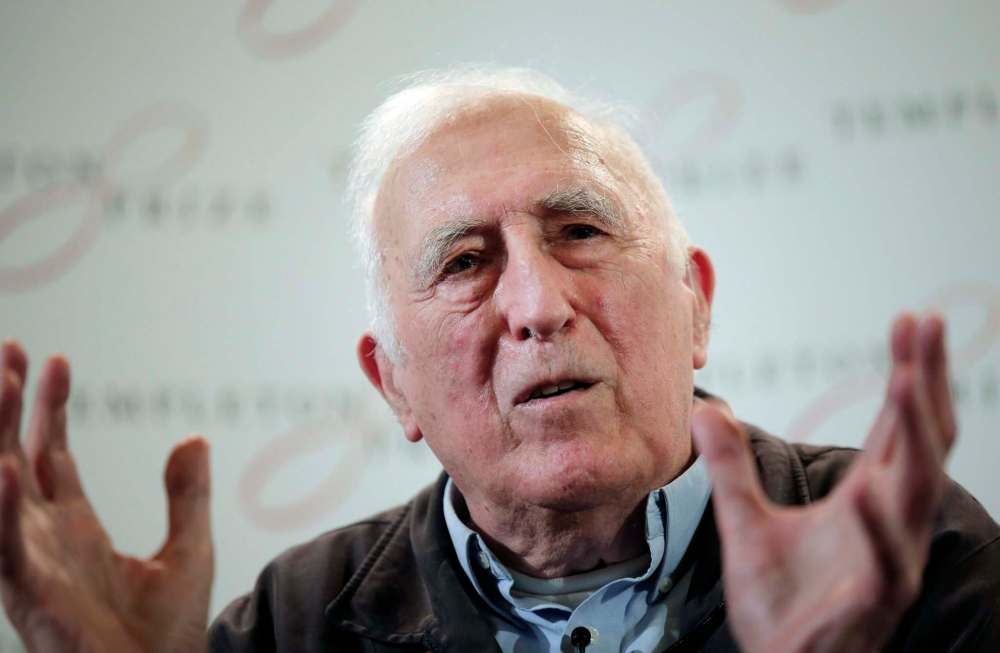
The recent news about Jean Vanier’s coercive and abusive sexual encounters with at least six adult women has rocked the Christian world — and beyond.
A lot has been written about the revelations. Since Vanier was Roman Catholic, I wondered what some writers from that church were saying about it.
Writing for Catholic News Service, Jamie Manson noted Vanier’s abuse follows a pattern in the Catholic church of men in authority abusing children and women.
For him, the Vanier case reaffirmed that “the church’s radically patriarchal leadership structure and theology are at the root of most sex abuse cases in the church.”
When this patriarchal system is combined with the theological notion that God calls men to lead and women to submit, “it creates the perfect breeding ground for the kinds of abuse we see in the Vanier case,” he stated.
For Colleen Dulle, the challenge is reconciling the Vanier she knew before the revelations with the one that exists today.
Writing in the Jesuit magazine America, she indicated she had written uncritically about Vanier several of times, calling him a “revered spiritual master and prophetic voice.” Like many, she believed he was a saint.
“Part of me wonders now if I was foolish,” she added, especially after the many revelations of sexual abuse in the Catholic church.
And yet, although she can no longer in good conscience call Vanier a saint, she can’t accept that “sanctity does not exist.”
For her, the Vanier case “raises important concerns about who holds power in the church, the ways that power can corrupt those who hold it and the disturbing links between spiritual and sexual abuse,” she wrote.
Charles Camosy is a Catholic who teaches theological and social ethics at Fordham University. The question this situation raises for him is: “If Jean Vanier is not good — indeed, far from it — who can be good?”
Writing in Religion News Service, he noted “it is important to remind ourselves of Jesus’s humbling claim that ‘no one is good but God alone.’ We are fallen, broken, depraved creatures in desperate need of God’s mercy and grace. We must let that disturbing reality sink in. Profound sin lurks even within the best of us. Sometimes, as in this case, even horrible sin lurks within the best of us.”
The situation also shows why Catholics should take time before declaring someone ready for sainthood, he added.
For Michael W. Higgins, the distinguished professor of Catholic thought at Sacred Heart University in Fairfield, Conn., “there is no way [the revelations] can be soft-pedalled… this is one godawful mess.”
Writing in the Globe and Mail, he noted how Vanier was heavily influenced in this direction by his spiritual mentor, Father Thomas Philippe.
Church history is full of “charismatic figures who cloak themselves in an attractive spirituality that allows them a hold over their followers,” he wrote, adding “their sense of personal entitlement, their persuasive and gentle presence and their empathy with the vulnerable is a tried formula, and it is insidious.”
More troublesome, he added, was that Vanier emulated his spiritual father in his own behaviour. “The sins of the spiritual father, as it were.”
For him, the Vanier case illustrates how there is a “deep pathology” that runs through centuries of Catholic teaching on sexuality that “needs to be recognized for its destructive potential.”

Charles Lewis, a Roman Catholic and former reporter at the National Post, interviewed Vanier in 2007. He asked him if he thought he was saint. Vanier responded angrily, saying “aren’t all Catholics supposed to strive to be saints?”
Now, Lewis wrote in the Catholic Register, “I wonder whether his refusal to acknowledge his saintly life was his own guilt over what he had done over 35 years.”
Barely able to conceal his anger, he wrote that Vanier “and all the other priests who have disgraced us with their pathetic sexual appetites,” have made “a mockery of what we believe and expose us to collective shame,” he said.
But, he added forcefully, the Catholic Church is “bigger than any one mortal man or woman. We will go on… shame on Jean Vanier and shame on all those who have betrayed us. We are better than you.”
faith@freepress.mb.ca
The Free Press is committed to covering faith in Manitoba through our Religion in the News project. This reporting continues because readers like you step forward to fund it.
Donate now to support our reporting on religion.
Your donation is eligible for a charitable tax receipt.
BECOME A FAITH JOURNALISM SUPPORTER
Our newsroom depends on a growing audience of readers to power our journalism. If you are not a paid reader, please consider becoming a subscriber.
Our newsroom depends on its audience of readers to power our journalism. Thank you for your support.
The Free Press is committed to covering faith in Manitoba through our Religion in the News project. This reporting continues because readers like you step forward to fund it.
Donate now to support our reporting on religion.
Your donation is eligible for a charitable tax receipt.
BECOME A FAITH JOURNALISM SUPPORTER
Our newsroom depends on a growing audience of readers to power our journalism. If you are not a paid reader, please consider becoming a subscriber.
Our newsroom depends on its audience of readers to power our journalism. Thank you for your support.

Advertisement Advertise With Us
Advertisement Advertise With Us
The Free Press acknowledges the financial support it receives from members of the city’s faith community, which makes our coverage of religion possible.