Judge rejects church’s COVID-19 request
Provincial restrictions against drive-in religious services remain
Advertisement
Read this article for free:
or
Already have an account? Log in here »
To continue reading, please subscribe:

Digital Subscription
One year of digital access for only $205*
- Enjoy unlimited reading on winnipegfreepress.com
- Read the E-Edition, our digital replica newspaper
- Access News Break, our award-winning app
- Play interactive puzzles
*First annual payment billed as $205.00 + GST for one year. This annual subscription will automatically renew at $233.00 + GST every 52 weeks (10% off the regular annual price of $259.35). Offer available to new and qualified returning subscribers only. Cancel any time.
To continue reading, please subscribe:
Add Free Press access to your Brandon Sun subscription for only an additional
$1 for the first 4 weeks*
- Enjoy unlimited reading on winnipegfreepress.com
- Read the E-Edition, our digital replica newspaper
- Access News Break, our award-winning app
- Play interactive puzzles
*Your next Brandon Sun subscription payment will increase by $1.00 and you will be charged $17.95 plus GST for four weeks. After four weeks, your payment will increase to $24.95 plus GST every four weeks.
Read unlimited articles for free today:
or
Already have an account? Log in here »
Hey there, time traveller!
This article was published 05/12/2020 (2126 days ago), so information in it may no longer be current.
A Manitoba judge rejected a church’s request Saturday to hold drive-in services despite the province’s COVID-19 restrictions on public gatherings and in-person religious events.
“The onus that an applicant must meet to obtain a stay of legislation is extremely high,” Chief Justice Glenn Joyal of the Manitoba Court of Queen’s Bench said in his rare weekend ruling.
“I do not believe that the applicants meet their burden of showing that (they) will suffer irreparable harm if the injunction is not granted.”
Joyal held a special Saturday court hearing in a case brought by Springs Church, which has faced more than $32,000 in fines for drive-in services in recent weeks and wanted a ruling before a planned service later in the day.
“I do not believe that the applicants meet their burden of showing that (they) will suffer irreparable harm if the injunction is not granted.” – Chief Justice Glenn Joyal
The church argued the latest provincial public health order, which requires religious services to be only available online or via broadcasts, violates freedoms of religion and association under the Charter of Rights and Freedoms. The order also bans public gatherings of more than five people.
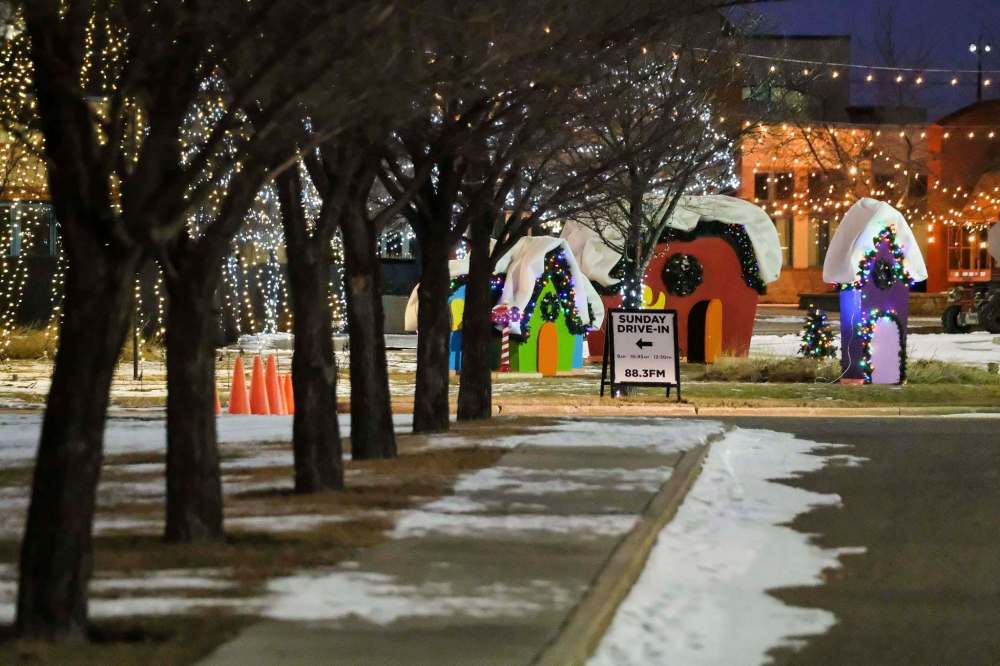
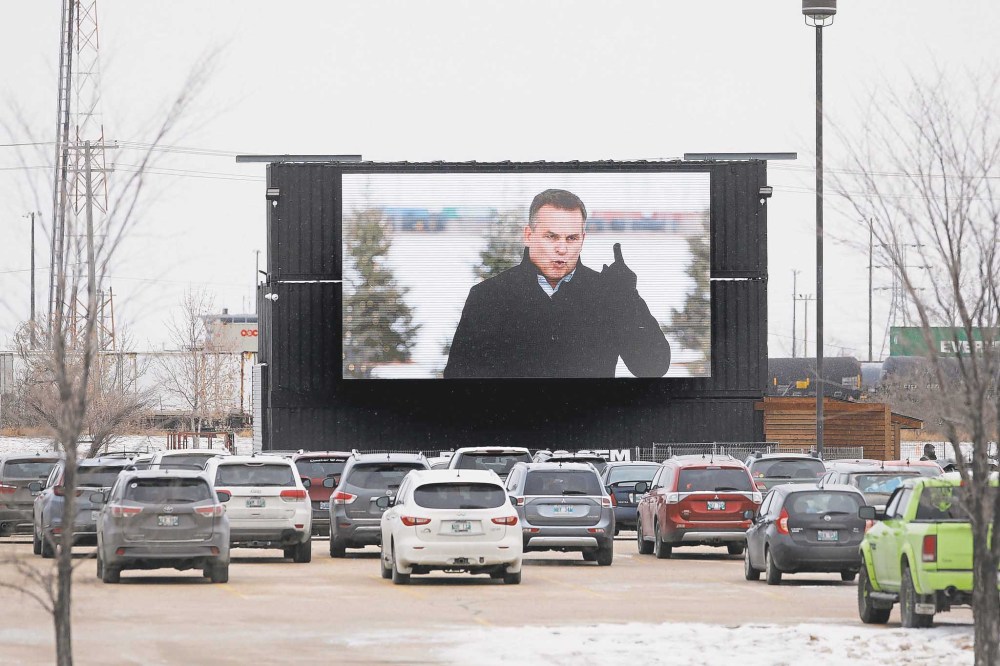
Springs Church asked for a temporary stay of enforcement of the order so that drive-in services could continue until a full hearing on the charter issue could be held. Its lawyer argued the drive-in services do not pose a threat to public health, since attendees are told to remain in the vehicles while a pastor speaks from the stage.
“They’re not allowed to enter the church buildings or sanctuaries, even to use the washrooms,” church lawyer Kevin Williams told court.
Leon Fontaine, Springs Church’s pastor posted a video on the church’s Facebook account on Saturday evening. He said the Chief Justice said the province’s rules were unclear and there is evidence from scientists that COVID-19 isn’t likely to be transmitted between cars with the windows rolled up.
Fontaine said he isn’t done fighting for drive-in services, but he is asking the public to follow COVID-19 guidelines, which means not attending drive-in church services for the time being, because being good citizens means following the laws. He also requested people reach out to their elected politicians.
“It is my opinion that there is an opportunity here to enhance the rules around gatherings, so that drive-in church services and other innovative solutions can continue to safely occur, because the right to practise faith during these challenging times is vital,” Fontaine said in his video.
Government lawyers argued the restrictions on in-person gatherings, both generally and for religious services, are needed to slow the spread of COVID-19. Manitoba has one of the highest per-capita rates of new infections among provinces.
Health officials reported 354 new cases Saturday and a record-high 19 deaths.
“I am in agreement with the submissions of the (government) that a remote service in your home is, at least, very similar to a remote service in your car.” – Chief Justice Glenn Joyal
“It cannot be business as usual,” government lawyer Heather Leonoff said, arguing there’s no way to guarantee that congregants don’t mingle while in the church parking lot.
Joyal ruled the church failed to show evidence that being able to sit in a car while listening to a church service is a necessary alternative to sitting at home.
“I am in agreement with the submissions of the (government) that a remote service in your home is, at least, very similar to a remote service in your car,” he said.
One woman says gathering for a drive-in church service is important for the community. She added even waving to people through your car window brings a sense of togetherness.
“What pastor Leon is looking to do is keep everyone in their vehicle and create the feeling of assemblance without there being an assemblance,” said Julie Hoeppner, who has attended Springs Church on and off since 1999.
Hoeppner moved to southern Manitoba in 2010, but she said it’s only an hour, hour and a half drive to the church, and sometimes she will still make the trip for a service.
Joyal also rejected other arguments made by the church, including a claim that a service of people attending in cars is not the same as a public gathering, which is limited to five people.
“It has persons. They are grouping. They are in general proximity to each other, and they have assembled for a common purpose or reason,” Joyal said.
Hoeppner says the COVID-19 gathering rules do not make sense and it seems like church is being singled out.
“Pastor Leon isn’t doing anything different than we do at the Tim Horton’s drive-thru, or the Walmart parking lot,” she said. “It’s unfair when he’s not doing anything further to add to the risk, but to mitigate future risk like mental well-being.”
“What pastor Leon is looking to do is keep everyone in their vehicle and create the feeling of assemblance without there being an assemblance,” – Julie Hoeppner
A date has not been set for a full hearing on the church’s Charter argument. Manitoba’s current public health order is scheduled to expire on Friday, although Premier Brian Pallister has said some form of restrictions will have to be extended.
Manitoba is not the only province facing a legal fight over its COVID-19 rules.
The Justice Centre for Constitutional Freedoms filed a challenge Friday with Alberta’s Court of Queen’s Bench on behalf of two churches and two individuals, alleging the province’s public health orders infringe on charter freedoms and violate the Alberta Bill of Rights.
“‘Measures imposed by the (chief medical officer of health) to lock down society and short-circuit the economy, both in the spring of 2020 and again now as the holiday season approaches, have imposed tragic levels of harm that dwarf the harm that unfortunately has and may continue to be caused by COVID-19,” the group’s court application stated.
— with files from Kellen Taniguchi
— The Canadian Press
The Free Press is committed to covering faith in Manitoba through our Religion in the News project. This reporting continues because readers like you step forward to fund it.
Donate now to support our reporting on religion.
Your donation is eligible for a charitable tax receipt.
BECOME A FAITH JOURNALISM SUPPORTER
The Free Press is committed to covering faith in Manitoba through our Religion in the News project. This reporting continues because readers like you step forward to fund it.
Donate now to support our reporting on religion.
Your donation is eligible for a charitable tax receipt.
BECOME A FAITH JOURNALISM SUPPORTER
Related Articles
Manitoba extends pandemic lockdown into new year



Advertisement Advertise With Us
Advertisement Advertise With Us
The Free Press acknowledges the financial support it receives from members of the city’s faith community, which makes our coverage of religion possible.