Relish the ‘ruin’
Pandemic an opportunity to reflect on Nativity

Advertisement
Read this article for free:
or
Already have an account? Log in here »
To continue reading, please subscribe:

Digital Subscription
One year of digital access for only $205*
- Enjoy unlimited reading on winnipegfreepress.com
- Read the E-Edition, our digital replica newspaper
- Access News Break, our award-winning app
- Play interactive puzzles
*First annual payment billed as $205.00 + GST for one year. This annual subscription will automatically renew at $233.00 + GST every 52 weeks (10% off the regular annual price of $259.35). Offer available to new and qualified returning subscribers only. Cancel any time.
To continue reading, please subscribe:
Add Free Press access to your Brandon Sun subscription for only an additional
$1 for the first 4 weeks*
- Enjoy unlimited reading on winnipegfreepress.com
- Read the E-Edition, our digital replica newspaper
- Access News Break, our award-winning app
- Play interactive puzzles
*Your next Brandon Sun subscription payment will increase by $1.00 and you will be charged $17.95 plus GST for four weeks. After four weeks, your payment will increase to $24.95 plus GST every four weeks.
Read unlimited articles for free today:
or
Already have an account? Log in here »
Hey there, time traveller!
This article was published 12/12/2020 (2106 days ago), so information in it may no longer be current.
Earlier this month Premier Brian Pallister apologized for ruining Christmas. That got me thinking; if Christmas is going to be “ruined” this year, can that happen in a positive way?
For starters, the pandemic might be giving us a chance to re-think all the things we’ve done for years and years at Christmastime; are they really necessary? What things give us joy, and what things just create burdens?
Maybe during this pandemic “ruined” Christmas we can let some of the latter go.
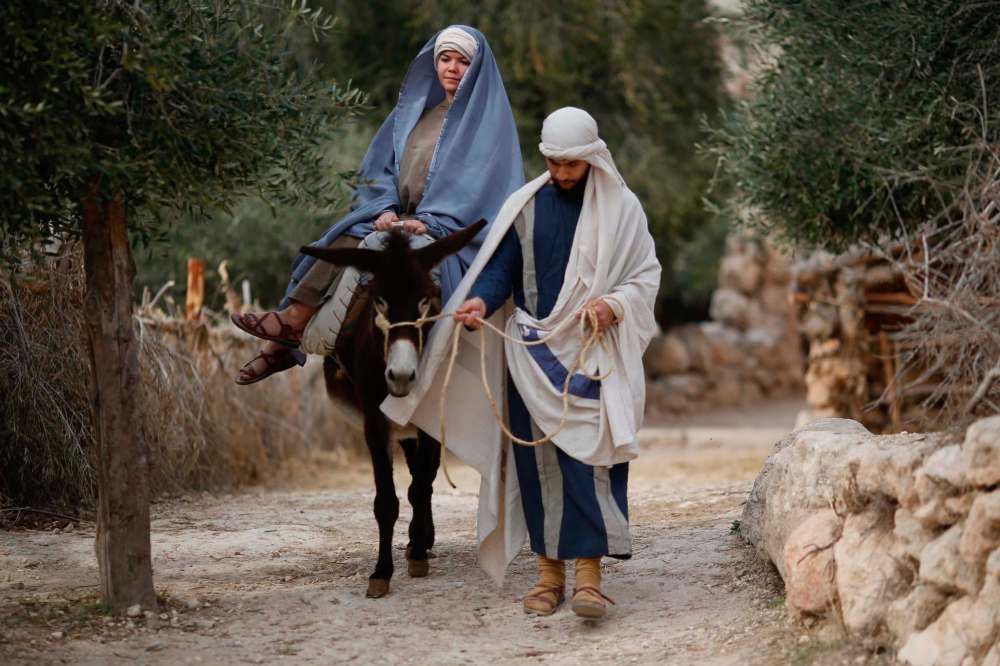
It may also give us time to re-imagine the Nativity story itself. That’s what theologian Pete Enns does in a series of blog posts titled “Pete Ruins Christmas.”
In the posts, the professor of biblical studies at Eastern University in Pennsylvania takes a look at the Christmas story in the Bible and “ruins” it — in a good way, he hopes.
In one post, he takes on the verses in Isaiah that are believed to predict the birth of Jesus — the ones made famous by Handel’s Messiah: “Unto us a child is born…”
“At first blush,” says Enns, “one can’t help but think that calling this child ‘Mighty God, Everlasting Father,’ who gives ‘endless peace’ and will establish justice ‘forevermore’ could only refer to a divine child, and therefore Jesus.”
But that’s not the case, he says.
Those verses, written in the eighth century BC, are actually about the liberation of Israel from the Assyrians by a royal birth. The identity of this son is not given, though some scholars suggest it is Hezekiah; during his reign the southern nation of Judah successfully repulsed an Assyrian attack.
What about all those divine names and attributes for this child? It was a common practice at that time for Israelite kings, like kings of other nations, to be given exalted “throne names” that bore divine titles, Enns says.
Says Enns: “No one — I repeat, no one — in the eighth century would think that Isaiah is referring to a child who is actually divine, but of a child born to be king through whom God would work, in this case, the liberation of the northern regions from Assyrian control.”
Those verses are “not a prophecy of the coming of Jesus,” he says.
Instead, what the writer of the Gospel of Matthew is doing is engaging in a “creative interpretation of his Bible” by tying that story in Isaiah to the birth of Jesus — a way of interpretation that was employed by the Gospel writers.
By linking back to Isaiah, Matthew is connecting “Jesus’s ministry of deliverance to the deliverance referred to in the eighth century.”
He was reading what Christians now call the Old Testament “in light of Christ… not as a predictor of something that wouldn’t happen for 700-plus years with no relevance to Isaiah’s audience.”
Someone else “ruining” Christmas is blogger Sarah Bessey. In a post titled “Why everything you know about the Nativity is probably wrong,” she writes about how she is reorganizing her understanding of the Nativity story.
“As a woman who has given birth a time or four, give or take, I have long been able to fully attest that there are aspects of the Christmas story we know and love that do not — let’s say it gently — quite line up with reality,” she says, noting a lot of what we have been taught about the Nativity has been interpreted my men.
If more women were preachers, “perhaps the beautiful crèche scenes of Christmas wouldn’t be quite so immaculate,” she says of the antiseptic and church view of the birth of Jesus we usually see.
“We wouldn’t sing songs of babies who don’t cry. And maybe we wouldn’t mistake quiet for peace,” she adds.
While she’s at it, she has also “thoroughly disabused” herself of the notion of white baby Jesus. “Whitewashing Jesus, let alone pretending he isn’t a first century Jew, is an act of erasure to his actual incarnation,” she says. Bessey also notes our western misconception of the whole manger-in-a-stable thing, written about by theologian and scholar Kenneth E. Bailey.
“For starters, Jesus wasn’t born in a barn, folks,” Bessey says, noting Middle Eastern homes of that time did not have the stable for the animals separate from the home at all.

Instead, the home was usually made of two rooms: one for the family and the animals and another one at the back or on the roof for the guests.
The family wasn’t turned away from a hotel, she notes; they were told that the guest room in the house was already taken and, instead, were invited into the family’s quarters.
So, she says, “the story is actually one of hospitality; the home where Mary and Joseph stayed was not a guest room but an actual family room.”
So: is your Christmas “ruined” enough yet? If yes, maybe that’s a good thing. Between the pandemic, Enns and Bessey, maybe this year many will have time to think about what Christmas is really all about and find fresh ways of understanding and celebrating the season.
faith@freepress.mb.ca
The Free Press is committed to covering faith in Manitoba through our Religion in the News project. This reporting continues because readers like you step forward to fund it.
Donate now to support our reporting on religion.
Your donation is eligible for a charitable tax receipt.
BECOME A FAITH JOURNALISM SUPPORTER
Our newsroom depends on a growing audience of readers to power our journalism. If you are not a paid reader, please consider becoming a subscriber.
Our newsroom depends on its audience of readers to power our journalism. Thank you for your support.
The Free Press is committed to covering faith in Manitoba through our Religion in the News project. This reporting continues because readers like you step forward to fund it.
Donate now to support our reporting on religion.
Your donation is eligible for a charitable tax receipt.
BECOME A FAITH JOURNALISM SUPPORTER
Our newsroom depends on a growing audience of readers to power our journalism. If you are not a paid reader, please consider becoming a subscriber.
Our newsroom depends on its audience of readers to power our journalism. Thank you for your support.
Advertisement Advertise With Us
Advertisement Advertise With Us
The Free Press acknowledges the financial support it receives from members of the city’s faith community, which makes our coverage of religion possible.