From underneath the cloak
Coptic church opens doors to former Trappist monastery

Advertisement
Read this article for free:
or
Already have an account? Log in here »
To continue reading, please subscribe:

Digital Subscription
One year of digital access for only $205*
- Enjoy unlimited reading on winnipegfreepress.com
- Read the E-Edition, our digital replica newspaper
- Access News Break, our award-winning app
- Play interactive puzzles
*First annual payment billed as $205.00 + GST for one year. This annual subscription will automatically renew at $233.00 + GST every 52 weeks (10% off the regular annual price of $259.35). Offer available to new and qualified returning subscribers only. Cancel any time.
To continue reading, please subscribe:
Add Free Press access to your Brandon Sun subscription for only an additional
$1 for the first 4 weeks*
- Enjoy unlimited reading on winnipegfreepress.com
- Read the E-Edition, our digital replica newspaper
- Access News Break, our award-winning app
- Play interactive puzzles
*Your next Brandon Sun subscription payment will increase by $1.00 and you will be charged $17.95 plus GST for four weeks. After four weeks, your payment will increase to $24.95 plus GST every four weeks.
Read unlimited articles for free today:
or
Already have an account? Log in here »
Hey there, time traveller!
This article was published 28/08/2022 (1495 days ago), so information in it may no longer be current.
HOLLAND, Man. — A sign in the gap of a tall lilac hedge cautions visitors not to venture further, but these days the doors of a former Trappist cloister are wide open.
Two years after the two remaining French-speaking monks of the Cistercian Order of Strict Observance — known as Trappists — moved to a house in nearby Notre Dame de Lourdes, the former Our Lady of the Prairies monastery now houses another religious group.
“We will use it for all ages of Sunday School and Scouts and elders,” said Rev. Marcos Farag, priest at St. Mark Coptic Orthodox Church in Winnipeg. “When we can go, we will go.”
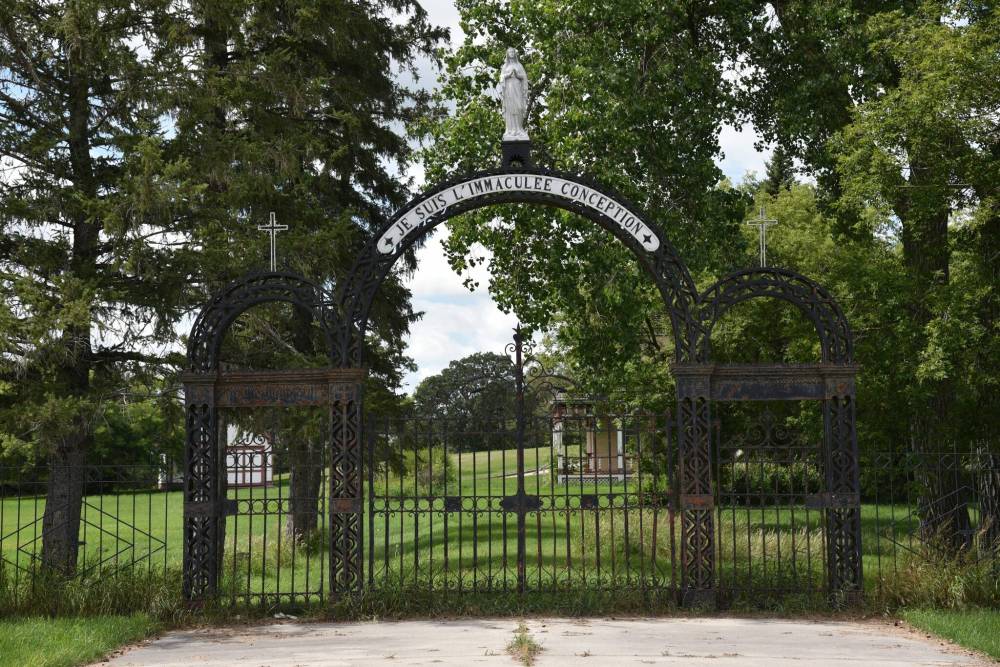
Farag and members of the church will manage the 53-acre property, located about 10 minutes south of Holland on Highway 34. Now known as St. Mary Coptic Orthodox Retreat Centre, the former monastery is officially owned by the Coptic Orthodox Diocese of Mississauga, Vancouver and Western Canada.
One day it may again house monks — most likely from Egypt — in the 20 small cells located in a long, stall-like building protruding from the square brick cloister, but for now the small rooms with a desk and single bed are used for group getaways by church members.
Located 140 kilometres from Winnipeg, the newly purchased facility offers another space to interact with church friends, says Maria Fanous, who enters Grade 12 in September.
“It felt very safe, and we had so much fun,” she said of the recent weekend spent with other high school girls at the sprawling property.
Elders plan to use the facility as well, said Sophie Louka, who attended a recent Saturday morning liturgy in the spare but stunning chapel constructed 44 years ago.
“For our generation, it will be retreats, but for the younger ones it will be more,” she said.
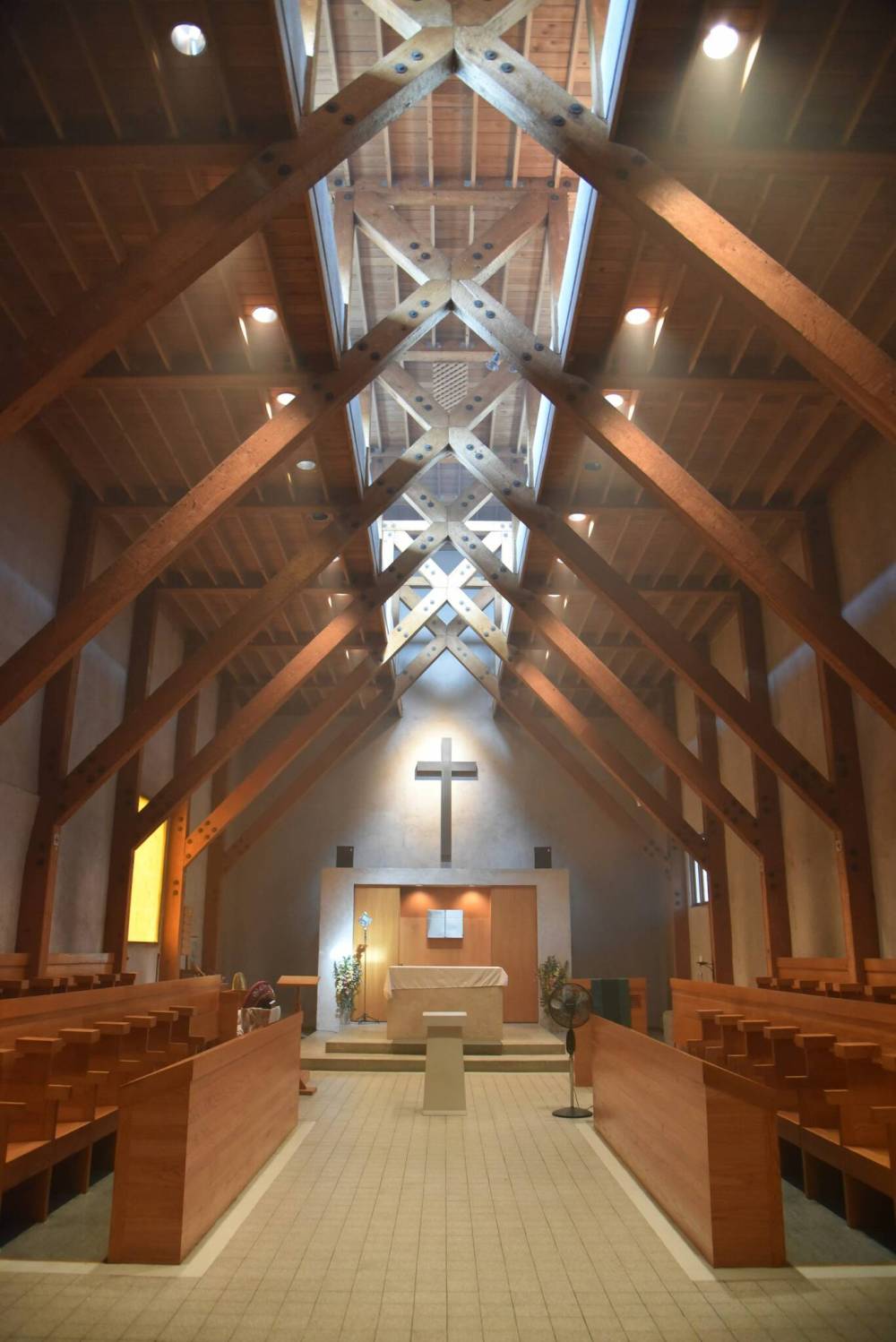
That chapel stands as the centrepiece of the cloister designed by Jacques Collin, a French-speaking University of Manitoba architecture professor the Trappists consulted when relocating from their former monastery in St. Norbert to the sprawling acreage in the Tiger Hills.
The entire complex was inspired by ancient monastic principles of durable architecture and simple unadorned design. The chapel features clear-coated oak millwork, chunky angled rafters crossing at ceiling height, modern upright pews, and high windows illuminating the space. The only decorative element is a simple, unadorned stainless steel cross hanging high above the poured concrete altar.
Monks would have been seated facing each other in individual choir stalls, entering from a staircase inside the cloister with a wooden fence separating them from the three rows of pews meant for visitors.
The spare design contrasts to the many icons, frescos and stained glass featured in Coptic Orthodox churches, but Farag hopes to soon install an iconostasis across the front of the chapel.
“It’s beautiful, but we’re going to put our touch on it,” he says of the chapel.
Common to Eastern Christian traditions, an iconostasis is a decorative screen of icons and religious paintings separating the main area of a church from the area around the altar.
Remnants of the Roman Catholic order are visible through the monastery, from small wooden carved stations of the cross embedded in walls overlooking the inner quadrangle, now overgrown with trees and shrubs, to the large library of theological books housed in the main floor library down the hall from the chapel.
“They left everything. They have no need for it,” said Farag of the dozen mobile shelves packed with books.
The monks also left behind a well-equipped commercial kitchen on the lower level of the building, fully stocked with cooking pots and serving dishes, and featuring long counters for meal preparation. A small bakery connected to the main cooking space is ready for action again, with a large commercial mixer, freestanding convection oven, and dozens of well-seasoned bread pans stacked on a kitchen cart.
Stainless steel dishwashing sinks around the corner provide another glimpse into the austerity of monastic life with a small sign stating “Silence at dishes please. Thank you!”
A basement entrance leading to the back gardens and fields bears witness to the practical aspects of monastic life. Monks literally shook off the dirt from their labours inside a large mudroom lined with gray-painted wooden shelves, furnished with a simple bench and equipped with floor grates to catch the debris, and then stored their work boots in assigned lockers next door before heading to the showers. Down the hall, a laundry room features two commercial-grade washers, and next door, numbered bins assigned to specific monks sit on shelves, empty of the robes and socks they once contained.
A main floor serving room is still connected to the basement kitchen by a dumbwaiter to carry food up and down. The adjacent dining room, called a refectory in monastic circles, features nine rectangular wooden tables arranged in rows of threes, each fitted with six round stools. The design of the refectory is spare but calm, featuring exposed wooden rafters, rectangular windows high on the walls, polished concrete floors, and rough plaster walls. A raised platform equipped with the remnants of a sound system bears testament to the silent meals punctuated by the amplified voice of a monk reading to the others seated on the backless stools.
After changing out the mattresses and updating some of the washrooms, the new owners are slowly familiarizing themselves with the new space and deciding what improvements to make, tackling renovations one building at a time, said Farag, who plans to hire a live-in caretaker soon.
“I would like to keep the heritage of the building,” he says, set well back from the road and nearly hidden by large trees.
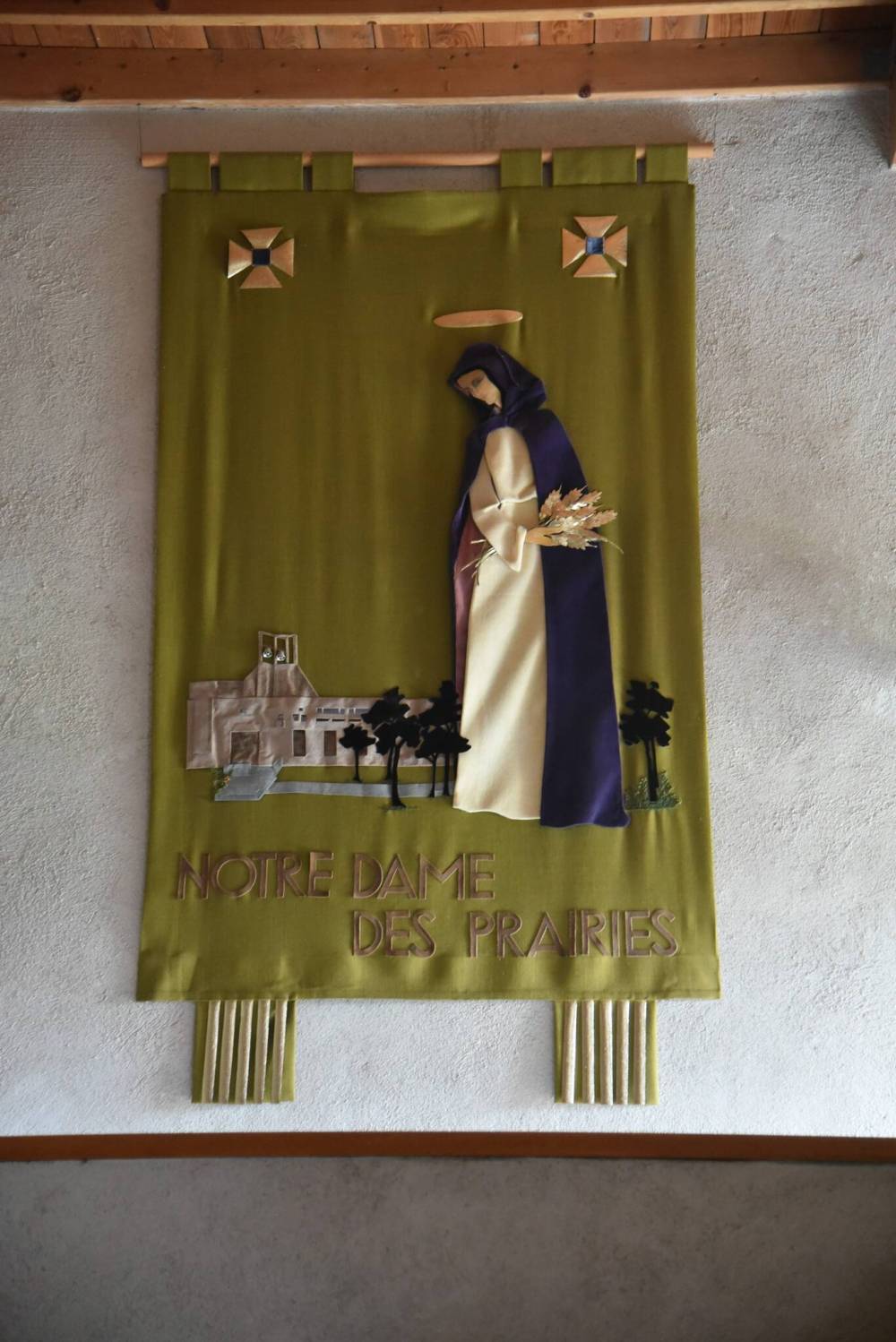
Part of that heritage is reflected in the name of the new retreat centre. Both St. Mary and Our Lady refer to the mother of Jesus Christ.
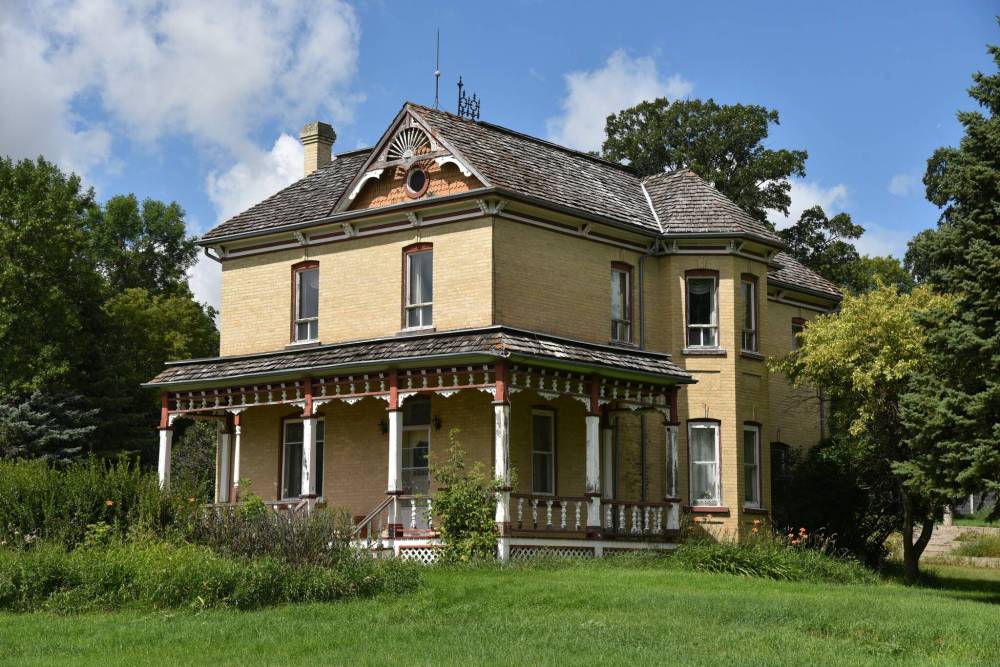
The deal includes the two-storey brick farmhouse near the road, a small freestanding chapel, the large monastery cloister, the former gift shop where the monks sold the cheese, chocolate and honey produced on their farm, guest houses, greenhouses, garages, an apiary and the former cheese factory.
“They got an appraisal for almost $6 million, but there was an agreement to get it for almost free,” Farag said of the purchase price for the property. Much of the monastery’s farmland was previously sold to local farmers.
On Saturday, the retreat centre held an open house for its members and the surrounding community, inviting neighbours to meet them and tour the facility.
As the new owners, Farag said the Coptic Orthodox community has two priorities for the property — continue running it as a place of prayer and contemplation and be accessible to those looking for a space to retreat from the world.
“It’s spending time without interruptions,” Farag said.
“One day, God willing, it’s going to be a landmark.”
brenda.suderman@freepress.mb.ca

The Free Press is committed to covering faith in Manitoba through our Religion in the News project. This reporting continues because readers like you step forward to fund it.
Donate now to support our reporting on religion.
Your donation is eligible for a charitable tax receipt.
BECOME A FAITH JOURNALISM SUPPORTER
Brenda Suderman has been a columnist in the Saturday paper since 2000, first writing about family entertainment, and about faith and religion since 2006.
Our newsroom depends on a growing audience of readers to power our journalism. If you are not a paid reader, please consider becoming a subscriber.
Our newsroom depends on its audience of readers to power our journalism. Thank you for your support.
The Free Press is committed to covering faith in Manitoba through our Religion in the News project. This reporting continues because readers like you step forward to fund it.
Donate now to support our reporting on religion.
Your donation is eligible for a charitable tax receipt.
BECOME A FAITH JOURNALISM SUPPORTER
Brenda Suderman has been a columnist in the Saturday paper since 2000, first writing about family entertainment, and about faith and religion since 2006.
Our newsroom depends on a growing audience of readers to power our journalism. If you are not a paid reader, please consider becoming a subscriber.
Our newsroom depends on its audience of readers to power our journalism. Thank you for your support.
Advertisement Advertise With Us
Advertisement Advertise With Us
The Free Press acknowledges the financial support it receives from members of the city’s faith community, which makes our coverage of religion possible.