Bulgarians celebrate Epiphany with traditional rituals
Advertisement
Read this article for free:
or
Already have an account? Log in here »
To continue reading, please subscribe:

Digital Subscription
One year of digital access for only $205*
- Enjoy unlimited reading on winnipegfreepress.com
- Read the E-Edition, our digital replica newspaper
- Access News Break, our award-winning app
- Play interactive puzzles
*First annual payment billed as $205.00 + GST for one year. This annual subscription will automatically renew at $233.00 + GST every 52 weeks (10% off the regular annual price of $259.35). Offer available to new and qualified returning subscribers only. Cancel any time.
To continue reading, please subscribe:
Add Free Press access to your Brandon Sun subscription for only an additional
$1 for the first 4 weeks*
- Enjoy unlimited reading on winnipegfreepress.com
- Read the E-Edition, our digital replica newspaper
- Access News Break, our award-winning app
- Play interactive puzzles
*Your next Brandon Sun subscription payment will increase by $1.00 and you will be charged $17.95 plus GST for four weeks. After four weeks, your payment will increase to $24.95 plus GST every four weeks.
Read unlimited articles for free today:
or
Already have an account? Log in here »
Hey there, time traveller!
This article was published 06/01/2023 (1364 days ago), so information in it may no longer be current.
SOFIA, Bulgaria (AP) — Thousands of young men are plunging into rivers and lakes across Bulgaria to retrieve crucifixes, in an old ritual marking the feast of Epiphany.
By tradition, a crucifix is cast into the waters of a lake or river, and it is believed that the person who retrieves it will be freed from evil spirits and will be healthy through the year.
After the cross is fished out, the priest sprinkles believers with water using a bunch of basil.
The celebration of Epiphany, or the Apparition of Christ, as Bulgarians call it, began on Friday in Sofia with a water blessing ceremony.
Senior clergymen of Bulgaria’s Orthodox church said prayers for the prosperity of the people and blessed the colors of representative army units in a tradition that was abandoned in 1946 but re-established following the fall of communism in 1992.
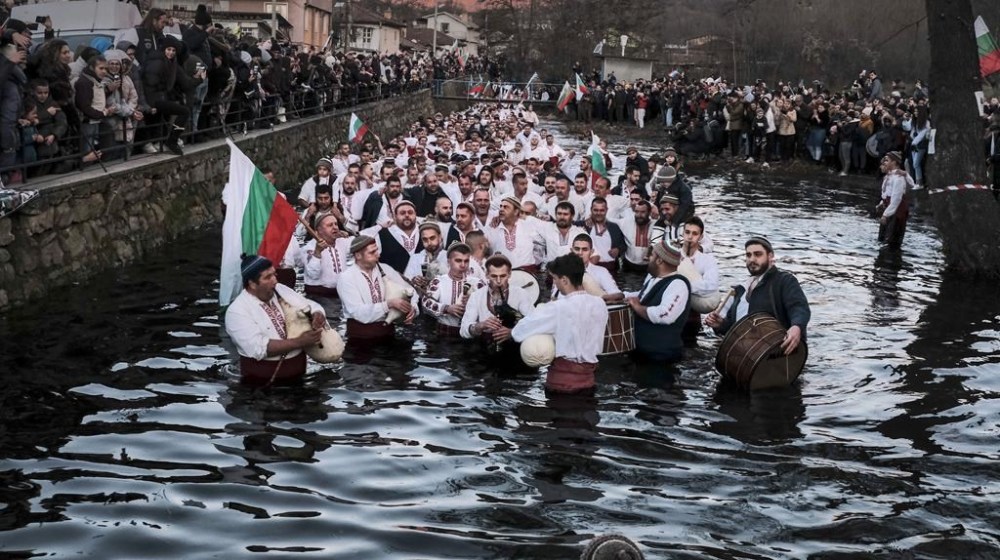
In the small mountain city of Kalofer in central Bulgaria, people stick to a century-old unique ritual, as nearly dozens of men dressed in traditional white embroidered shirts wade into the Tundzha River to perform a slow “mazhko horo,” or men’s dance.

Led by the town’s mayor and inspired by bass drums and bagpipes, the men dance for nearly half an hour, holding each other by the shoulders and stomping on the rocky riverbed up to their waists in the cold water.
Despite the unusual spring-like weather which damped down the thrill of dancing among ice chunks in the river, the men did not skip the usual preparations, which kick off the previous night as they warm up in the city tavern with local red wine.
Epiphany marks the end of the 12 days of Christmas, but not all Orthodox Christian churches celebrate it on the same day.
While the Orthodox Christian churches in Greece, Bulgaria and Romania celebrate the feast on Jan. 6, Orthodox Churches in Russia, Ukraine and Serbia follow the Julian calendar, according to which Epiphany is celebrated on Jan. 19, as their Christmas falls on Jan. 7.
Some Western Christian churches celebrate the religious holiday of Epiphany as Three Kings Day, which marks the visit of the Magi, or three wise men, to the baby Jesus, and closes out the Christmas season.
The Free Press acknowledges the financial support it receives from members of the city’s faith community, which makes our coverage of religion possible.