Minnesota governor signs broad abortion rights bill into law
Advertisement
Read this article for free:
or
Already have an account? Log in here »
To continue reading, please subscribe:
Digital Subscription
One year of digital access for only $1.44 a week*
- Enjoy unlimited reading on winnipegfreepress.com
- Read the E-Edition, our digital replica newspaper
- Access News Break, our award-winning app
- Play interactive puzzles
*Billed as $5.77 plus GST every four weeks. After 52 weeks, price increases to the regular rate of $19.95 plus GST every four weeks. Offer available to new and qualified returning subscribers only. Cancel any time.
To continue reading, please subscribe:
Add Free Press access to your Brandon Sun subscription for only an additional
$1 for the first 4 weeks*
- Enjoy unlimited reading on winnipegfreepress.com
- Read the E-Edition, our digital replica newspaper
- Access News Break, our award-winning app
- Play interactive puzzles
*Your next Brandon Sun subscription payment will increase by $1.00 and you will be charged $17.95 plus GST for four weeks. After four weeks, your payment will increase to $24.95 plus GST every four weeks.
Read unlimited articles for free today:
or
Already have an account? Log in here »
Hey there, time traveller!
This article was published 31/01/2023 (1356 days ago), so information in it may no longer be current.
ST. PAUL, Minn. (AP) — Gov. Tim Walz enshrined the right to abortion and other reproductive health care into Minnesota statutes Tuesday, signing a bill meant to ensure that the state’s existing protections remain in place no matter who sits on future courts.
Democratic leaders took advantage of their new control of both houses of the Legislature to rush the bill through in the first month of the 2023 legislative session. They credit the backlash against the U.S. Supreme Court decision last summer to reverse Roe v. Wade for their takeover of the state Senate and for keeping their House majority in a year when Republicans expected to make gains.
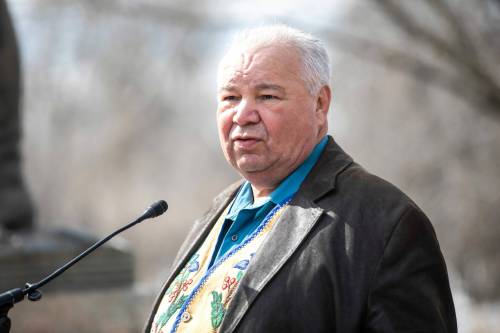
“After last year’s landmark election across this country, we’re the first state to take legislative action to put these protections in place,” Walz said at a signing ceremony flanked by over 100 lawmakers, providers and other advocates who worked to pass the bill.
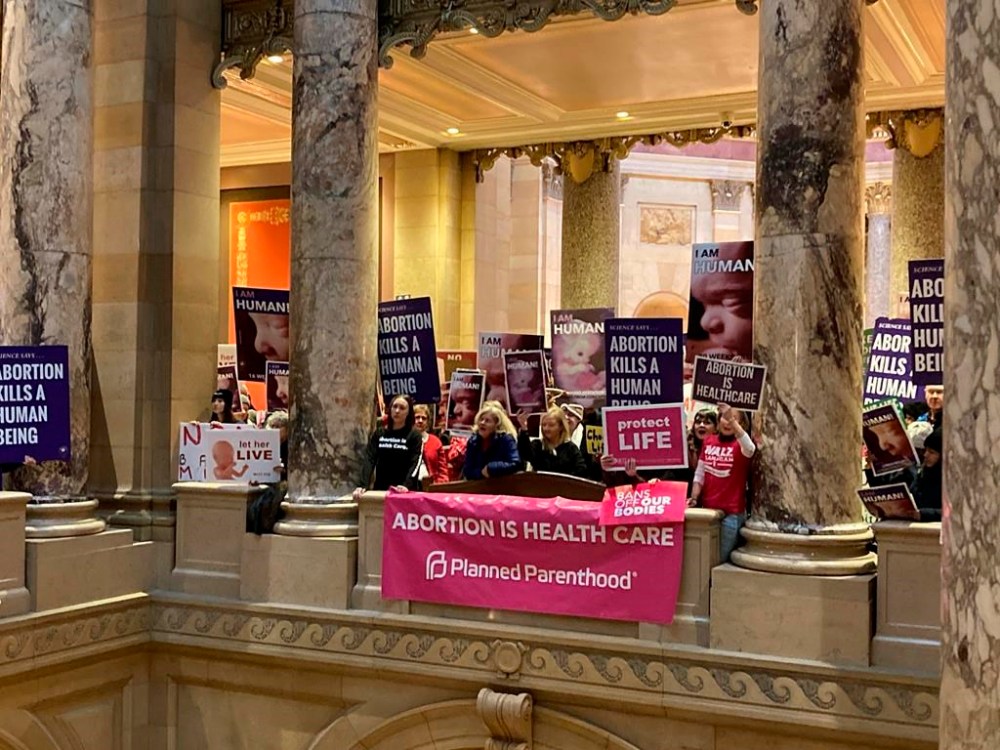
Abortion rights were already protected under a 1995 Minnesota Supreme Court decision known as Doe v. Gomez, which held that the state Constitution protects abortion rights. And a district court judge last summer declared unconstitutional several restrictions that previous Legislatures had put in place, including a 24-hour waiting period and a parental notification requirement for minors.
Opponents decried the bill as “extreme,” saying that it and other fast-tracked legislation will leave Minnesota with essentially no restrictions on abortion at any stage of pregnancy.
The leaders of the Senate and House GOP minorities, Sen. Mark Johnson, of East Grand Forks, and Rep. Lisa Demuth, of Cold Spring, urged Walz in a letter Monday to veto the bill, saying the Democratic majorities rejected dozens of amendments that Republican lawmakers proposed as guardrails, including prohibitions on third-trimester abortions except to save the patient’s life.
But the White House welcomed Walz’s signature on the bill, noting that Minnesota is the first state Legislature to codify protections into law this year. Press Secretary Karine Jean-Pierre noted that voters also turned out for ballot initiatives to defend access to abortion in California, Kansas, Kentucky, Michigan, Montana, and Vermont.
“While Congressional Republicans continue their support for extreme policies including a national abortion ban, the President and Vice President are calling on Congress to restore the protections of Roe in federal law,” Jean-Pierre said in a statement. “Until then, the Biden-Harris Administration will continue its work to protect access to abortion and support state leaders in defending women’s reproductive rights.”
While the new law will have little immediate further impact on access to abortion in Minnesota, the governor, legislative leaders and sponsors of the bill said it provides a critical new layer of protection in case the composition of the state courts someday changes, as it did on the U.S. Supreme Court before it struck down Roe v. Wade.
“To Minnesotans, know that your access to reproductive health, and your right to make your own health care decisions, are preserved and protected,” Walz said. “And because of this law, that won’t change with the political winds and the makeup of the Supreme Court.”

The House passed the bill 69-65 less than two weeks ago, and party discipline held firm during a 15-hour debate in the Senate that ended in a 34-33 vote early Saturday.
“Fundamentally this legislation is about who decides,” said House Speaker Melissa Hortman, of Brooklyn Park. “Who should be legally entitled to make reproductive health care decisions for an individual. … It can’t be decided by politicians. It can’t be decided by judges.”
Abortion is currently considered illegal at all stages of pregnancy, with various exceptions, in 13 states, including neighboring Wisconsin and South Dakota. Bans in several states, including neighboring North Dakota, remain on hold for the moment pending court challenges. Because of restrictions elsewhere, Minnesota has seen a surge of pregnant patients coming to the state for abortions.
Minnesota’s new law is named the “PRO Act,” short for “Protect Reproductive Actions.” It establishes that “every individual has a fundamental right to make autonomous decisions about the individual’s own reproductive health” including abortion and contraception.
There are other bills to protect abortion rights in the Legislature’s pipeline as well, including one to delete the statutory restrictions that the district court declared unconstitutional last summer. It’s meant to safeguard against those limits being reinstated if that ruling is overturned on appeal. Hortman said she expected House floor votes to approve them as early as next week.
The Free Press acknowledges the financial support it receives from members of the city’s faith community, which makes our coverage of religion possible.