A cautionary tale for places of worship

Advertisement
Read this article for free:
or
Already have an account? Log in here »
To continue reading, please subscribe:

Digital Subscription
One year of digital access for only $205*
- Enjoy unlimited reading on winnipegfreepress.com
- Read the E-Edition, our digital replica newspaper
- Access News Break, our award-winning app
- Play interactive puzzles
*First annual payment billed as $205.00 + GST for one year. This annual subscription will automatically renew at $233.00 + GST every 52 weeks (10% off the regular annual price of $259.35). Offer available to new and qualified returning subscribers only. Cancel any time.
To continue reading, please subscribe:
Add Free Press access to your Brandon Sun subscription for only an additional
$1 for the first 4 weeks*
- Enjoy unlimited reading on winnipegfreepress.com
- Read the E-Edition, our digital replica newspaper
- Access News Break, our award-winning app
- Play interactive puzzles
*Your next Brandon Sun subscription payment will increase by $1.00 and you will be charged $17.95 plus GST for four weeks. After four weeks, your payment will increase to $24.95 plus GST every four weeks.
Read unlimited articles for free today:
or
Already have an account? Log in here »
Hey there, time traveller!
This article was published 06/07/2023 (1195 days ago), so information in it may no longer be current.
If there’s one thing people of faith are told to do, it’s to be open, trusting and supportive of other members of a church, synagogue, gurdwara, mosque or other place of worship — to bear each other’s burdens, to use the language of the Bible.
That includes being there when people need help, and always being ready and willing to provide assistance.
It’s what can make places of worship such wonderful places; no matter what happens, someone’s got your back. Emotionally and mentally, it helps make life so much more bearable to know you are surrounded by people you can trust and rely on to be open and honest with you.
Louis Lanzano / The Associated Press Files
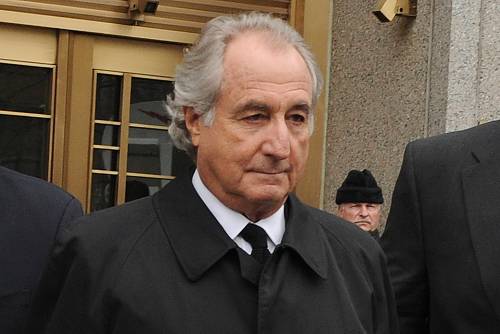
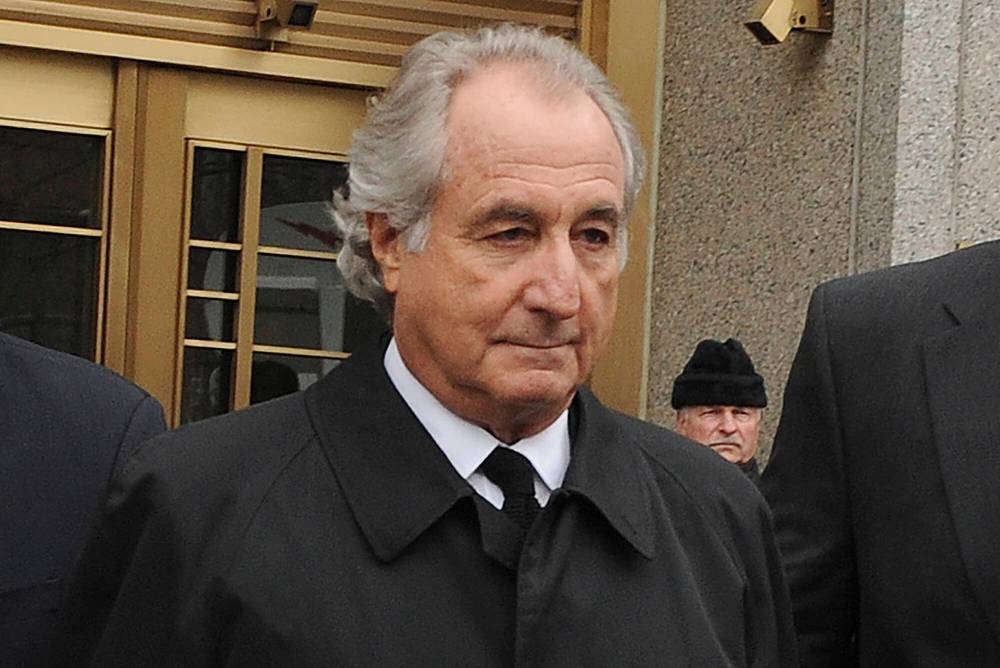
Bernie Madoff used his connections to scam people out of billions of dollars.
And that’s what can make places of worship susceptible to affinity fraud.
Affinity fraud happens when individuals take advantage of the trust and close-knit nature of a community to carry out financial scams. They use their insider status in the group for personal gain.
In some cases, it happens when people join faith communities with the express intent of committing fraud. But it can also be perpetrated by longtime members who take advantage of the strong bonds of trust between members.
Affinity fraud in faith groups can be Ponzi or pyramid schemes, where people are promised high returns in return for investing in a project. Or it can be asking for loans because the borrower has fallen on hard times and needs money to pay rent or other bills.
One of the worst recent examples of affinity fraud involved Bernie Madoff, who used his connections in Jewish communities to scam people out of about US$20 billion. Also in the U.S., members of the Church of Jesus Christ of Latter-day Saints were targets of a US$500 million affinity fraud scheme between 2017-22.
A church here in Winnipeg that knows all too well about affinity fraud is Bethel Mennonite Church.
Earlier this year, the church discovered such a scheme within its membership that resulted in 35 households losing about $1.1 million in total.
According to the church, the son of two longtime members claimed to need money to pay for child support and for legal fees related to an alleged lawsuit that was expected to result in a large settlement. The son had attended the church at one time, but no longer does.
At first, he borrowed money from his parents, ultimately receiving about $700,000 from them. The parents also went to friends in the church to ask them to help their son with his financial needs. Those who loaned them money were promised to be paid back as soon as the lawsuit was settled.
People responded generously, with some lending smaller amounts, some lending more. Some gave over $250,000. Between the parents and the others, in total $1.8 million was loaned.
There was one important condition, though: Lenders were told that, because of the lawsuit, everything had to be kept secret. In fact, things were so hush-hush the lenders had no idea others had given money until the fraud was exposed.
In autumn last year, a few Bethel members became concerned when they learned about these loans. Church leaders asked a committee to work with the family to learn more. By April, it became clear to the committee and to the parents that there had never been a lawsuit or need for secrecy.
Also, the money was gone — the lenders would never be repaid.
While Bethel Mennonite Church has no fiscal responsibility in this matter, the situation is of concern to church leadership, said church council member Adelia Neufeld Wiens.
“Did we as a church inadvertently help create the conditions for this unfortunate situation by encouraging people to support each other?” she wonders. “Did our sermons about caring for each other make it easier for people to give money? These are questions we are wrestling with.”
The church also wonders what will happen now that trust has been violated. “How can we minister both to those who lost money and also to those who are responsible for the fraud?” she asked.
Also challenging for Bethel is that it is part of a denomination and Anabaptist belief system that places a high value on forgiveness, reconciliation and restoration.
“We hope there may eventually be healing and reconciliation,” she said. “Those goals, however, cannot be rushed or mandated.”
An added factor is that most of the people who fell victim to the scam were seniors, a group that can be vulnerable to such schemes.

“The issue of elder abuse is front-and-centre for the congregation,” Neufeld Wiens said, adding “we want to be supportive and helpful to those harmed by this experience of affinity fraud. This is a complex story, with many facets.”
The church has alerted the Financial Crimes Unit of the Winnipeg Police Service and an incident file has been created. The congregation is also considering bringing in outside assistance to find ways to move forward.
Bethel’s experience is a cautionary tale for other places of worship. If it can happen there, it can happen anywhere. And for all people of faith, it can mean being extra wary if someone asks you for money, especially if secrecy is involved.
As one victim of the Church of Jesus Christ of Latter-day Saints affinity fraud put it, “Because we were friends and belonged to the same church, the red flags were heart-shaped.”
faith@freepress.mb.ca
The Free Press is committed to covering faith in Manitoba through our Religion in the News project. This reporting continues because readers like you step forward to fund it.
Donate now to support our reporting on religion.
Your donation is eligible for a charitable tax receipt.
BECOME A FAITH JOURNALISM SUPPORTER
Our newsroom depends on a growing audience of readers to power our journalism. If you are not a paid reader, please consider becoming a subscriber.
Our newsroom depends on its audience of readers to power our journalism. Thank you for your support.
The Free Press is committed to covering faith in Manitoba through our Religion in the News project. This reporting continues because readers like you step forward to fund it.
Donate now to support our reporting on religion.
Your donation is eligible for a charitable tax receipt.
BECOME A FAITH JOURNALISM SUPPORTER
Our newsroom depends on a growing audience of readers to power our journalism. If you are not a paid reader, please consider becoming a subscriber.
Our newsroom depends on its audience of readers to power our journalism. Thank you for your support.
Advertisement Advertise With Us
Advertisement Advertise With Us
The Free Press acknowledges the financial support it receives from members of the city’s faith community, which makes our coverage of religion possible.