Spiritual care director program seeks to fill crucial need

Advertisement
Read this article for free:
or
Already have an account? Log in here »
To continue reading, please subscribe:

Digital Subscription
One year of digital access for only $205*
- Enjoy unlimited reading on winnipegfreepress.com
- Read the E-Edition, our digital replica newspaper
- Access News Break, our award-winning app
- Play interactive puzzles
*First annual payment billed as $205.00 + GST for one year. This annual subscription will automatically renew at $233.00 + GST every 52 weeks (10% off the regular annual price of $259.35). Offer available to new and qualified returning subscribers only. Cancel any time.
To continue reading, please subscribe:
Add Free Press access to your Brandon Sun subscription for only an additional
$1 for the first 4 weeks*
- Enjoy unlimited reading on winnipegfreepress.com
- Read the E-Edition, our digital replica newspaper
- Access News Break, our award-winning app
- Play interactive puzzles
*Your next Brandon Sun subscription payment will increase by $1.00 and you will be charged $17.95 plus GST for four weeks. After four weeks, your payment will increase to $24.95 plus GST every four weeks.
Read unlimited articles for free today:
or
Already have an account? Log in here »
Hey there, time traveller!
This article was published 08/08/2023 (1157 days ago), so information in it may no longer be current.
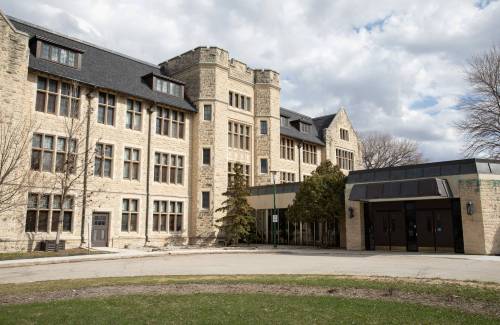
A growing need for spiritual care directors in Winnipeg hospitals and faith-based personal care homes has prompted the creation of a new program at Canadian Mennonite University.
The master of arts in spiritual care is being offered in collaboration with St. Boniface Hospital and Selkirk Mental Health Centre.
The need became evident during the COVID-19 pandemic, when half of 49 positions in the capital city became vacant due to retirements, said Kathleen Rempel Boschman, lead for spiritual care services at Winnipeg Regional Health Authority.
“It’s usually pretty stable,” she said of the workforce over her almost 30-year career in the field. “But we were faced with a lot of vacancies during that time.”
While WRHA received applications from people interested in becoming spiritual care directors in city hospitals and the 15 faith-based personal care homes that fundraise to employ people in those roles, most weren’t fully qualified.
“They did not meet the requirements,” she said, noting the WRHA follows standards set by the Canadian Association for Spiritual Care.
The shortage of qualified applicants was partly due to the lack of spaces in Winnipeg to study, Rempel Boschman said. Through the new two-year program at CMU, more people will be able to get the training they need.
“I’m super-excited for this,” she said of the potential of the new program and the importance of spiritual care. “People are not just about their diagnoses when they are ill. Spirituality is key to their well-being.”
Chenene Layne, who co-ordinates spiritual care education at St. Boniface Hospital, is one of two people with expertise and experience in the field who have been hired by CMU to teach in the new program.
“Spiritual care is important because people have a need for purpose and meaning in their lives,” she said. “When people face illness, these things especially come into question.”
Through the program, students will be trained to do a spiritual assessment with patients, helping to draw out the things that are spiritually meaningful to them.
This means “helping them in their belief or their unbelief,” she said, noting spiritual care is not about promoting one religion or another.
“Everyone wants to feel heard and listened to, they want to know their story counts.”
Nurses and doctors are so busy, they have little time to talk with patients and “spiritual care directors can take time,” she said.
Joining Layne in the program is Tim Frymire, who teaches spiritual care through the Selkirk Mental Health Centre.
“We’re in a unique situation in Manitoba, having more spiritual care positions than qualified applicants,” he said.
Frymire acknowledged while interest in organized religion is waning, “religion and spirituality are not the same thing… many people are still spiritual.”
The sense of spirituality is “intrinsic to who we are as human beings, especially true during a health crisis,” he said. “Then, interest in spirituality often increases.”
Spiritual care directors are part of the health-care team, contributing to health-care plans for patients and also “providing support to health-care workers” who are often overworked and stressed, Frymire added.
In the program, which is a mix of classroom and on-site learning, students will learn to “get their own biases out of the way” and “undo some unhelpful theology,” he said, such as citing trite scripture verses about God’s plans or believing there is only one name for God.
The program at CMU is for students of all faiths. “We want to give them a more expansive theology. That’s a big adjustment for some.”
The goal of spiritual care is to listen, Frymire said, “giving patients a chance to say what connects them spiritually.”
For Karl Koop, who teaches theology at the master’s level at CMU, the new spiritual care program fits well with the Winnipeg-based university’s mission.
“Our goal is to equip people to serve in the world, to make a contribution to society,” he said. “It’s another part of our larger vision of serving and helping people.”
Spiritual care studies are also offered in Manitoba at Providence University College and Seminary in Otterburne and through St. Boniface Hospital.
faith@freepress.mb.ca
The Free Press is committed to covering faith in Manitoba through our Religion in the News project. This reporting continues because readers like you step forward to fund it.
Donate now to support our reporting on religion.
Your donation is eligible for a charitable tax receipt.
BECOME A FAITH JOURNALISM SUPPORTER
Our newsroom depends on a growing audience of readers to power our journalism. If you are not a paid reader, please consider becoming a subscriber.
Our newsroom depends on its audience of readers to power our journalism. Thank you for your support.
The Free Press is committed to covering faith in Manitoba through our Religion in the News project. This reporting continues because readers like you step forward to fund it.
Donate now to support our reporting on religion.
Your donation is eligible for a charitable tax receipt.
BECOME A FAITH JOURNALISM SUPPORTER
Our newsroom depends on a growing audience of readers to power our journalism. If you are not a paid reader, please consider becoming a subscriber.
Our newsroom depends on its audience of readers to power our journalism. Thank you for your support.
Related Articles
Providence forced into cuts in wake of enrolment drop
Advertisement Advertise With Us
Advertisement Advertise With Us
The Free Press acknowledges the financial support it receives from members of the city’s faith community, which makes our coverage of religion possible.