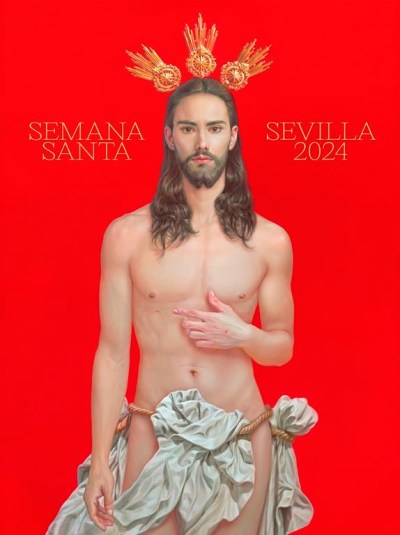
Too pretty? Easter poster depicting a handsome, fresh-faced Jesus prompts criticism in Spain
Advertisement
Read this article for free:
or
Already have an account? Log in here »
To continue reading, please subscribe:

Digital Subscription
One year of digital access for only $205*
- Enjoy unlimited reading on winnipegfreepress.com
- Read the E-Edition, our digital replica newspaper
- Access News Break, our award-winning app
- Play interactive puzzles
*First annual payment billed as $205.00 + GST for one year. This annual subscription will automatically renew at $233.00 + GST every 52 weeks (10% off the regular annual price of $259.35). Offer available to new and qualified returning subscribers only. Cancel any time.
To continue reading, please subscribe:
Add Free Press access to your Brandon Sun subscription for only an additional
$1 for the first 4 weeks*
- Enjoy unlimited reading on winnipegfreepress.com
- Read the E-Edition, our digital replica newspaper
- Access News Break, our award-winning app
- Play interactive puzzles
*Your next Brandon Sun subscription payment will increase by $1.00 and you will be charged $17.95 plus GST for four weeks. After four weeks, your payment will increase to $24.95 plus GST every four weeks.
Read unlimited articles for free today:
or
Already have an account? Log in here »
Hey there, time traveller!
This article was published 02/02/2024 (977 days ago), so information in it may no longer be current.
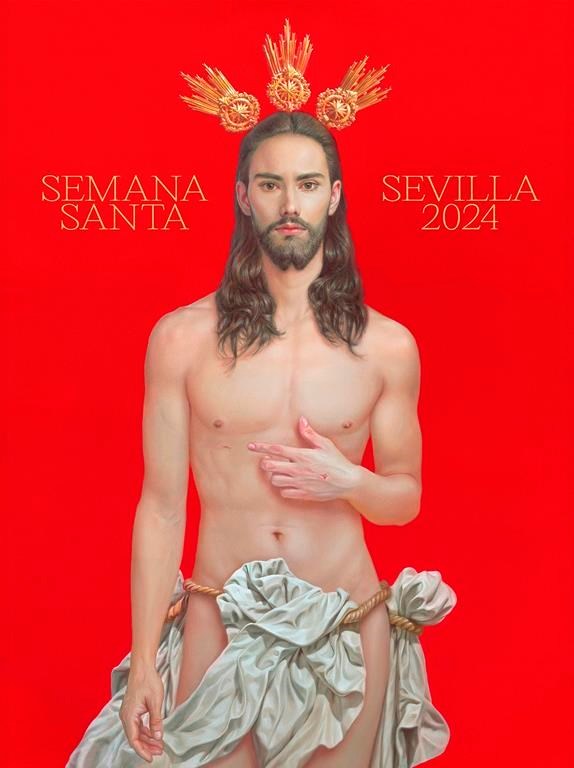
MADRID (AP) — A poster in the southern Spanish city of Seville that depicts a young, handsome Jesus wearing only a loincloth has unleashed a storm on social media, with some calling it an affront to the figure of Christ and others posting lewd remarks and memes poking fun at the image.
The poster by internationally recognized Seville artist Salustiano García Cruz shows a fresh-faced Jesus without a crown of thorns, no suffering face and minuscule wounds on the hands and ribcage. It was commissioned and approved by the General Council of Brotherhoods, which organizes the renowned and immensely popular Holy Week processions ahead of Easter in Seville.
As soon as it was unveiled last week criticism of it went viral on social media and a debate erupted over how a resurrected Christ should be depicted. Many called it a disgrace, inappropriate, too pretty, modernist and out of line with Seville’s Easter tradition.
Spain is predominantly Catholic and church traditions such as marriage, baptisms and religious parades are immensely popular both among believers and nonbelievers. A campaign on Change.org to have the poster of Jesus withdrawn was signed by some 14,000 people from around the country.
The artist, García, defended the work and dismissed the poster’s critics as old fashioned.
“There is nothing revolutionary in the painting, ” García told Atlas news agency. “There is contemporaneity, but all the elements that I have used are elements that have been used in the last seven centuries in sacred art.
“I don’t see at what point, at what element, people who don’t like it don’t like it,” he said.
In another interview published by El Mundo daily, Garcia responded to criticism from conservative groups that the depiction of Jesus was “effeminate” or “homoerotic.”
“A gay Christ because he looks sweet and is handsome, come on! We are in the 21st century,” García said.
The artist said he used his son, Horacio, as the model for the poster.

“It caught us a little more by surprise because everything was done with respect,” Horacio Garcia told Atlas.
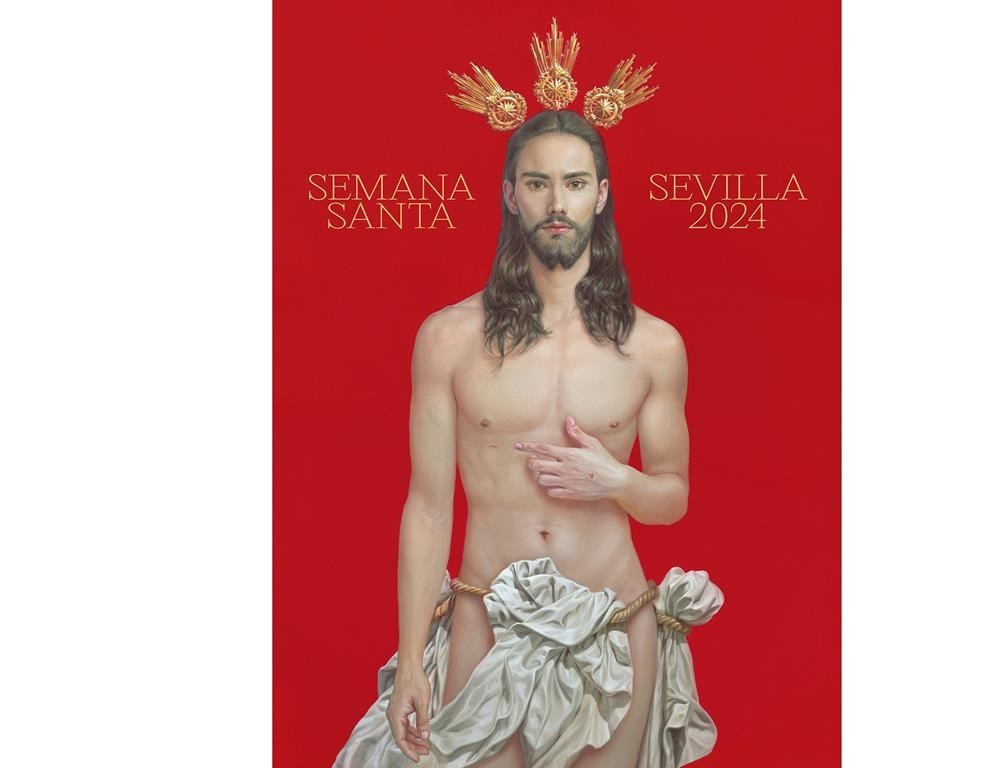
“A lot of controversy comes from the fact that the model is too good, the Christ too handsome, too attractive,” he said. But it hasn’t been all bad: Horacio Garcia said he also has received many compliments and good wishes from people.
The General Council of Brotherhoods has so far ignored calls to replace the poster before Holy Week at the end of March. In past years, some posters for different Catholic celebrations were withdrawn following criticism.
Seville Mayor José Luis Sanz labeled the controversy “artificial.”
“I like the poster,” he said, adding that not all Holy Week posters can be the same each year. “Some posters are riskier, some more classical, some are more daring.”
The Free Press acknowledges the financial support it receives from members of the city’s faith community, which makes our coverage of religion possible.