Belarus cracks down on clergy who supported protests of its authoritarian leader
Advertisement
Read this article for free:
or
Already have an account? Log in here »
To continue reading, please subscribe:

Digital Subscription
One year of digital access for only $205*
- Enjoy unlimited reading on winnipegfreepress.com
- Read the E-Edition, our digital replica newspaper
- Access News Break, our award-winning app
- Play interactive puzzles
*First annual payment billed as $205.00 + GST for one year. This annual subscription will automatically renew at $233.00 + GST every 52 weeks (10% off the regular annual price of $259.35). Offer available to new and qualified returning subscribers only. Cancel any time.
To continue reading, please subscribe:
Add Free Press access to your Brandon Sun subscription for only an additional
$1 for the first 4 weeks*
- Enjoy unlimited reading on winnipegfreepress.com
- Read the E-Edition, our digital replica newspaper
- Access News Break, our award-winning app
- Play interactive puzzles
*Your next Brandon Sun subscription payment will increase by $1.00 and you will be charged $17.95 plus GST for four weeks. After four weeks, your payment will increase to $24.95 plus GST every four weeks.
Read unlimited articles for free today:
or
Already have an account? Log in here »
Hey there, time traveller!
This article was published 22/02/2024 (951 days ago), so information in it may no longer be current.
TALLINN, Estonia (AP) — The Rev. Viachaslau Barok was a familiar face in Rasony, a town in northern Belarus near the Russian border, overseeing construction of its Roman Catholic church and celebrating Mass daily for two decades.
He got into trouble in December 2020, the height of anti-government demonstrations, when he posted a caricature of authoritarian President Alexander Lukashenko and another official on social media. He spent 10 days in jail.
When security services raided his church in July 2021, however, he knew it was time to leave the country.
Barok is among dozens of clergy — Catholic, Orthodox and Protestant — who have been jailed, silenced or forced into exile for protesting the 2020 election that gave Lukashenko a sixth term. That disputed vote triggered mass demonstrations, beatings of protesters and a crackdown on dissent — tensions that increased in 2022, when Belarus ally Russia invaded Ukraine.
The pro-Kremlin Lukashenko, who lashed out against any church officials siding with the protesters, last month signed into law a measure requiring all religious organizations in the country of 9.5 million to reregister with authorities or face being outlawed if their loyalty to the state is in doubt.
Anastasiia Kruope, a Human Rights Watch researcher for Europe and Central Asia, said the law gives authorities “more tools and possibilities for repressions.”
In the last three years, at least 74 clergy have been arrested, fined or deported, according to the Viasna human rights center, even before the new law took effect.
“It’s clear that the number of priests subject to repression will grow, (as the government tries) to force the church’s loyalty,” Barok told The Associated Press. “The authorities want to demonstrate to the Vatican their unlimited power within Belarus.”
The media-savvy priest had over 7,000 followers on YouTube before he was visited by security operatives who had a search warrant, and he chose exile in Poland over arrest.
Thousands have fled Belarus since 2020 as police detained more than 35,000 people. Scores have been labeled extremists, and Viasna said there are over 1,400 political prisoners.
While Orthodox Christians make up about 80% of the population, just under 14% are Catholic and 2% are Protestants.
Catholic and Protestant clergy who supported the protests and sheltered demonstrators at their churches became targets of repression, but even some Orthodox priests condemned the crackdown.
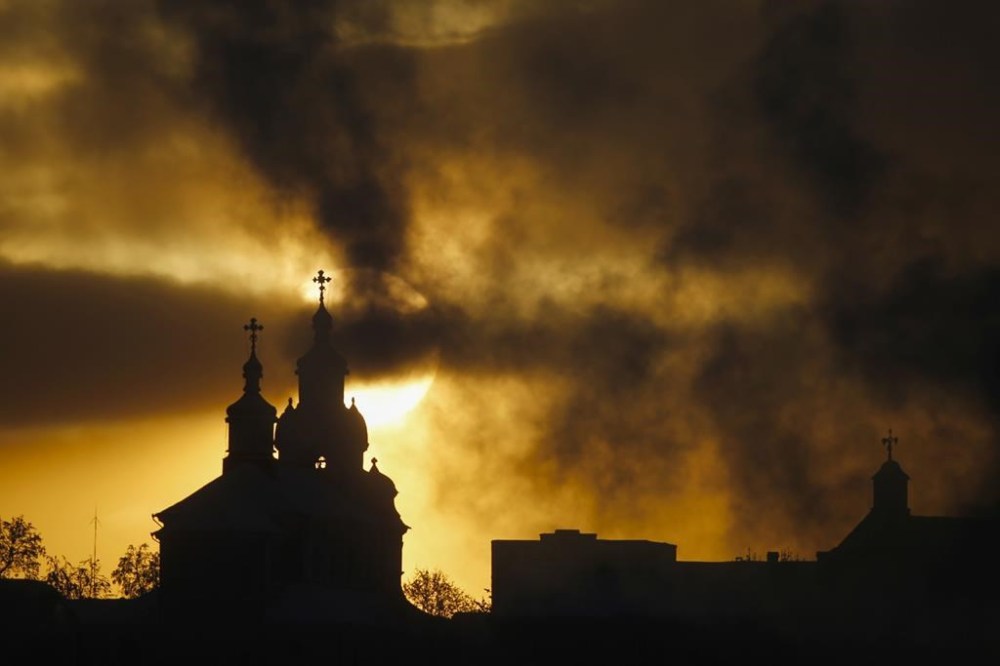
In a famous incident amid the protests on Aug. 26, 2020, about 100 people took refuge from police in the landmark Sts. Simon and Helena Catholic Church, a red-brick structure just off the main government square in Minsk. Weeks later, the church again became the focus when dozens of women dressed in white joined its senior priest, the Rev. Uladislau Zavalnyuk, in forming a human chain around it.
But the “Red Church,” as it is known, has held no services since September 2022, when it was ordered closed. Authorities cited unpaid utility bills and the need for repairs after a minor fire that month, even though its priests say there was little damage.
Lukashenko, who has ruled Belarus for nearly 30 years and describes himself as an “Orthodox atheist,” lashed out at dissident clergy during the 2020 protests, urging them to “do their jobs,” and not fuel unrest. “People should go to churches to pray! Orthodox churches, Catholic churches — they’re not for politics,” he said.
Ten Catholic priests were arrested last year, including the Rev. Henrykh Akalatovich, a 70-year-old who is in solitary confinement despite a cancer diagnosis, facing 20 years on treason charges.
A report last year by Aid to the Church in Need, a Catholic organization tracking persecution of the faithful, named Belarus as the second-largest jailer of Catholic priests, behind only Nicaragua.
The crackdown also affected the Belarusian Orthodox Church, which is subordinate to Moscow’s Patriarch Kirill, a close Kremlin ally. A prominent cleric, Archbishop Artemy Kishchenko, of Hrodna in western Belarus, was stripped of all church posts and forced to retire in 2021 for condemning the repression as well as attempts by Moscow and Minsk to use the church as a political tool.
Russia’s Feb. 24, 2022, invasion of Ukraine prompted further clerical splits after Lukashenko allowed Belarusian territory to be used to send troops into its neighbor.
Days afterward, Archpriest Georgy Roy and 24 Belarusian Orthodox priests, alongside counterparts from Russia and elsewhere, called for a cease-fire. Anti-war statements by Roy, who presided at Hrodna’s main Orthodox cathedral and lectured at a prestigious seminary, came under fire from church and secular leaders.
Last year, he fled the country with his wife and four children, citing fears for their safety. He now ministers to Belarusians in Vilnius, the Lithuanian capital, and pledges allegiance to the Orthodox patriarch in Turkey, rather than Russia.
In an interview with AP, Roy accused the Orthodox church in Russia and Belarus of legitimizing what he described as Moscow’s aggressive expansionist ideology.
“The name of Christ is called on to justify war, bloodshed, violence and untruths,” he said, adding that Russian Orthodox leaders “serve that ideology, but I cannot reconcile myself to this horror and live in this sin.”
He said Belarusian authorities openly seek to bring the clergy into line, repeatedly summoning them for “preventive” political talks, checking websites and social media, and having security services monitor sermons.
The government lists 3,417 registered religious communities and organizations in Belarus; membership in unregistered ones was made a criminal offense in 2022, punishable by up to two years in jail.
The new law, which gives the government broad powers over religious denominations and groups, requires them to reapply for state registration and says they must have had at least one parish operating for 30 years.
The law also bars anyone accused of what Minsk deems extremist or terrorist activity from heading a religious organization. It prohibits any secular symbols at services or using churches for any purpose other than worship.
Alexander Rumak, commissioner for Religious and Ethnic Affairs, told the Belarusian Security Council in September that authorities must ensure “the spiritual security” of society, as a way of “maintaining stability and calm in the country.”
Analysts say the restrictions are part of a broader campaign to quash dissent ahead of parliamentary elections, being held Sunday, as well as next year’s presidential vote.
The United Nations sent a letter to the government objecting to the law, saying it violates the country’s obligations to ensure religious freedom, but it got no response, said Anaïs Marin, the U.N. special rapporteur on Belarus.
Marin told AP the law would allow authorities “to simply destroy” the remnants of civil society that “are not yet underground, not in prison or exile.”
The Rev. Zmitser Khvedaruk called the law “the most repressive in Europe,” expressing concern that his and other Protestant churches will be the main targets, given their popularity among younger Belarusians.

He told AP that many Protestant churches already face a difficult choice — “either cease their activities or return to the dark Soviet times, when Protestant churches in fact operated underground and gathered illegally in people’s homes, (when) believers prayed under the threat of criminal prosecution.”
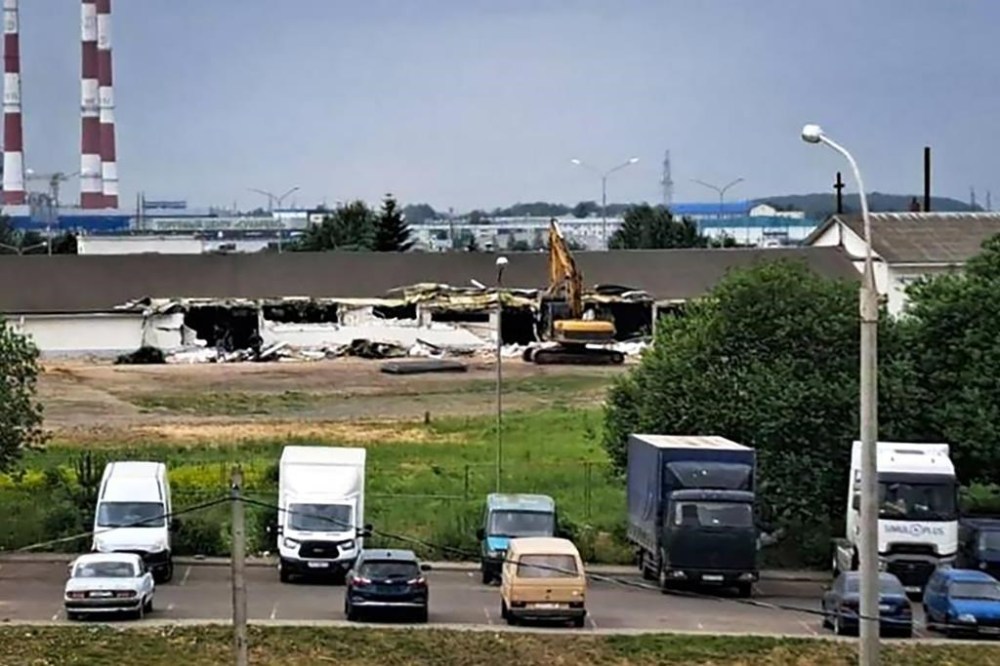
Last year, authorities bulldozed the Pentecostal New Life Church on Minsk’s outskirts because they suspected its congregation supported the opposition. Founded in 2002 in a converted cowshed, its pastor, the Rev. Viachaslau Hancharenka, was fined and detained after officials said its social media platforms carried “extremist” content.
The U.S. Commission on International Religious Freedom last month condemned what it called Minsk’s repressive course, urging President Joe Biden and Congress to “prioritize religious freedom” as it holds Belarus accountable “for its gross human rights violations.”
Human rights campaigners say clergy and their flocks are under threat for raising funds and helping political prisoners. Barok — the priest who fled to Poland — discovered that because authorities deem his social media posts to be “extremist,” anyone viewing or reposting them faces six years in jail.
“I dream of returning to my church in Rasony,” Barok said. “But I can’t while the state arrests priests for carrying their cross and calling evil ‘evil.’”
The Free Press acknowledges the financial support it receives from members of the city’s faith community, which makes our coverage of religion possible.