Indigenous wisdom could help build interfaith relations

Advertisement
Read this article for free:
or
Already have an account? Log in here »
To continue reading, please subscribe:

Digital Subscription
One year of digital access for only $205*
- Enjoy unlimited reading on winnipegfreepress.com
- Read the E-Edition, our digital replica newspaper
- Access News Break, our award-winning app
- Play interactive puzzles
*First annual payment billed as $205.00 + GST for one year. This annual subscription will automatically renew at $233.00 + GST every 52 weeks (10% off the regular annual price of $259.35). Offer available to new and qualified returning subscribers only. Cancel any time.
To continue reading, please subscribe:
Add Free Press access to your Brandon Sun subscription for only an additional
$1 for the first 4 weeks*
- Enjoy unlimited reading on winnipegfreepress.com
- Read the E-Edition, our digital replica newspaper
- Access News Break, our award-winning app
- Play interactive puzzles
*Your next Brandon Sun subscription payment will increase by $1.00 and you will be charged $17.95 plus GST for four weeks. After four weeks, your payment will increase to $24.95 plus GST every four weeks.
Read unlimited articles for free today:
or
Already have an account? Log in here »
Hey there, time traveller!
This article was published 09/03/2024 (922 days ago), so information in it may no longer be current.
Could Indigenous people help the interfaith community build bridges and heal relations following the Oct. 7 Hamas attack on Israel and the subsequent war in Gaza?
That’s the question Loraine MacKenzie Shepherd, a former minister at the Augustine and Westworth United churches here in Winnipeg, asked on Feb. 6 when she received the Lieutenant Governor’s Award for the Advancement of Interreligious Understanding.
Noting that efforts to date to build bridges, hold gatherings and have conversations between faith groups about the attack and the war have been unsuccessful, MacKenzie Shepherd wondered if there might be a new way to deal with the situation.
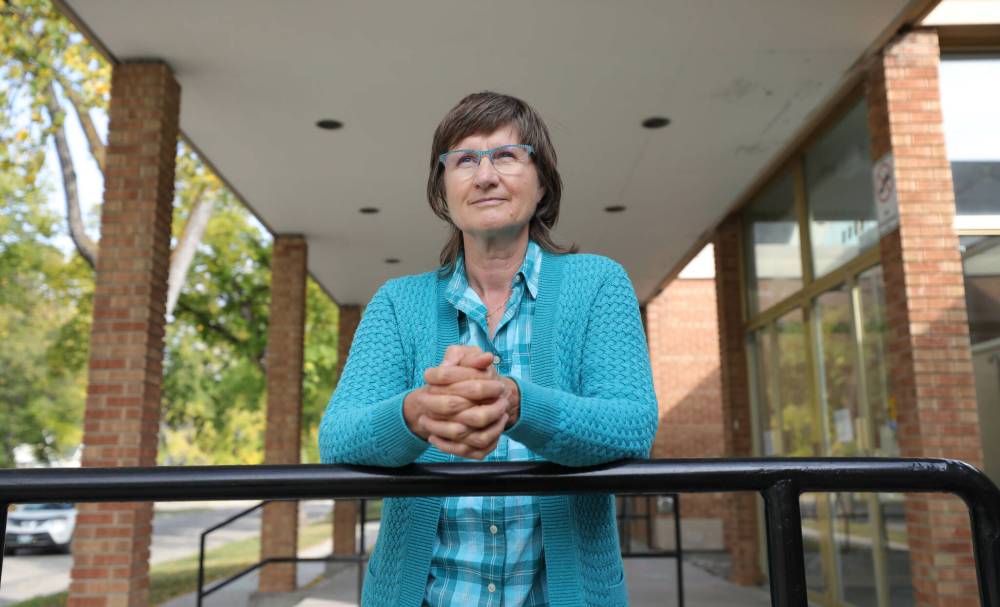
Perhaps, she wondered, it’s time to invite Indigenous people, with their traditions of healing and reconciliation, to “help us sit in the fire and have difficult conversations,” as she put it, adding it might be “a third way out of our current impasse that deters interfaith gatherings.”
That idea intrigued me. Could Indigenous people offer a way out of the current impasse? I reached out to Stan McKay, an elder and knowledge keeper at Fisher River Cree Nation, to see what he thought about the idea.
For starters, McKay was pleased simply to have been asked the question. “We usually aren’t asked to contribute to solving some of the world’s problems,” he said. “Instead, we are often seen as the problem.”
If asked to help faith communities navigate this challenging time, McKay said he thought Indigenous people would be open to being “part of sharing ideas and possibilities.”
At the same time, he added, they would do it only if invited, and then with caution and humility. Indigenous people, he explained, “know only too well what it is like to be aggressively imposed upon.”
As for how they could help, it could be a series of circle meetings where various perspectives are shared in a way that “allows for conversation,” McKay said, noting that Indigenous people “understand there are many truths … it’s a mistake to think all truth is only in one culture or way of life.”
The circle meetings would not be opportunities for making statements and presenting research, as happens in many other settings, he said. Instead, it would be a time to share stories. “We are a people of story,” he said of Indigenous people, adding “everyone has a story, and needs a safe place to tell it.”
Also important would be taking time, not rushing things, McKay said. “It takes time to build consensus, to hear each story, to build community,” he said.
And what if, after sharing, a decision about how to proceed can’t be reached? That happens, McKay said, adding that agreement “can’t be forced. People, and the health of the community, is more important than making a decision.”
If people are willing to give time and effort to rebuild interfaith relations, then reaching out to Indigenous people “is worth exploring,” he concluded.
Listening to MacKenzie Shepherd and McKay reflect on the possibilities of Indigenous involvement in healing interfaith relations brought to mind something John Ralston Saul wrote in A Fair Country: Telling Truths About Canada. In the book, he talked about how Canada is what he called a Métis nation, heavily influenced and shaped by Indigenous ideas of egalitarianism, of a proper balance between individual and group, and of a penchant for negotiation over violence.

But over the past centuries, he said, non-Indigenous Canadians forgot the wisdom offered by their Indigenous neighbours. Instead, non-Indigenous Canadians came to believe that they, and they alone, had all the answers, cutting themselves off from a valuable source of information for how to thrive in this country.
If Canada is to be successful as a nation, Ralston Saul wrote, we need to reconnect with that original Indigenous wisdom and work together to succeed in this fair land.
If that’s true for Canada at large, perhaps it is also true for interfaith relations at this challenging time. Indigenous people may have much to offer when it comes to finding ways to share stories, hear each other and create space for difficult conversations. Perhaps they can help heal the divisions and polarization that has come between groups.
Considering the impasse facing interfaith relations not only in Manitoba today, but across Canada, maybe it’s an option that should be explored.
faith@freepress.mb.ca
The Free Press is committed to covering faith in Manitoba through our Religion in the News project. This reporting continues because readers like you step forward to fund it.
Donate now to support our reporting on religion.
Your donation is eligible for a charitable tax receipt.
BECOME A FAITH JOURNALISM SUPPORTER
Our newsroom depends on a growing audience of readers to power our journalism. If you are not a paid reader, please consider becoming a subscriber.
Our newsroom depends on its audience of readers to power our journalism. Thank you for your support.
The Free Press is committed to covering faith in Manitoba through our Religion in the News project. This reporting continues because readers like you step forward to fund it.
Donate now to support our reporting on religion.
Your donation is eligible for a charitable tax receipt.
BECOME A FAITH JOURNALISM SUPPORTER
Our newsroom depends on a growing audience of readers to power our journalism. If you are not a paid reader, please consider becoming a subscriber.
Our newsroom depends on its audience of readers to power our journalism. Thank you for your support.
Advertisement Advertise With Us
Advertisement Advertise With Us
The Free Press acknowledges the financial support it receives from members of the city’s faith community, which makes our coverage of religion possible.