‘A step back in time’: America’s Catholic Church sees an immense shift toward the old ways
Advertisement
Read this article for free:
or
Already have an account? Log in here »
To continue reading, please subscribe:

Digital Subscription
One year of digital access for only $205*
- Enjoy unlimited reading on winnipegfreepress.com
- Read the E-Edition, our digital replica newspaper
- Access News Break, our award-winning app
- Play interactive puzzles
*First annual payment billed as $205.00 + GST for one year. This annual subscription will automatically renew at $233.00 + GST every 52 weeks (10% off the regular annual price of $259.35). Offer available to new and qualified returning subscribers only. Cancel any time.
To continue reading, please subscribe:
Add Free Press access to your Brandon Sun subscription for only an additional
$1 for the first 4 weeks*
- Enjoy unlimited reading on winnipegfreepress.com
- Read the E-Edition, our digital replica newspaper
- Access News Break, our award-winning app
- Play interactive puzzles
*Your next Brandon Sun subscription payment will increase by $1.00 and you will be charged $17.95 plus GST for four weeks. After four weeks, your payment will increase to $24.95 plus GST every four weeks.
Read unlimited articles for free today:
or
Already have an account? Log in here »
Hey there, time traveller!
This article was published 30/04/2024 (887 days ago), so information in it may no longer be current.
MADISON, Wis. (AP) — It was the music that changed first. Or maybe that’s just when many people at the pale brick Catholic church in the quiet Wisconsin neighborhood finally began to realize what was happening.
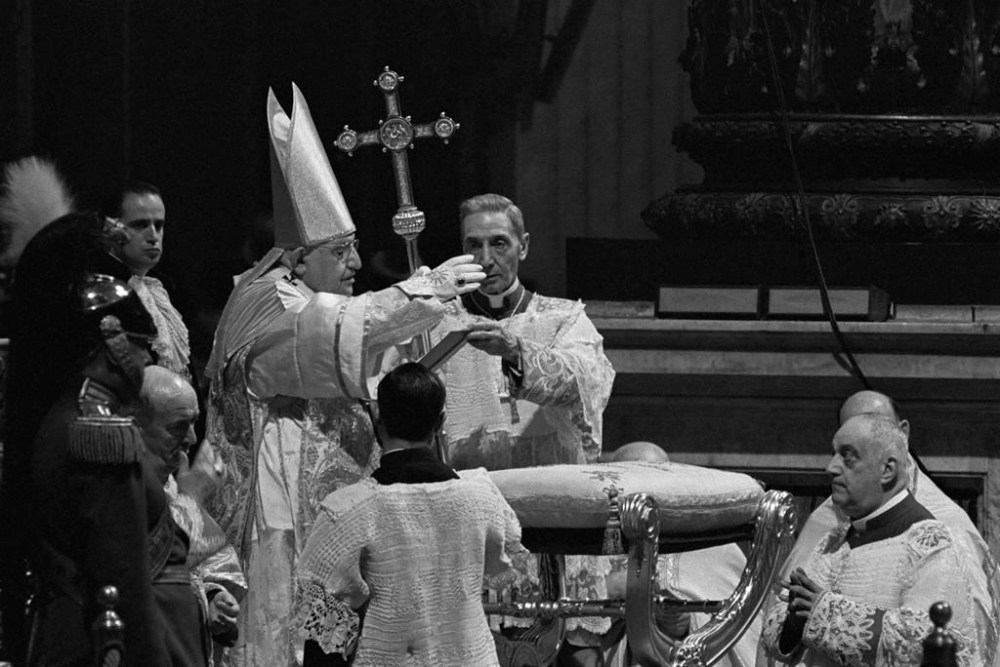
The choir director, a fixture at St. Maria Goretti for nearly 40 years, was suddenly gone. Contemporary hymns were replaced by music rooted in medieval Europe.
So much was changing. Sermons were focusing more on sin and confession. Priests were rarely seen without cassocks. Altar girls, for a time, were banned.
At the parish elementary school, students began hearing about abortion and hell.
“It was like a step back in time,” said one former parishioner, still so dazed by the tumultuous changes that began in 2021 with a new pastor that he only spoke on condition of anonymity.
It’s not just St. Maria Goretti.
Across the U.S., the Catholic Church is undergoing an immense shift. Generations of Catholics who embraced the modernizing tide sparked in the 1960s by Vatican II are increasingly giving way to religious conservatives who believe the church has been twisted by change, with the promise of eternal salvation replaced by guitar Masses, parish food pantries and casual indifference to church doctrine.
The shift, molded by plummeting church attendance, increasingly traditional priests and growing numbers of young Catholics searching for more orthodoxy, has reshaped parishes across the country, leaving them sometimes at odds with Pope Francis and much of the Catholic world.
The changes are not happening everywhere. There are still plenty of liberal parishes, plenty that see themselves as middle-of-the-road. Despite their growing influence, conservative Catholics remain a minority.
Yet the changes they have brought are impossible to miss.
The progressive priests who dominated the U.S. church in the years after Vatican II are now in their 70s and 80s. Many are retired. Some are dead. Younger priests, surveys show, are far more conservative.
“They say they’re trying to restore what us old guys ruined,” said the Rev. John Forliti, 87, a retired Twin Cities priest who fought for civil rights and reforms in Catholic school sex education.
Doug Koesel, an outspoken 72-year-old priest at Blessed Trinity Parish in Cleveland, was blunter: “They’re just waiting for us to die.”
At St. Maria Goretti, once steeped in the ethos of Vatican II, many parishioners saw the changes as a requiem.
“I don’t want my daughter to be Catholic,” said Christine Hammond, whose family left the parish when the new outlook spilled into the church’s school and her daughter’s classroom. “Not if this is the Roman Catholic Church that is coming.”
But this is not a simple story. Because there are many who welcome this new, old church.
They often stand out in the pews, with the men in ties and the women sometimes with the lace head coverings that all but disappeared from American churches more than 50 years ago. Often, at least a couple families will arrive with four, five or even more children, signaling their adherence to the church’s ban on contraception, which most American Catholics have long casually ignored.
They attend confession regularly and adhere strictly to church teachings. Many yearn for Masses that echo with medieval traditions – more Latin, more incense more Gregorian chants.
“We want this ethereal experience that is different from everything else in our lives,” said Ben Rouleau, who until recently led St. Maria Goretti’s young adult group, which saw membership skyrocket even as the parish shrank amid the turmoil.
They are, Rouleau said, happily out of touch with a liberal city like Madison.
“It’s radical in some ways,” Rouleau said. “We’re returning to the roots of the church.”
____
If this movement emerged from anywhere, it might be a now-demolished Denver football stadium and a borrowed military helicopter carrying in Pope John Paul II.
Some 500,000 people descended on Denver in 1993 for the Catholic festival World Youth Day. When the pope’s helicopter landed just outside Mile High Stadium, the ground shook from the stomping.
The pope, whose grandfatherly appearance belied an electric charisma, and who was beloved both for his kindness and his sternness, confronted an American church shaped by three decades of progressive change.
If the church is often best known to non-Catholics for its opposition to abortion, it had grown increasingly liberal since Vatican II. Birth control was quietly accepted in many parishes, and confession barely mentioned. Catholic social teaching on poverty suffused churches. Most priests traded in their cassocks for plain black shirts with Roman collars. Incense and Latin became increasingly rare.
On some issues, John Paul II agreed with these liberal-minded Catholics. He spoke against capital punishment and pushed for workers’ rights. He preached relentlessly about forgiveness – “the oxygen that purifies the air of hatred.” He forgave his own would-be assassin.
But he was also uncompromising on dogma, warning about change and cracking down on liberal theologians. He urged a return to forgotten rituals.
Catholics “are in danger of losing their faith,” he told crowds at the final Denver Mass, decrying abortion, drug abuse, and what he called “sexual disorders,” a barely veiled reference to growing acceptance of gay rights.
Across the nation, fervent young Catholics listened.
Newman Centers, which serve Catholic university students, became increasingly popular. So did FOCUS, a traditionalist organization working on American college campuses. Conservative Catholic media grew, particularly the cable TV network EWTN, a prominent voice for increased orthodoxy.
Today, conservative Catholic America has its own constellation of online celebrities aimed at young people. There’s Sister Miriam James, an ever-smiling nun in full habit who talks openly about her hard-partying college days. There’s Jackie Francois Angel, who speaks in shockingly frank detail about sex, marriage and Catholicism. There’s Mike Schmitz, a movie-star handsome Minnesota priest who exudes kindness while insisting on doctrine.
Even today, surveys show most American Catholics are far from orthodox. Most support abortion rights. The vast majority use birth control.
But increasingly, those Catholics are not in church.
In 1970, more than half of America’s Catholics said they went to Mass at least once a week. By 2022, that had fallen to 17%, according to CARA, a research center affiliated with Georgetown University. Among millennials, the number is just 9%.
Even as the U.S. Catholic population has jumped to more than 70 million, driven in part by immigration from Latin America, ever-fewer Catholics are involved in the church’s most important rites. Infant baptisms have fallen from 1.2 million in 1965 to 440,000 in 2021, CARA says. Catholic marriages have dropped by well over two-thirds.
The shrinking numbers mean that those who remain in the church have outsized influence compared with the overall Catholic population.
On the national level, conservatives increasingly dominate the U.S. Catholic Bishops Conference and the Catholic intellectual world. They include everyone from the philanthropist founder of Domino’s Pizza to six of the nine U.S. Supreme Court justices.
Then there’s the priesthood.
Young priests driven by liberal politics and progressive theology, so common in the 1960s and 70s, have “all but vanished,” said a 2023 report from The Catholic Project at Catholic University, based on a survey of more than 3,500 priests.
Today’s young priests are far more likely to believe that the church changed too much after Vatican II, tangling itself up in America’s rapidly shifting views on everything from women’s roles to LGBTQ people.
“There really aren’t very many liberals in the seminaries anymore,” said a young, recently ordained Midwestern priest. He spoke on condition of anonymity because of the turmoil that engulfed his parish after he began pressing for more orthodox services. “They wouldn’t feel comfortable.”
—–
Sometimes, the shift toward orthodoxy happens slowly. Maybe there’s a little more Latin sprinkled into Mass, or an occasional reminder to go to confession. Maybe guitars are relegated to Saturday evening services, or dropped completely.
And sometimes the changes come like a whirlwind, dividing parishes between those thirsting for a more reverent Catholicism and those who feel their spiritual home has been taken from them.
“You’d leave Mass thinking, ‘Holy cow! What just happened?’” said another ex-parishioner at St. Maria Goretti, whose family eventually left the church, describing the 2021 promotion of a new pastor, and a sudden focus on sin and confession.
Like many former parishioners, he spoke only on condition of anonymity, worried about upsetting friends still at the church. Diocesan clergy did not respond to requests for interviews.
“I’m a lifelong Catholic. I grew up going to church every Sunday,” he said. “But I’d never seen anything like this.”
The new outlook has spilled across America.
In churches from Minnesota to California, parishioners have protested changes introduced by new conservative priests. In Cincinnati, it came when the new priest abandoned gospel music and African drumming. In small-town North Carolina, it was an intense focus on Latin. In east Texas, it was a right-wing bishop forced out by the Vatican after accusing Pope Francis of undermining church teachings.
Each can seem like one more skirmish in the cultural and political battles tearing at America.
But the movement, whether called conservative or orthodox or traditionalist or authentic, can be hard to define.
It ranges from Catholics who want more incense, to Latin Mass adherents who have brought back ancient prayers that mention “the perfidious Jew.” There are right-wing survivalists, celebrity exorcists, environmentalists and a handful of quasi-socialists.
There’s the Catholic news outlet railing against the Vatican’s “wicked entourage,” and the small-town Wisconsin priest who traces COVID-19 to a century-old prophecy and warns of looming dictatorship. There’s the recent “Catholic Prayer for Trump,” a $1,000-a-plate dinner at the former president’s Mar-a-Lago resort, featuring a string of conspiracy theorists.
Yet the orthodox movement can also seem like a tangle of forgiveness and rigidity, where insistence on mercy and kindness mingle with warnings of eternity in hell.
Looming over the American divide is PopeFrancis, who has pushed the global church to be more inclusive, even as he toes the line on mostdogma.
The orthodox movement has watched him nervously from the first days of his papacy, angered by his more liberal views on issues like gay relationships and divorce. Some reject him entirely.
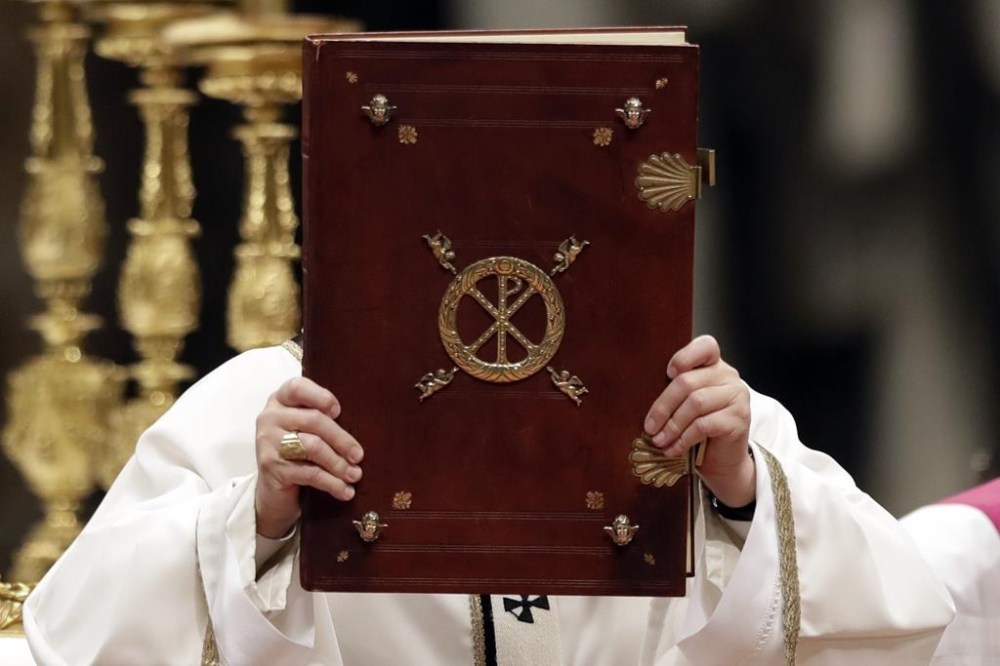
And the pope clearly worriesabout America.
The U.S. church has “a very strong reactionary attitude,” he told a group of Jesuits last year. “Being backward-looking is useless.”
____
You can find this new vision of Catholic America at Latin Masses in Milwaukee, the pews crowded with worshippers even at noon on a weekday. It’s in conferences held in California wine country, at reinvigorated parishes in Tennessee and prayer groups in Washington, D.C.
And it’s at a little Kansas college built high on a bluff above the Missouri River.
At first glance, nothing seems unusual about Benedictine College.
Students worry about unfinished essays and the complexities of dating. They wear cutoff shorts on warm autumn afternoons. Football is huge. The cafeteria food is mediocre.
But look deeper.
Because at Benedictine, Catholic teaching on contraception can slip into lessons on Plato, and no one is surprised if you volunteer for 3 a.m. prayers. Pornography, pre-marital sex and sunbathing in swimsuits are forbidden.
If these rules seem like precepts of a bygone age, that hasn’t stopped students from flocking to Benedictine and other conservative Catholic colleges.
At a time when U.S. college enrollment is shrinking, Benedictine’s expansion over the last 15 years has included four new residence halls, a new dining hall and an academic center. An immense new library is being built. The roar of construction equipment never seems to stop.
Enrollment, now about 2,200, has doubled in 20 years.
Students, many of whom grew up in conservative Catholic families, jokingly call it “the Benedictine bubble.” And it might be a window into the future of the Catholic Church in America.
In a deeply secular America, where an ever-churning culture provides few absolute answers, Benedictine offers the reassurance of clarity.
“We don’t all agree on everything, obviously,” said John Welte, a senior majoring in economics and philosophy. “But I would say everyone has an understanding of, like, truth.”
“There are certain things you can just know in your mind: This is right, and this is wrong.”
Sometimes, people here quietly admit, it goes too far. Like the students who loudly proclaim how often they go to Mass, or the young man who quit his classics course because he refused to read the works of ancient Greek pagans.
Very often, talk here echoes the 13th-century writings of St. Thomas Aquinas, who believed God could be found in truth, goodness and beauty. Sometimes, they say, that means finding God in strict tenets about sexuality. Sometimes in the haunting beauty of Gregorian chants.
“It’s a renewal of, like, some really, really good things that we might have lost,” said Madeline Hays, a pensive 22-year-old senior biology major.
She takes the church’s rules seriously, from pre-marital sex to confession. She can’t stand modern church architecture. She’s seriously considering becoming a nun.
But she also worries about poverty and America’s wastefulness and the way Americans –including herself – can find themselves slotted into the political divide without even knowing it.
She wrestles with her belief in an unerring Catholic doctrine that can see good people, including some of her own friends, as sinners.
Yet she doesn’t want change.
“The church wouldn’t be the church if it changed things it had set down as, ‘This is infallible doctrine and this will not change through the ages,’” she said.
They understand that in Benedictine’s small, mostly closeted gay community. Like the young man, once deeply religious, who suffers in silence as people on campus casually throw around anti-gay slurs.
He’s thought many times of leaving, but generous financial aid keeps him here. And after many years, he’s accepted his sexuality.
He’s seen the joy that people can get from Benedictine, how some will move back to Atchison after graduation, just to stay close.
But not him.
“I don’t think I’ll come back to Atchison – not ever.”
_____
For decades, the pews at St. Maria Goretti were filled with the families of plumbers, engineers and professors from the University of Wisconsin, just a couple miles up the road. The church is a well-kept island of Catholicism tucked into the leafy residential streets of one of America’s most liberal cities.
Like so many other parishes, it had been shaped by the ideals of the 1960s and 1970s. Poverty and social justice became tightly interwoven with sermons and parish life. Gay people felt welcome. Some of the church’s moral absolutes, like the contraception ban, became forgotten dogma.
Change arrived in 2003 with a new bishop, Robert C. Morlino, an outspoken conservative. Many liberals remember him as the man who lambasted the message of acceptance in the modern hymn, “All Are Welcome.”
His successor, Bishop Donald J. Hying, steers clear of public battles. But in many ways, he quietly carries on Morlino’s legacy, warning about “the tangled thinking of Modernism.”
In 2021, Hying named the Rev. Scott Emerson, a onetime top Morlino aide, as pastor of the Madison church.
Parishioners watched – some pleased, some uneasily – as their spiritual home was remodeled.
There was more incense, more Latin, more talk of sin and confession.
Emerson’s sermons are not all fire-and-brimstone. He speaks often about forgiveness and compassion. But his tone shocked many longtime parishioners.
Protection is needed, he said in a 2023 service, from “the spiritual corruption of worldly vices.” He has warned against critics – “the atheists, journalists, politicians, the fallen-away Catholics” – he said were undermining the church.
For some, Emerson’s changes were welcome.
“A lot of us were like, ’Hey, more confession! Sweet!” said Rouleau, who ran the parish young adult group. “Better music!”
But the parish – which in mid-2023 became part of a two-church “pastorate” amid a diocese-wide restructuring – was shrinking fast.
For decades, many traditional Catholics have wondered if the church would – and perhaps should – shrink to a smaller but more faithful core.
In ways, that’s how St. Maria Goretti looks today. The 6:30 a.m. Friday Mass, Rouleau says, is increasingly popular among young people. But once-packed Sunday Masses now have empty pews. Donations are down. School enrollment plunged.
Some who left have gone to more liberal parishes. Some joined Protestant churches. Some abandoned religion entirely.
“I’m not a Catholic anymore,” said Hammond, the woman who left when the church’s school began to change. “Not even a little bit.”

But Emerson insists the Catholic Church’s critics will be proven wrong.
“How many have laughed at the church, announcing that she was passe, that her days were over and that they would bury her?” he said in a 2021 Mass.
“The church,” he said, “has buried every one of her undertakers.”
___
Associated Press journalist Jessie Wardarski contributed to this report.
The Free Press acknowledges the financial support it receives from members of the city’s faith community, which makes our coverage of religion possible.