Quebec teachers should be evaluated every two years, new plan says after Bedford saga

Advertisement

Advertise with us

MONTREAL - Quebec teachers should be evaluated every two years, according to new recommendations that stem from a controversy at a Montreal elementary school in which teachers allegedly used physical and psychological violence on students and staff.

Read this article for free:


or

Already have an account? Log in here »

To continue reading, please subscribe:

Subscribe and receive a limited-edition Free Press branded hat or tote.

Digital Subscription

One year of digital access for only $205*

  • Enjoy unlimited reading on winnipegfreepress.com
  • Read the E-Edition, our digital replica newspaper
  • Access News Break, our award-winning app
  • Play interactive puzzles

*First annual payment billed as $205.00 + GST for one year. This annual subscription will automatically renew at $233.00 + GST every 52 weeks (10% off the regular annual price of $259.35). Offer available to new and qualified returning subscribers only. Cancel any time.

To continue reading, please subscribe:

Add Free Press access to your Brandon Sun subscription for only an additional

$1 for the first 4 weeks*

  • Enjoy unlimited reading on winnipegfreepress.com
  • Read the E-Edition, our digital replica newspaper
  • Access News Break, our award-winning app
  • Play interactive puzzles
Start now

*Your next Brandon Sun subscription payment will increase by $1.00 and you will be charged $17.95 plus GST for four weeks. After four weeks, your payment will increase to $24.95 plus GST every four weeks.

Hey there, time traveller!
This article was published 14/02/2025 (603 days ago), so information in it may no longer be current.

MONTREAL – Quebec teachers should be evaluated every two years, according to new recommendations that stem from a controversy at a Montreal elementary school in which teachers allegedly used physical and psychological violence on students and staff.

The government should also consider mandating the use of French in schools wherever students are present, and banning all religious activities in schools, including after hours, says a plan released Friday by two independent advisers appointed by the province. 

The recommendations come in the wake of a government report released last October that revealed a group of teachers, many of North African descent, had imposed autocratic rule at Bedford school.
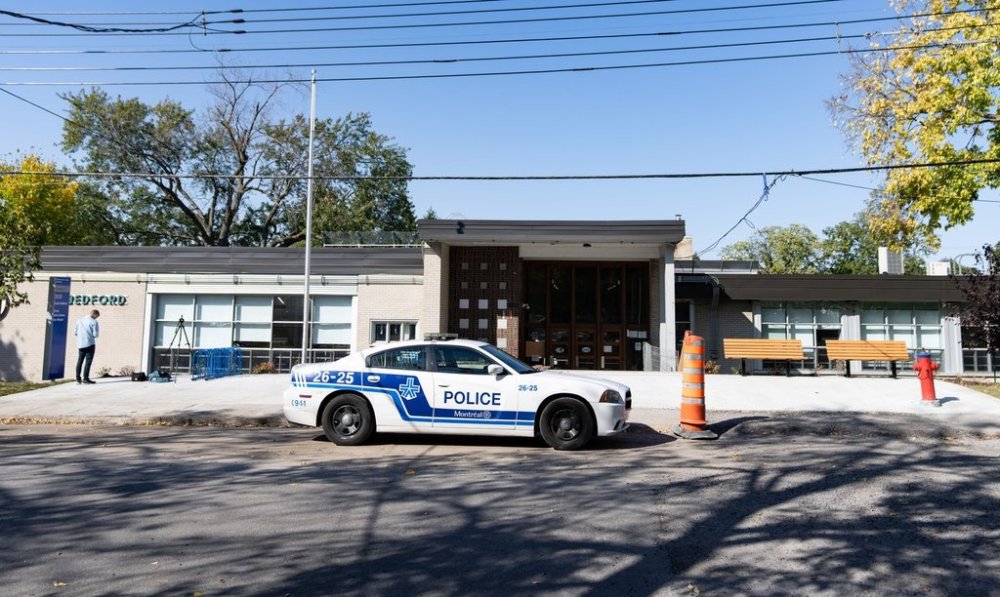
A police car sits outside Bedford school in Montreal on Oct. 11, 2024. THE CANADIAN PRESS/Christinne Muschi

Teachers had yelled at and humiliated students, the report found. Some didn’t believe in learning disabilities and attributed students’ difficulties to laziness. Subjects like science and sex education were either ignored or barely taught, and girls were prevented from playing soccer. Eleven teachers have since been suspended from the school and are under investigation.

The controversy made waves across Quebec, with Premier François Legault claiming the teachers were trying to “introduce Islamist religious concepts into a public school.” Seventeen other schools were later investigated after new allegations emerged of Muslim religious practices in classrooms.

Written by advisers Jean-Pierre Aubin et Malika Habel, the action plan contains 24 recommendations for staff at Bedford school and 10 broader recommendations, including legislative changes that would affect schools across the province. 

Education Minister Bernard Drainville said in a statement Friday that “all options are on the table” to prevent another situation like the one at Bedford. He has already promised to table new legislation to strengthen secularism in public schools. 

“The safety and well-being of our students is non-negotiable,” he said.

The plan says schools should be required to evaluate their teachers every two years, with support from an expert as needed. It also says the government should consider enshrining in law the obligation to speak French anywhere that students are present in schools, including classrooms, hallways and common areas. The Bedford report found that staff often spoke in languages other than French. 

Another recommendation says the government should modify Quebec’s law on public education to ban all religious activities in schools, during and after school hours. The plan also suggests Quebec should reconsider whether to create a professional order of teachers. 

In response, teachers unions were quick to raise doubts about the need for legislative solutions to what they say is a localized problem. 

“These are 17 schools out of approximately 3,000 in Quebec,” Éric Gingras, president of the Centrale des syndicats du Québec, said in a statement. “It’s not true that things are bad everywhere.”

The union says the law on public education already gives schools “all the necessary levers” to supervise and evaluate teachers. “Before imposing more new measures, we must question what went wrong in these specific cases,” Gingras said. 

The plan makes two dozen recommendations specific to Bedford, including that management should clarify the difference between discipline and violence and between learning disabilities and laziness. It also says an educational adviser should help staff teach the science program. 

Aubin et Habel also wrote that the “rigidity” of the teachers’ collective agreement can lead to “prioritizing the working conditions and the professional autonomy of the teacher to the detriment of other considerations.” They stressed the importance of focusing on students’ well-being. 

Drainville said Thursday he had received a report on the other 17 schools that may have breached the province’s secularism rules, and was not reassured. That report is still being analyzed and should be made public in the coming weeks. 

This report by The Canadian Press was first published Feb. 14, 2025. 

Report Error Submit a Tip

The Free Press acknowledges the financial support it receives from members of the city’s faith community, which makes our coverage of religion possible.


More Stories

Puppies, stocks — ‘zoomies’ abound

Andrew Froese 4 minute read 2:01 AM CDT

This spring, I adopted a three-month-old rescued German Shepherd mix. To say she is easily excitable is an understatement.

It is not really her fault. A puppy’s frontal cortex, the part of the brain that helps with decision-making and impulse control, is still developing. When an older dog, or a human, gets tired, we generally understand we should rest. Puppies have not quite figured that out. They often interpret tiredness as a signal something is wrong, which makes them more alert, more reactive and harder to settle.

That creates a feedback loop. The puppy gets tired, which makes her frantic, which makes her more tired, which makes her even more frantic. Eventually, this becomes what people call the “zoomies”: frantic sprinting, biting, jumping and general chaos.

From the outside, it looks like the puppy has too much energy. In reality, the opposite is true. The zoomies are not a sign of excess energy. They are a sign the puppy is overtired and does not know it yet.

Musk’s meddlesome trolling

Editorial 4 minute read Preview

Musk’s meddlesome trolling

Editorial 4 minute read 2:01 AM CDT

It seems obvious the world’s first trillionaire thought he was helping separatists within the Canadian federation when he encouraged three provinces — Alberta, Saskatchewan and Quebec — to leave Canada.

Unfortunately for Elon Musk, a man suffering from a profound deficit of self-awareness, his comments may only help those who want to keep the country together.

Musk entered the national unity debate on Wednesday, two days after the pro-independence Parti Quebecois was returned to power in Quebec with a minority mandate. The PQ has promised to hold a third referendum on separation at some point in its current term.

Musk — who has a Canadian mother and attended university in Ontario — took to X, the social media platform formerly known as Twitter (which he owns) and encouraged Quebec to forge ahead with plans to separate. He said Alberta — which will hold a vote this fall on whether to hold a binding referendum on separation — and Saskatchewan should follow suit.

Read
2:01 AM CDT

Nature doesn’t waste its time

Russell Wangersky 7 minute read Preview

Nature doesn’t waste its time

Russell Wangersky 7 minute read 2:01 AM CDT

Sixteen months in and the black burn from a forest fire somehow transitions from the foreground to the background. I’m not sure if it actually softens, if it really changes, or if is just that your eyes, now used to the background, start seeing less of it.

One thing’s for certain: nature doesn’t waste any time taking its opportunities. In the sheltered ground behind where the shed over our Newfoundland root cellar used to be, a forest of sorrel has arisen, its dark-green leaves with their distinctive double horns at their base crowding in tight amongst each other.

It’s no surprise: sorrel is new beginnings, often the first plant I see recultivating abandoned gardens or disturbed ground and I’m happy to have it around always. Its distinctive lemony bite is a fine addition to salads, though we’re not likely to choose it from that particular root cellar patch. Not with the way the asphalt roof shingles burned right around there. I shovelled up the heavy pats of congealed black tar last spring, right after the fire, bringing them up from inside the cellar in big plastic buckets to send to safe disposal. But there’s probably plenty of tar still in the ground and out of sight — hardly an appetizing thought.

From other areas, maybe we will eventually sample sorrel: it depends on how close they were to the house or shed or anything else that burned. And so very much burned. The province has said gardens are safe from contamination by fire-retardant chemicals as nothing has shown up in tests. But we know what way the wind was blowing — what burned, and where, is always part of the equation. It’s a strange calculation to make: I’m just glad our house wasn’t heated with fuel oil, was too old to contain asbestos, and didn’t have indoor plumbing for decades.

Read
2:01 AM CDT

Police on scene at Fairmont hotel construction site

1 minute read Updated: Yesterday at 12:19 AM CDT

At least three police cars were present at the under-construction Fairmont Winnipeg Thursday evening.

The nature of the response was unclear, but officers were guiding traffic outside of the construction zone at 2 Lombard Place while the response was underway. At 6:50 p.m., traffic was flowing normally.

Security on site provided no information on the response, but an individual working behind site fencing told the Free Press there’d be no comment from anyone on site as to why police were on scene at this time.

An SUV with a Government of Manitoba logo on its side was also present alongside personnel from Manitoba Workplace Safety and Health. However, it’s unknown if it’s connected to the police response.

PCs renew calls for CFS inquiry

Carol Sanders 6 minute read Preview

PCs renew calls for CFS inquiry

Carol Sanders 6 minute read Thursday, Oct. 8, 2026

The Progressive Conservatives renewed calls to put Manitoba’s child and welfare system under the microscope Thursday, tabling a motion that urged the province to appoint a commissioner to lead a public inquiry.

Families critic Jodie Byram’s opposition day motion, which was ultimately defeated by the NDP majority, reiterated demands for an inquiry into the systemic failures of Child and Family Services, more than 20 years after the death of Phoenix Sinclair first prompted demands for answers.

“We have seen far too many children die under the care of CFS, and we need to determine where the gaps are in the system in order to make the system a safer place for children,” Byram told reporters before the motion was defeated in the legislature.

Families Minister Nahanni Fontaine said in an interview that her department, CFS agencies and authorities are “doing good work” and won’t call an inquiry.

Read
Thursday, Oct. 8, 2026

Final hurdles are moving on in your mind and life

Maureen Scurfield 3 minute read 2:01 AM CDT

DEAR MISS LONELYHEARTS: I just ran into my former husband with his new woman. It was a shock. She looked nothing like me — not nearly as good. In fact, she’s the opposite of me — red-haired, freckled, tall and skinny like a rake. I’m short, dark, with golden skin from my Italian background. That was what my husband used to say he loved in a woman.

Does that mean he lied — that he really didn’t like my looks and secretly longed for the opposite? That seems crazy to me. But I should mention that in our last miserable years together he didn’t even want to hold me in his arms and look at me. He sometimes slept at his office (or so he said) because he was “too tired to drive home.”

He could have been elsewhere — like in some other woman’s home — because he always used his cellphone to call me, not his office line.

How can I forget about the man I loved so much and finally move on?