None of Canada’s five cardinals likely to be next pope, Vatican experts say
Advertisement
Read this article for free:
or
Already have an account? Log in here »
To continue reading, please subscribe:

Digital Subscription
One year of digital access for only $205*
- Enjoy unlimited reading on winnipegfreepress.com
- Read the E-Edition, our digital replica newspaper
- Access News Break, our award-winning app
- Play interactive puzzles
*First annual payment billed as $205.00 + GST for one year. This annual subscription will automatically renew at $233.00 + GST every 52 weeks (10% off the regular annual price of $259.35). Offer available to new and qualified returning subscribers only. Cancel any time.
To continue reading, please subscribe:
Add Free Press access to your Brandon Sun subscription for only an additional
$1 for the first 4 weeks*
- Enjoy unlimited reading on winnipegfreepress.com
- Read the E-Edition, our digital replica newspaper
- Access News Break, our award-winning app
- Play interactive puzzles
*Your next Brandon Sun subscription payment will increase by $1.00 and you will be charged $17.95 plus GST for four weeks. After four weeks, your payment will increase to $24.95 plus GST every four weeks.
Read unlimited articles for free today:
or
Already have an account? Log in here »
Hey there, time traveller!
This article was published 21/04/2025 (532 days ago), so information in it may no longer be current.
MONTREAL – A Canadian cardinal was a top contender the last time a new pope was elected, but observers say that’s unlikely to be the case this time around.
Canada’s five cardinals all have marks against them, ranging from advanced age to inexperience to allegations of sexual misconduct, according to Vatican experts.
“I would be quite surprised if one of them was elected,” said Mark McGowan, a professor of history at the University of St. Michael’s College in Toronto. “I don’t think our five guys in Canada are really up there in the running, in the top tier.”
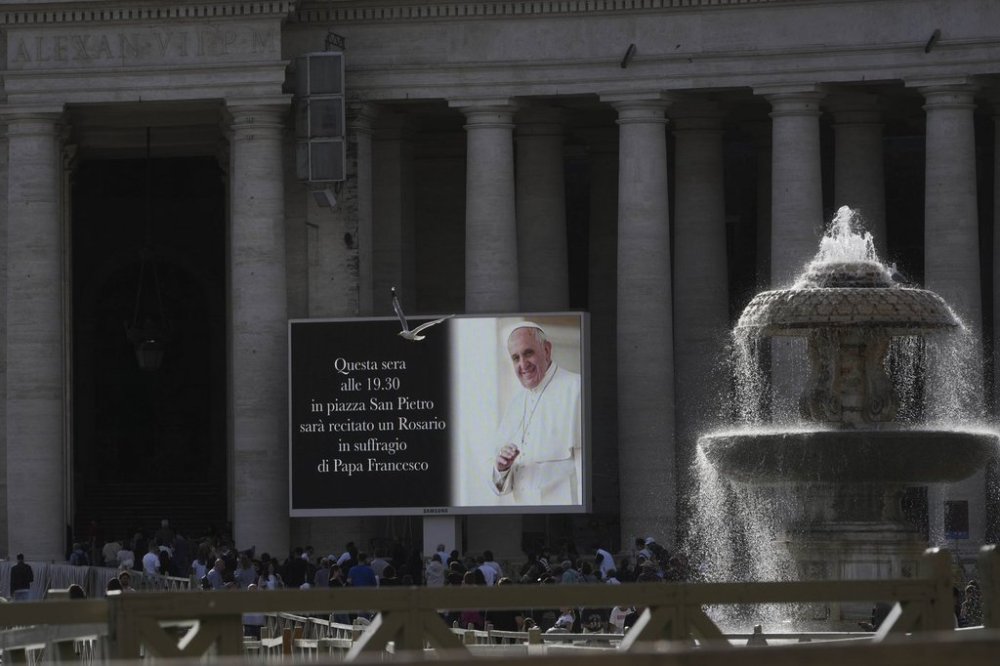
The Vatican announced Monday that Pope Francis had died of a stroke after 12 years at the head of the Catholic Church. The 88-year-old pontiff had spent five weeks in hospital earlier this year, where he was treated for pneumonia in both lungs.
Emma Anderson, a professor of religious studies at the University of Ottawa, said Cardinal Gérald Lacroix, archbishop of Quebec, would have the best shot at replacing Francis from among Canada’s five cardinals.
Pope Francis named Lacroix a cardinal in 2014 and appointed him to his nine-member council of cardinal advisers in 2023. At “a very youthful 67,” Anderson said, Lacroix is considerably younger than Francis when he was elected pope at age 76.
However, Lacroix was named last year in a class-action lawsuit against the archdiocese of Quebec. He was accused of touching a 17-year-old without her consent in Quebec City between 1987 and 1988.
A church-led investigation found no evidence of sexual misconduct, and Anderson said he is considered within the church to have been exonerated. Still, “even just the breath or hint of something being wrong can often derail careers,” she added.
Canadian Cardinal Marc Ouellet, who was touted in 2013 as a front-runner to replace Pope Benedict XVI, was named in the same class-action lawsuit. He was accused by one woman of inappropriate touching, which he has denied.
Ouellet, who hails from the tiny Quebec village of La Motte, was named a cardinal in 2003 and headed the powerful Vatican office that oversees the selection of new bishops from 2010 until his retirement in 2023.
When Ouellet turned 80 last June, he lost the right to vote in the conclave that will choose the next pontiff. Technically, he could still be elected pope — though cardinals lose their eligibility to vote at age 80, they can still receive votes. But that would be unusual, according to McGowan.
“I think his time has kind of come and gone,” Anderson said. “I think he’s too old and damaged now.”
Two other Canadian cardinals are also nearing the age of 80. Thomas Collins, 78, is the former archbishop of Toronto and was named a cardinal in 2012 by Benedict. Aside from his age, Anderson said, he is likely too conservative to be a top choice for many of the cardinals elevated by the more liberal Francis.
Cardinal Michael Czerny, 78, is much more closely linked to Francis, McGowan said. A Czech-born social justice advocate, he spoke out recently against the Trump administration’s plans to gut USAID. Czerny is a Jesuit, like Francis, who made him a cardinal in 2019.
But McGowan said Czerny’s age will work against him. “He’s an extraordinarily bright man,” he said. “But at 78, how many years would they get out of him?”
Canada’s newest cardinal is 53-year-old Francis Leo, a Montreal native who last year was elevated to the highest rank below the pope, after succeeding Collins as archbishop of Toronto in 2023. McGowan and Anderson both said Leo is likely too young and inexperienced to be a contender this time around.
In an interview Monday, Montreal Archbishop Christian Lépine called it a “privilege” to have Canadian cardinals involved in the selection of a new pope.
Lépine said there are “certain names” that always circulate ahead of the selection of a new pontiff, but the outcome is usually a surprise even to those who follow elections closely.
“There’s this old saying that, if you get into the conclave being thought about as a pope — a ‘papabile,’ as they say — you get out of it as a cardinal,” he said.
There are 252 living cardinals, only 135 of whom are eligible to vote in a conclave. Eighty per cent of the electors were appointed by Francis, and McGowan said it’s likely the College of Cardinals will choose a new pope in the same vein as Francis. “I would put my money on someone who’s pastoral and someone who’s multilingual, for sure,” he said.
He and Anderson both pointed to 67-year-old Filipino Cardinal Luis Antonio Tagle as a likely front-runner. “He’s almost seen as a new version or a new face of the Franciscan legacy,” Anderson said. “Some even call him the Asian Francis.”
They said 70-year-old Italian Cardinal Pietro Parolin, the Vatican’s secretary of state, is another top contender.
Pope Francis made a point of naming cardinals from around the globe, including from many countries that had never been represented in the College of Cardinals. Anderson said this conclave will be the first without a majority of European electors.

But that diversity could add an element of uncertainty for those hoping to see Francis’s legacy carried on.
“I think liberals would love to see a pope like Pope Francis that comes from a new and under-represented part of the Catholic world,” Anderson said. “I think there’s a lot of people out there who would love to see an African pope, or an Asian pope.
“But one of the things that comes with that is that there’s many parts of the Global South that are much more conservative theologically.”
This report by The Canadian Press was first published April 21, 2025.
— With files from Morgan Lowrie
Related Articles
Pope Francis, Latin America's first pontiff who ministered with charm and humility, dies at 88


Advertisement Advertise With Us
Advertisement Advertise With Us
The Free Press acknowledges the financial support it receives from members of the city’s faith community, which makes our coverage of religion possible.