How the AP uncovered US big tech’s role in China’s digital police state
Advertisement
Read this article for free:
or
Already have an account? Log in here »
To continue reading, please subscribe:
Digital Subscription
One year of digital access for only $1.44 a week*
- Enjoy unlimited reading on winnipegfreepress.com
- Read the E-Edition, our digital replica newspaper
- Access News Break, our award-winning app
- Play interactive puzzles
*Billed as $5.77 plus GST every four weeks. After 52 weeks, price increases to the regular rate of $19.95 plus GST every four weeks. Offer available to new and qualified returning subscribers only. Cancel any time.
To continue reading, please subscribe:
Add Free Press access to your Brandon Sun subscription for only an additional
$1 for the first 4 weeks*
- Enjoy unlimited reading on winnipegfreepress.com
- Read the E-Edition, our digital replica newspaper
- Access News Break, our award-winning app
- Play interactive puzzles
*Your next Brandon Sun subscription payment will increase by $1.00 and you will be charged $17.95 plus GST for four weeks. After four weeks, your payment will increase to $24.95 plus GST every four weeks.
Read unlimited articles for free today:
or
Already have an account? Log in here »
Hey there, time traveller!
This article was published 08/09/2025 (408 days ago), so information in it may no longer be current.
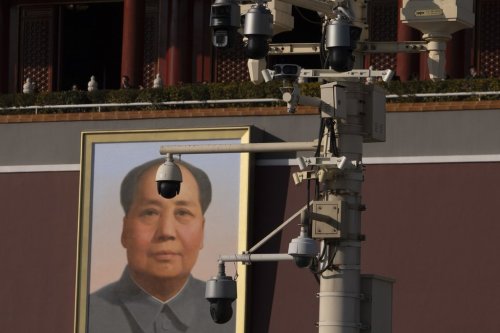
BEIJING (AP) — Over the past quarter century, American tech companies to a large degree designed and built China’s surveillance state, playing a far greater role in enabling human rights abuses than previously known, the Associated Press has found.
AP journalists spoke to more than 100 sources, scoured tens of thousands of documents, and obtained several major leaks of internal and classified material, the existence of which is being reported here for the first time.
Researchers and reporters have raised questions about American technology in Chinese policing before. Companies have pushed back, saying they weren’t aware of or responsible for the way their technology was being used.
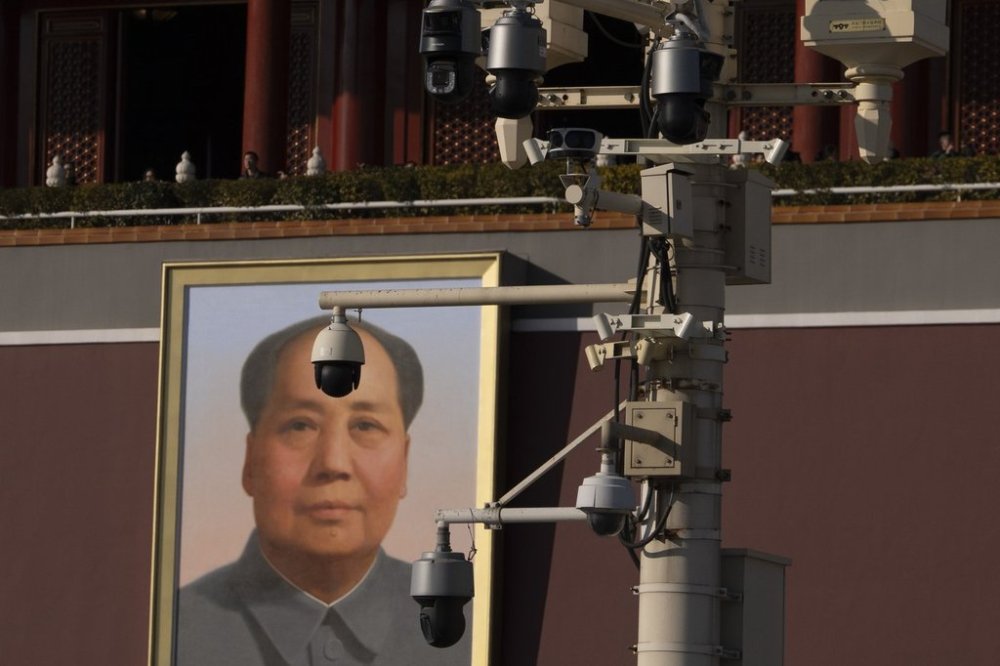
But AP found Chinese police and state-owned defense contractors partnered with American tech firms — especially IBM — to design China’s surveillance apparatus from the top down. American tech companies not only knew, some also directly pitched their tech as tools for Chinese police to control citizens. IBM and other companies that responded said they fully complied with all laws, sanctions and U.S. export controls governing business in China, past and present.
AP reporters and freelance partners spent three years combing through tens of thousands of documents, including:
-Thousands of pages of classified government documents, blueprints, and accounting ledgers from a Chinese military contractor and IBM partner. They were taken out of China by a whistleblower and handed to AP by an intermediary, both of whom declined to be named for fear of retribution.
-Over 20,000 leaked internal emails and a large database from Landasoft, a Chinese surveillance company and former IBM partner. They were obtained from an intermediary who declined to be identified for fear of retribution. Landasoft sold the software used to flag and detain people in China’s far western region of Xinjiang during a brutal government crackdown.
– Hundreds of marketing presentations, flyers, pamphlets and posts, often obtained from the companies themselves, at policing trade expos, on company and third-party websites and on official accounts on WeChat, a Chinese social media platform. Many advertised their gear directly for use by Chinese police or surveillance firms and were marked “internal.”
-Over 4,000 Chinese procurement bids given to AP by ChinaFile, a digital magazine published by the non-profit Asia Society, as well as others found separately by AP reporters. Many showed purchases of American and foreign technology by Chinese police.
-Publicly available records, including Chinese research papers, news articles, corporate reports, and court judgments. Most were obtained in China, where access to such information is growing increasingly tight.
The investigation started with a massive trove of internal emails and a database from Landasoft, the Chinese surveillance firm, obtained by Yael Grauer, a freelance journalist. Grauer worked with AP journalists to verify, analyze, and report out its contents.
The emails and documents revealed Landasoft software was at the heart of China’s mass detention campaign in Xinjiang — targeting, tracking and grading virtually the entire native Uyghur population to forcibly assimilate and subdue them. The leaked material was peppered with references to American firms.
Reporters searched phone numbers and cross-checked the leaked material with publicly available information to confirm its authenticity. Chinese corporate records revealed Landasoft’s links to IBM as a reseller of IBM’s i2 police surveillance analysis software. Analysis of the leaked emails revealed Landasoft staff said their software was copied from i2 and customized for the Chinese market.
Reporters traced IBM’s partnership with Landasoft and affiliated companies back to the 2000s. Classified Chinese government documents obtained by AP revealed that IBM and other American companies played an instrumental role in Beijing’s surveillance apparatus from the very beginning.
Three outside experts on Chinese surveillance judged the classified documents as authentic.
“It is effectively inconceivable that they are not legitimate,” said Conor Healy, research affairs director for IPVM, a surveillance research publication. Healy added the documents are “consistent with the hundreds of documents on (Chinese) government technology deployments I have reviewed over the years.”
The AP sought sources in a dozen territories across three continents. That included dozens of current and former executives, officials, officers, and engineers from China — a difficult task given widespread fear and surveillance. Many felt compelled to speak out, but the majority did so anonymously, worried for the safety of themselves and their families.
At times, AP reporters themselves were ensnared themselves by China’s digital police state: They were tracked down, stopped and hauled in for questioning.
Together, the evidence AP compiled revealed how American companies brought “predictive policing” to China, enabling Chinese police to preemptively detain people for crimes they have not even committed. Such systems mine a vast array of information — texts, calls, payments, flights, video, DNA swabs, mail deliveries, the internet, even water and power use — to unearth individuals deemed suspicious and predict their movements.
The partnership between American firms and the Chinese police laid the groundwork for China’s digital surveillance state as it exists today — the largest and most sophisticated on earth.
__
Contact AP’s global investigative team at Investigative@ap.org or https://www.ap.org/tips/
The Free Press acknowledges the financial support it receives from members of the city’s faith community, which makes our coverage of religion possible.