Why two skulls unearthed in B.C. could be harbingers for future archeological woes
Advertisement
Read this article for free:
or
Already have an account? Log in here »
To continue reading, please subscribe:

Digital Subscription
One year of digital access for only $205*
- Enjoy unlimited reading on winnipegfreepress.com
- Read the E-Edition, our digital replica newspaper
- Access News Break, our award-winning app
- Play interactive puzzles
*First annual payment billed as $205.00 + GST for one year. This annual subscription will automatically renew at $233.00 + GST every 52 weeks (10% off the regular annual price of $259.35). Offer available to new and qualified returning subscribers only. Cancel any time.
To continue reading, please subscribe:
Add Free Press access to your Brandon Sun subscription for only an additional
$1 for the first 4 weeks*
- Enjoy unlimited reading on winnipegfreepress.com
- Read the E-Edition, our digital replica newspaper
- Access News Break, our award-winning app
- Play interactive puzzles
*Your next Brandon Sun subscription payment will increase by $1.00 and you will be charged $17.95 plus GST for four weeks. After four weeks, your payment will increase to $24.95 plus GST every four weeks.
Read unlimited articles for free today:
or
Already have an account? Log in here »
Hey there, time traveller!
This article was published 27/01/2026 (254 days ago), so information in it may no longer be current.
Last June, landscapers working on a site in Kamloops, B.C., came upon a troubling discovery — two human skulls and jawbones.
Police and the coroner were informed, but after an inspection that swiftly determined the remains ancient, the Tk’emlúps te Secwépemc First Nation was called in and the day after the find issued a press release, declaring the property owned by Park Place Seniors Living to be a sacred site.
“The site is protected under the United Nations Declaration on the Rights of Indigenous Peoples and the BC Heritage Conservation Act. Any alteration or disturbance to the sacred site is illegal and punishable under provincial law,” the statement said, adding that the nation had put the property in a residential area of North Kamloops under “24-hour security.”
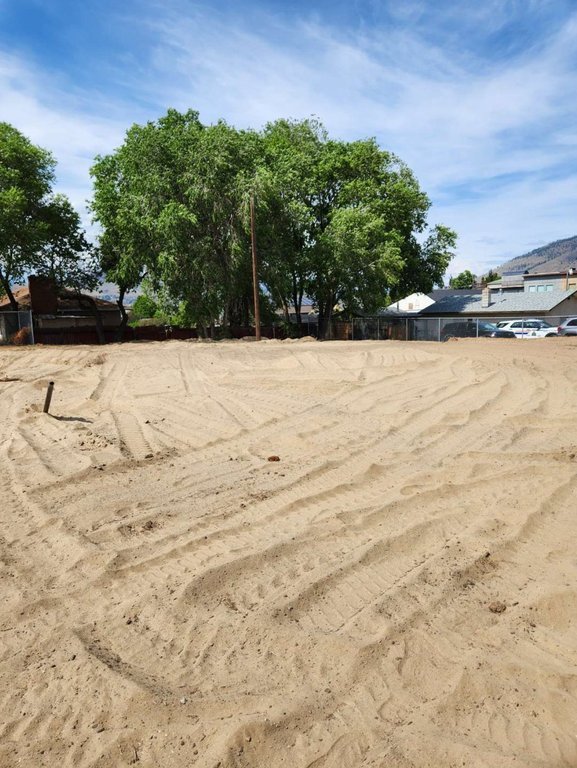
But Gordon Mohs, an archeologist later hired by the owners to look into the discovery, concluded the skulls were found in landfill that came from elsewhere.
His report on the find says that while undisturbed parts of the property had “dark, humus soils,” the soil where the skulls were found was made of sand or sandy silt, which he concluded was landfill material “imported and deposited” on the site.
Mohs, who is the First Nations liaison and archeological specialist at Mission, B.C.-based Summit Earthworks, is now warning that future finds on private land in the province could be hidden after the owners said they were asked by a local First Nation for $80,000 in relation to the handling of the remains.
On at least one point, Mohs and the First Nation found common ground.
Chief Rosanne Casimir of the Tk’emlups te Secwepemc First Nation acknowledged the financial burden on private owners — and the risks that could follow.
“Tkemlúps te Secwépemc advocates for the government to change its policies to support private property owners with the costs associated with such finds. Without government support, other private property owners will be discouraged to come forward if they find remains,” she said in an email.
Christine Elliott, the lawyer for the landowner, said her client had been verbally asked by the First Nation to pay the $80,000 for security, archeological work and a smudging ceremony.
Asked about the request, Casimir cited the heritage act as saying owners and developers were responsible for archeological work, but added that an invoice in relation to the Kamloops find had not been sent “at this time.”
Mohs said cases like the one in Kamloops “are going to be the future” under the province’s Heritage Conservation Act, predicting more First Nations would seek such payments, which would in turn deter reporting.
The Heritage Conservation Act is decades old, having been revised in 1996, but it faces a potential overhaul to bring it into line with the province’s Declaration on the Rights of Indigenous People’s Act, which in turn was intended to reflect the United Nations declaration known as UNDRIP that the Tkemlúps press release cited last year.
“The way that the legislation and (UNDRIP) and other relationships with First Nations and government are at the present, First Nations’ rights trump any rights that potential private property owners have,” said Mohs, who called himself a 40-year advocate of First Nations rights and the recognition of their cultural heritage.
Mohs said the heritage legislation is already quite clear. “Anyone who knowingly or unknowingly discovers archeological remains on their property is responsible for those remains being investigated,” he said.
But he said the process in the Kamloops case had been far from transparent, and the property owner had been left in the dark for 2 1/2 months after the initial discovery.
Mohs predicted that more First Nations would come onto private properties under their own heritage policies and the principles of UNDRIP.
Casimir has disputed Mohs’ conclusions about the origin of the remains, saying in an email that the “ancestral remains” were discovered in “local disturbed sediments and not imported fill.”
The remains were moved from the site between Sept. 29 and Oct. 10 on behalf of the nation.
“The ancestors are being taken care of in a culturally safe practice within our community. The assessment is ongoing and results will be shared with our community,” Casimir said when asked about the skulls’ whereabouts.
Elliott said her client had no intention of paying the $80,000 they say they were asked for. It would be on top of more than $100,000 in legal fees and other archeological costs that the property owner has already paid, she said, on a property valued at around $440,000.
Casimir said “the discovery of ancestral remains is not a matter of property or debate rather it is a matter of responsibility,” because they are their relatives and the First Nation was obliged “to care for them with dignity and respect.”
The Heritage Conservation Act does not have provisions for compensation in relation to archeological finds, but Forests Minister Ravi Parmar said in a statement that he understood the frustration of the property owner.
“Ensuring a speedy process for the property owner, while respecting any remains found, has always been our goal and ministry staff are working with the property owner and the parties to do just that,” said Parmar, who has oversight on the issue.
Premier David Eby, speaking at an unrelated press conference last week, said cases like the one in Kamloops underscored the need for reform. “This is an act that isn’t working for anybody,” he said. “It’s not working for property developers, it’s not working for First Nations and it’s not working for the natural resources sector.”
It is not clear when such reforms would move forward, after the government this month postponed amending the legislation.
Casimir said the First Nation recognized that “gaps” in the legislation that left private owners vulnerable to costs could discourage reporting.
Mohs predicted that government support for property owners “ain’t going to happen” because of the large number of archeological sites in B.C.
The Tkemlúps archeology department, Knúcwmens le Sxwixwéytemc Archaeology Services, said in a memo to the B.C. Archaeology Branch that staff had recovered additional ancestral remains and cultural belongings during the course of recovery work.
The memo said it can’t confirm there are no additional remains located in the areas and at greater depths, without further assessment.
This report by The Canadian Press was first published Jan. 27, 2026.
The Free Press acknowledges the financial support it receives from members of the city’s faith community, which makes our coverage of religion possible.