What to know about Iran’s Supreme Leader Ayatollah Ali Khamenei
Advertisement
Read this article for free:
or
Already have an account? Log in here »
To continue reading, please subscribe:
Digital Subscription
One year of digital access for only $1.44 a week*
- Enjoy unlimited reading on winnipegfreepress.com
- Read the E-Edition, our digital replica newspaper
- Access News Break, our award-winning app
- Play interactive puzzles
*Billed as $5.77 plus GST every four weeks. After 52 weeks, price increases to the regular rate of $19.95 plus GST every four weeks. Offer available to new and qualified returning subscribers only. Cancel any time.
To continue reading, please subscribe:
Add Free Press access to your Brandon Sun subscription for only an additional
$1 for the first 4 weeks*
- Enjoy unlimited reading on winnipegfreepress.com
- Read the E-Edition, our digital replica newspaper
- Access News Break, our award-winning app
- Play interactive puzzles
*Your next Brandon Sun subscription payment will increase by $1.00 and you will be charged $17.95 plus GST for four weeks. After four weeks, your payment will increase to $24.95 plus GST every four weeks.
Read unlimited articles for free today:
or
Already have an account? Log in here »
Hey there, time traveller!
This article was published 28/02/2026 (230 days ago), so information in it may no longer be current.
In one of his final public displays of power, Iran’s Supreme Leader Ayatollah Ali Khamenei unleashed the bloodiest crackdown of his nearly four-decade rule to crush nationwide protests in which people dared to shout “Death to Khamenei.”
Now a U.S. or Israeli military strike has sent Iran spinning into the unknown. The 86-year-old supreme leader is dead, with no designated successor.
Iranian state media confirmed his death without giving details early Sunday, hours after President Donald Trump said Khamenei was killed in a major new attack by U.S. and Israeli forces. Trump also urged Iranians to topple the theocracy. As rumors of the death spread, some cheered from rooftops in Tehran.
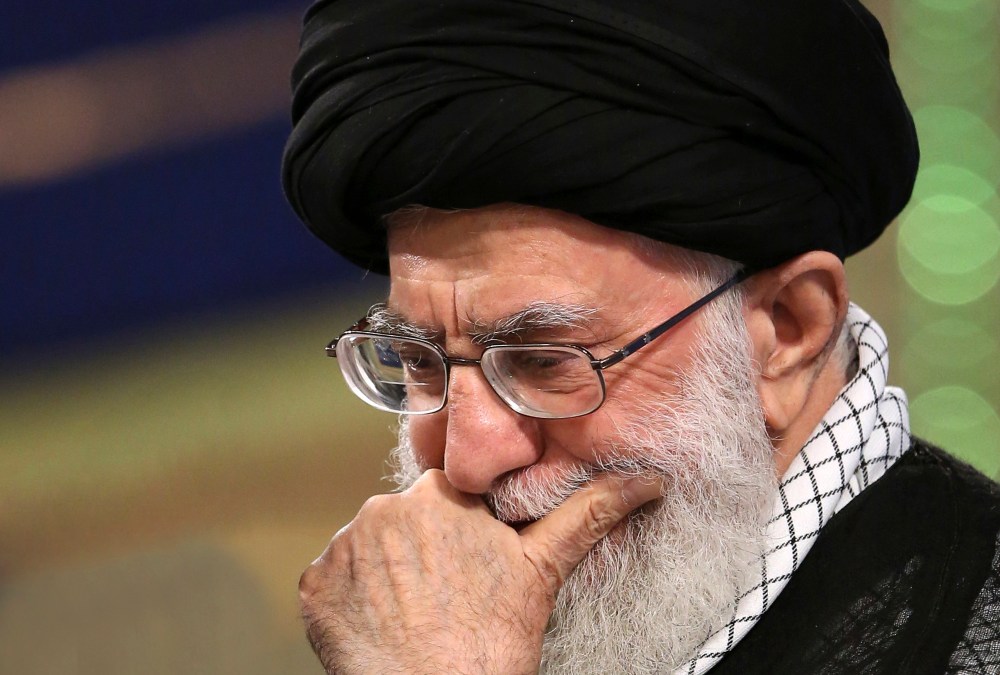
Long before the supreme leader’s compound was among the first targets on Saturday, Khamenei was under growing pressure.
In the past year he was effectively put on warning, with Trump saying he could have killed him if he wanted to and rejecting an Israeli plan to do just that in last year’s 12-day war.
In recent weeks the supreme leader tried to avert strikes as the U.S. built up its military presence in the region to pressure Tehran over its nuclear program. He warned that if the U.S. struck, a regional war would ensue. At the same time, he allowed Iran to enter negotiations with the U.S. over its nuclear program.
Khamenei’s suppression of the protests, with thousands of people killed, was a sign of the threat that popular anger represented. Years of sanctions, economic mismanagement and corruption have gutted Iran’s economy.
Israeli and U.S. bombardment during last summer’s 12-day war had heavily damaged Iran’s nuclear program, missile systems and military capabilities. Iran’s network of regional proxies, including Hamas in Gaza, Hezbollah in Lebanon and the Houthis in Yemen, has been weakened by Israeli and U.S. attacks since the war in Gaza began, along with Tehran’s influence across the Middle East.
Here’s what to know about Khamenei:
Transforming the Islamic Republic
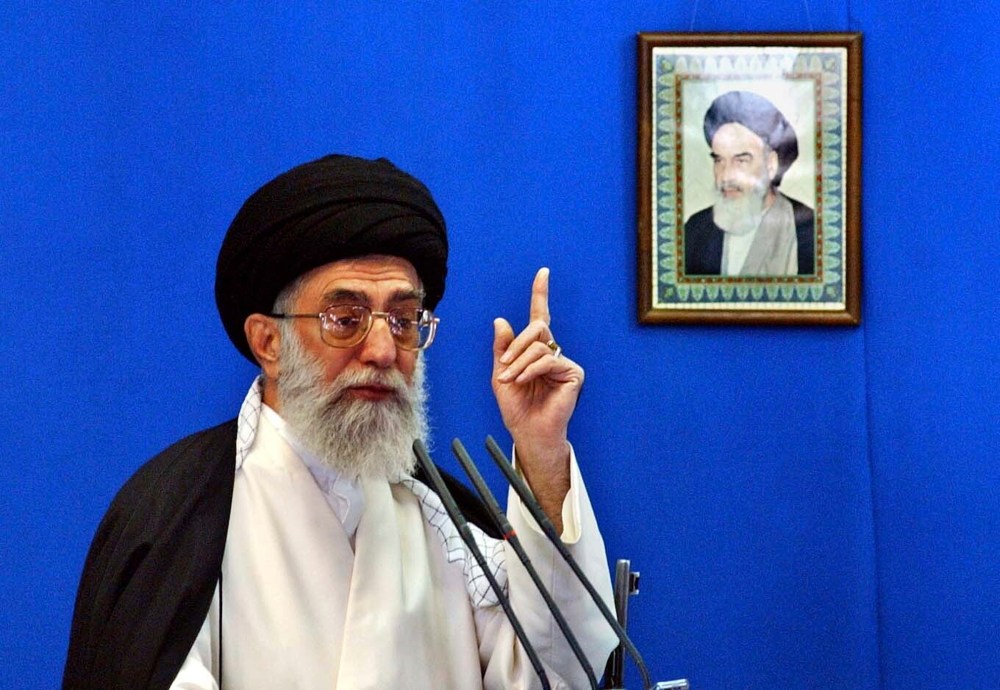
When he rose to power in 1989, Khamenei had to overcome deep doubts about his authority. A low-level cleric at the time, Khamenei lacked the religious credentials of his predecessor, Ayatollah Ruhollah Khomeini, the leader of the Islamic Revolution.
But Khamenei ruled three times longer than the late Khomeini and shaped Iran perhaps even more dramatically.
He entrenched the system of rule by the mullahs, or Shiite Muslim clerics. Under the Islamic Republic, clerics stand atop the hierarchy, drawing the lines to which the civilian government, the military and the intelligence and security establishment must submit.
In the eyes of hard-liners, Khamenei stood as the unquestionable authority — below only that of God.
At the same time, Khamenei built the paramilitary Revolutionary Guard into the dominant player in military and internal politics. It boasts Iran’s most elite military and oversees its ballistic missile program. Khamenei also gave the Guard a free hand to build a network of businesses and dominate the economy.
In return, the Guard became his loyal shock force.
Domestic challenges
The first major threat to Khamenei’s grip was the reform movement that swept into a parliamentary majority and the presidency soon after he became supreme leader. It advocated for giving greater power to elected officials, which Khamenei’s hard-line supporters feared would lead to dismantling the Islamic Republic system.
Khamenei rallied the clerical establishment, and unelected bodies run by mullahs shut down major reforms and barred reform candidates from elections.
Since then, waves of popular protests have been crushed.
Huge nationwide demonstrations erupted in 2009 over allegations of vote-rigging. Under the weight of sanctions, economic protests broke out in 2017 and 2019. More came in 2022 over the death of Mahsa Amini, who was detained by police for not wearing her mandatory headscarf properly.
Crackdowns against the protesters killed hundreds, and hundreds more were arrested amid reports of detainees tortured to death or raped in prison.
The deadliest crackdown yet
The latest demonstrations touched off in late December in Tehran’s traditional bazaar after the country’s currency, the rial, currency plunged to a record low of 1.42 million to the U.S. dollar. Protests quickly spread across the country.
“Rioters must be put in their place,” Khamenei declared. When hundreds of thousands took to the streets Jan. 8 and 9, security forces fired on crowds, and veterans of past demonstrations said they were stunned by the firepower unleashed.
Activists said they documented more than 7,000 killed and were working to verify more. The government has acknowledged more than 3,000 dead, which is still higher than the toll from past crackdowns.
Nuclear negotiations
By agreeing to nuclear negotiations, Khamenei likely sought to buy time to avert U.S. strikes. But Iran opposed Washington’s main demands that it halt all nuclear enrichment and surrender its uranium stocks.
Trump initially threatened strikes to stop Khamenei and Iran’s other leaders from killing peaceful protesters. He then wielded the threat to push Tehran to engage seriously in nuclear negotiations.
Some in Iran and the large Iranian diaspora expressed hope that the U.S. would use military force to bring down Khamenei. But there were also strong voices even among Khamenei opponents who were against foreign intervention to topple the theocracy.

No successor
Officially a panel of Shiite clerics is tasked with choosing one of their own to succeed Khamenei, and multiple names have been touted among including his son.
Danny Citrinowicz, an Iran expert at Israel’s Institute for National Security Studies, told The Associated Press this week that a key lesson Tehran drew from last year’s war was the need to ensure regime continuity in case of Khamenei’s death. He added that power could shift to a small committee of top officials until hostilities subside.
“It is possible that Khamenei has indicated a preferred successor behind closed doors,” Citrinowicz said. “However automatic implementation of a preselected successor will increase internal friction during war.”
But the Revolutionary Guard has grown to become Iran’s most powerful body. Khamenei’s death could prompt Guard commanders or its regular military to seize power more overtly. And that could set off a bloody conflict over control of the oil-rich country of 85 million people.
The Free Press acknowledges the financial support it receives from members of the city’s faith community, which makes our coverage of religion possible.