Archbishop urges Catholics to learn about Indigenous spirituality

Advertisement
Read this article for free:
or
Already have an account? Log in here »
To continue reading, please subscribe:

Digital Subscription
One year of digital access for only $205*
- Enjoy unlimited reading on winnipegfreepress.com
- Read the E-Edition, our digital replica newspaper
- Access News Break, our award-winning app
- Play interactive puzzles
*First annual payment billed as $205.00 + GST for one year. This annual subscription will automatically renew at $233.00 + GST every 52 weeks (10% off the regular annual price of $259.35). Offer available to new and qualified returning subscribers only. Cancel any time.
To continue reading, please subscribe:
Add Free Press access to your Brandon Sun subscription for only an additional
$1 for the first 4 weeks*
- Enjoy unlimited reading on winnipegfreepress.com
- Read the E-Edition, our digital replica newspaper
- Access News Break, our award-winning app
- Play interactive puzzles
*Your next Brandon Sun subscription payment will increase by $1.00 and you will be charged $17.95 plus GST for four weeks. After four weeks, your payment will increase to $24.95 plus GST every four weeks.
Read unlimited articles for free today:
or
Already have an account? Log in here »
Hey there, time traveller!
This article was published 23/03/2026 (193 days ago), so information in it may no longer be current.
Roman Catholics will benefit by taking time to learn more about Indigenous spirituality, the head of the Archdiocese of Winnipeg says.
“It can help us deepen our own faith,” said Archbishop Murray Chatlain. “It can help us ask better questions about what we believe.”
Chatlain was responding to news that the Portage la Prairie School Division upheld a decision to reject a Roman Catholic family’s request for a religious exemption from activities related to Indigenous spirituality. Portage la Prairie is part of the Archdiocese of Winnipeg.
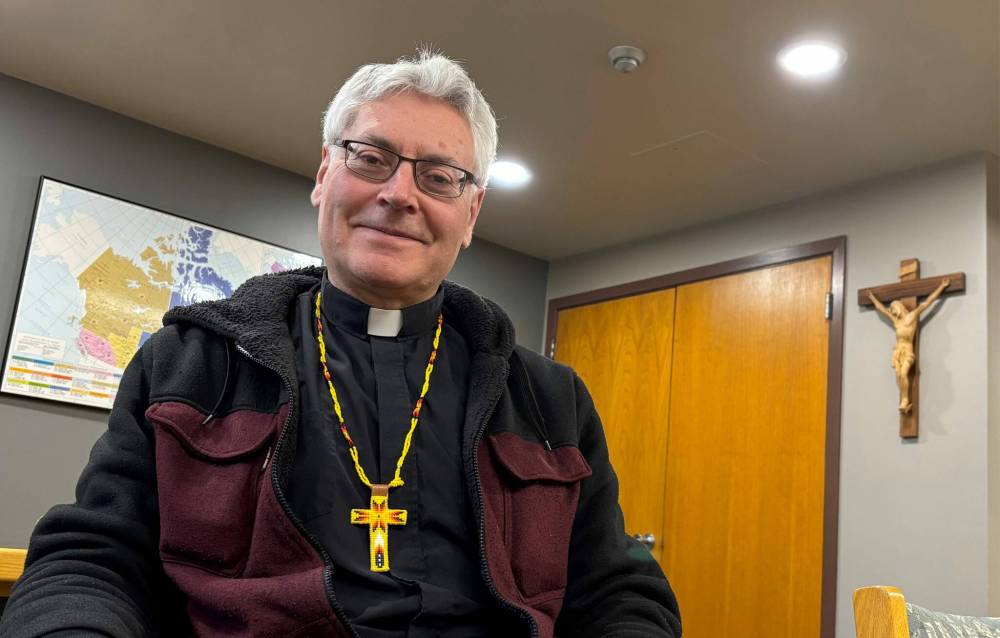
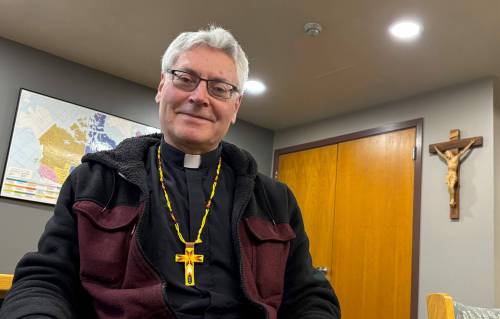
JOHN LONGHURST / FREE PRESS Archbishop Murray Chatlain
Sharon Sanders Zettler and Vince Zettler had been seeking accommodation for their children at Yellowquill School. They wanted them to be held out of activities about Indigenous spirituality they say conflict with their personal beliefs.
That included making tobacco pouches and participating in elk-hide scraping.
While not wanting to specifically address the family’s request, Chatlain — who spent years serving among Indigenous people in Canada’s North, including as bishop of Keewatin Le Pas in Manitoba — said learning about Indigenous spirituality has helped him grow as a Christian.
He said learning about Indigenous people has helped him view the land differently and he’s come to appreciate how creation is seen as alive and dynamic.
“Elders say that when they don’t go out on the land, the land misses them,” Chatlain said.
Being open to Indigenous spirituality is a good thing for Roman Catholics, Chatlain said. “There is a gift there for us. Indigenous people can contribute to our understanding of God.”
It’s like what happens when Christians engage with people from other faiths, he said, noting that is something the Roman Catholic Church encourages as a way to promote peace and mutual understanding between religious groups.
Although there are differences between Indigenous Spirituality and Christianity, there are also many commonalities, Chatlain said, citing the similarities between the Seven Sacred Teachings of Indigenous spirituality — love, respect, courage, honesty, wisdom, humility, truth — and the Ten Commandments.
In addition to learning about Indigenous spirituality, Chatlain has also taken part in various ceremonies over the years such as a vision quest, sweat lodges and sun and round dances.
“Looking back, I never say I shouldn’t have done those things,” he said. “They are all OK. I think if people knew their bishop can say this, maybe they can feel OK about it, too.”
Kyle Mason, a Winnipeg Indigenous consultant and former evangelical pastor, believes it’s important for non-Indigenous people to learn more about Indigenous ways.

“It’s important for us to learn about each other,” the Peguis First Nation member said, adding Indigenous people aren’t interested in seeing members of other faith groups switch their beliefs.
“We have a respect for all beliefs, we honour that,” he said.
Learning more about Indigenous spirituality can bring Canadians closer together, Mason said, adding that he personally blends his spirituality with the teachings of Jesus.
“Our beliefs are complementary, not in conflict. We can enhance each other,” he said.
faith@freepress.mb.ca
The Free Press is committed to covering faith in Manitoba through our Religion in the News project. This reporting continues because readers like you step forward to fund it.
Donate now to support our reporting on religion.
Your donation is eligible for a charitable tax receipt.
BECOME A FAITH JOURNALISM SUPPORTER
Our newsroom depends on a growing audience of readers to power our journalism. If you are not a paid reader, please consider becoming a subscriber.
Our newsroom depends on its audience of readers to power our journalism. Thank you for your support.
The Free Press is committed to covering faith in Manitoba through our Religion in the News project. This reporting continues because readers like you step forward to fund it.
Donate now to support our reporting on religion.
Your donation is eligible for a charitable tax receipt.
BECOME A FAITH JOURNALISM SUPPORTER
Our newsroom depends on a growing audience of readers to power our journalism. If you are not a paid reader, please consider becoming a subscriber.
Our newsroom depends on its audience of readers to power our journalism. Thank you for your support.
Advertisement Advertise With Us
Advertisement Advertise With Us
The Free Press acknowledges the financial support it receives from members of the city’s faith community, which makes our coverage of religion possible.