Faith-based groups worry about change to foreign aid

Advertisement
Read this article for free:
or
Already have an account? Log in here »
To continue reading, please subscribe:

Digital Subscription
One year of digital access for only $205*
- Enjoy unlimited reading on winnipegfreepress.com
- Read the E-Edition, our digital replica newspaper
- Access News Break, our award-winning app
- Play interactive puzzles
*First annual payment billed as $205.00 + GST for one year. This annual subscription will automatically renew at $233.00 + GST every 52 weeks (10% off the regular annual price of $259.35). Offer available to new and qualified returning subscribers only. Cancel any time.
To continue reading, please subscribe:
Add Free Press access to your Brandon Sun subscription for only an additional
$1 for the first 4 weeks*
- Enjoy unlimited reading on winnipegfreepress.com
- Read the E-Edition, our digital replica newspaper
- Access News Break, our award-winning app
- Play interactive puzzles
*Your next Brandon Sun subscription payment will increase by $1.00 and you will be charged $17.95 plus GST for four weeks. After four weeks, your payment will increase to $24.95 plus GST every four weeks.
Read unlimited articles for free today:
or
Already have an account? Log in here »
There’s a big change taking place in the way Canada provides foreign aid — and faith-based relief and development agencies are concerned about it.
In the past, decisions about where to spend international development dollars were based on the needs of the world’s poorest citizens. But now the federal government is linking aid with trade in order to benefit Canadian businesses.
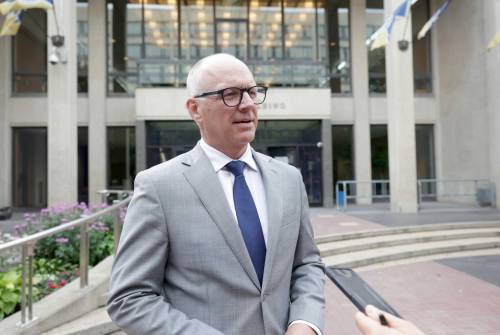
“Having development support our trade is key,” Randeep Sarai, the secretary of state for international development, told me earlier this year.
Emergency humanitarian aid would not be affected by the change, he said. But money intended for development projects — things like health care, education and agriculture — would be linked to trade. “We are trying to focus on where there are trade opportunities,” he said.
While this might seem to some like a pragmatic response to the need to ensure Canada’s economic security during this time of international upheaval, it goes against the 2008 Official Development Assistance Accountability Act, or “Better Aid Bill.”
That act legally mandates Canada to prioritize poor people in the developing world with its foreign aid — to make sure they and their needs always come first.
For faith-based aid groups, the move towards linking trade with aid is a challenging change of direction. Their scriptures command them to share with others without regard for any kind of return. How are they responding to this change of direction? I asked a few of them.
“I am concerned about the fact that the Canadian government is drifting in this direction,” said Ken Kim, executive director of Mennonite Central Committee (MCC).
MCC “remains committed to the ministry of compassion in responding to human need,” he said, noting the organization plans to “stay the course” despite the governmental change.
“Our faith says we should stand up, be present and be an example,” Kim said, adding that for MCC, “how Canada carries out development assistance cannot be with the aim of trade first.”
Houda Kerkadi is a media relations specialist for Islamic Relief Canada. For Muslims, “caring for people in need is a moral obligation,” she said.
Whatever direction the government takes, that organization will always put human dignity and human need first, she said, adding “our work is guided by values rooted in our faith, including sincerity, excellence, compassion, social justice and custodianship.”
While Islamic Relief recognizes the government has to think about things like Canadian prosperity, stability and resilience, it is willing to work with it to help meet those objectives as long as it goes hand-in-hand with principled international assistance, she said.
The goal of aid from Canada should always be to “genuinely serve people in need, protect dignity and help build lasting pathways out of poverty and vulnerability,” Kerkadi said, adding that Islamic Relief will “continue to serve those who need it most.”
Will Postma is executive director of Alongside Hope, the relief and development organization of the Anglican Church of Canada. “There is no small amount of sadness in seeing aid and trade being so intentionally linked together by the government,” he said.
The guiding principle for his organization is the parable of the Good Samaritan. “A biblical view of aid is really about love for neighbour,” he said of the story told by Jesus about giving help to a wounded traveller without seeking anything in return.
While Canada should be looking for ways to diversify its trade, not every country is in a place where it can offer anything tangible back to Canadians, especially countries experiencing conflict, he said.
“The government should focus aid on what Canadians want to see with their own charitable donations, things like health, education and livelihoods,” Postma said. Trade opportunities might come later, but aid should start by first helping people in other countries move forward, he added.
Luke Stocking directs public engagement for Caritas Canada, the development organization for Canadian Roman Catholics.
Guided by Catholic social teaching, which prioritizes the needs of the poor, Stocking said that Caritas Canada will insist that all overseas development assistance from Canada be consistent with the “Better Aid Bill” by being focused on poverty reduction and taking into account the perspective of the poor.
Andy Harrington is executive director of Canadian Foodgrains Bank, a partnership of 15 church-based aid groups. He also understands the government’s need to deliver value for Canadians in various ways. But he has concerns about framing development assistance too closely around trade objectives.
“Development aid is most effective when it is clearly focused on reducing poverty, responding to humanitarian needs, and strengthening local systems, particularly in the world’s poorest and most fragile contexts,” Harrington said.
When commercial interests become the main driver, Canada risks shifting assistance away from the area of greatest need and moving it towards areas where the economic returns for Canada can be maximized, he observed.
When that happens, “the people we serve, who are at the heart of our mission, can suffer,” he said.
faith@freepress.mb.ca
The Free Press is committed to covering faith in Manitoba through our Religion in the News project. This reporting continues because readers like you step forward to fund it.
Donate now to support our reporting on religion.
Your donation is eligible for a charitable tax receipt.
BECOME A FAITH JOURNALISM SUPPORTER
Our newsroom depends on a growing audience of readers to power our journalism. If you are not a paid reader, please consider becoming a subscriber.
Our newsroom depends on its audience of readers to power our journalism. Thank you for your support.
The Free Press is committed to covering faith in Manitoba through our Religion in the News project. This reporting continues because readers like you step forward to fund it.
Donate now to support our reporting on religion.
Your donation is eligible for a charitable tax receipt.
BECOME A FAITH JOURNALISM SUPPORTER
Our newsroom depends on a growing audience of readers to power our journalism. If you are not a paid reader, please consider becoming a subscriber.
Our newsroom depends on its audience of readers to power our journalism. Thank you for your support.
Advertisement Advertise With Us
Advertisement Advertise With Us
The Free Press acknowledges the financial support it receives from members of the city’s faith community, which makes our coverage of religion possible.