

Timeless traditions, curated customs
Rituals of ceremonies the cornerstone of Hindu weddings
Advertisement
Read this article for free:
or
Already have an account? Log in here »
To continue reading, please subscribe:

Digital Subscription
One year of digital access for only $205*
- Enjoy unlimited reading on winnipegfreepress.com
- Read the E-Edition, our digital replica newspaper
- Access News Break, our award-winning app
- Play interactive puzzles
*First annual payment billed as $205.00 + GST for one year. This annual subscription will automatically renew at $233.00 + GST every 52 weeks (10% off the regular annual price of $259.35). Offer available to new and qualified returning subscribers only. Cancel any time.
To continue reading, please subscribe:
Add Free Press access to your Brandon Sun subscription for only an additional
$1 for the first 4 weeks*
- Enjoy unlimited reading on winnipegfreepress.com
- Read the E-Edition, our digital replica newspaper
- Access News Break, our award-winning app
- Play interactive puzzles
*Your next Brandon Sun subscription payment will increase by $1.00 and you will be charged $17.95 plus GST for four weeks. After four weeks, your payment will increase to $24.95 plus GST every four weeks.
Read unlimited articles for free today:
or
Already have an account? Log in here »
Taking place over three to five days, a Hindu wedding is steeped in timeless traditions and curated customs.
While the grandeur of Hindu weddings strikes stunning notes, the rituals of the ceremonies remain the cornerstone of the celebration. The rituals are sacred offerings to seek blessings from the Divine and family and friends for the bride and groom to have a healthy and happy life.
Deeply anchored to the wedding rituals, called shaadi ki rasmein, is the role of family members. In Indian culture, it is believed that a wedding is an alliance of two families, not only an alliance of two people. Dates for the wedding ceremonies are sought by a Hindu priest who reads the bride and groom’s horoscope, or kundali to determine the auspicious time, or muhurat for the celebrations. Parents of both sides are consulted in this special first step.
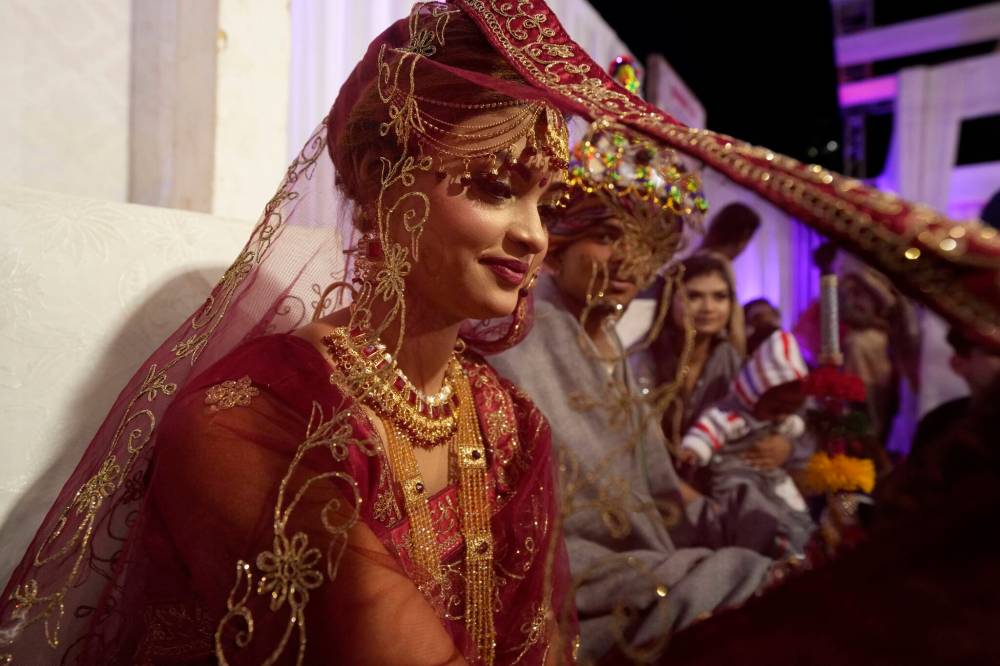
While some wedding rituals are common across different regions of India, others are unique to a particular region. Among Indo- Caribbeans of the Hindu faith, wedding rituals vary. One of these cherished rituals is the Maticoor, or Matkor ceremony, which symbolizes that by expressing gratitude to Mother Earth, the lives of the new couple will be happy and harmonious.
Colours for Hindu weddings matter. Red remains the colour of choice for brides. They traditionally wear a bright red sari or lehenga (long flowing skirt with matching blouse). The hue is associated with Goddess Durga and Goddess Laxmi who signify strength and protection as well as wealth and prosperity, respectively. Some brides opt for other bright colours such as maroon or pink. They are adorned with a matching veil to cover their heads as a sign of grace and respect.
For their wedding day attire, grooms don a regal look by typically wearing a classic cream or gold-hued sherwani (full-length majestic tunic with matching pants). They cover their heads with either a jewelled headpiece called a mukut or an ornate turban. Grooms also wear a beaded face veil, or sehra for a portion of the marriage ceremony.
White and black are inauspicious colours for the bride and groom to wear for their wedding-day rituals.
The mandap, referring to a four-pillared structure, serves as the wedding altar or sacred stage. Decorated with flowing fabric and flowers, illuminated by lights and diyas, the mandap can be elaborately ornate or simply elegant. In earlier times, the marriage ceremony took place at the bride’s home in an outdoor tent. Modern-day ceremonies occur in hotels, weddings halls or at destination locales. Weddings can also be held in Hindu temples. A mandap is erected under which the marriage rituals are performed and presided over by a Hindu priest. The four pillars of the mandap represent the foundation for a successful marriage based upon the Hindu way of life (Sanatana Dharma): duty and righteousness, wealth and prosperity, love and spiritual liberation.
Here is a glimpse at the ceremonies and rituals that comprise a Hindu wedding:
Sagai — This celebration is the engagement ceremony. Traditionally, it takes place at the bride’s home. Other social venues are often used. The Sagai ceremony is where the bride and groom exchange rings in the presence of their family and close friends. They receive blessings from their elders, and Indian sweets and gifts are exchanged to celebrate the occasion.
Ganesha Puja — Held at the bride and groom’s respective homes, this is a ceremony of prayers and religious offerings (puja) to Lord Ganesha, the remover of obstacles. It is done to ensure the wedding is carried out well and to seek blessings of peace and success in the new couple’s life.
Haldi — Both bride and groom have a paste made from turmeric (haldi), oil and water applied to them by family and close friends. The ceremony occurs at the homes of the bride and groom. The bright yellow paste is meant to purify and beautify the bride and groom before the marriage ceremony. With its holistic properties, the haldi paste renders a radiance to help the bride and groom look their very best on their wedding day. After the ceremony, the bride and groom bathe to fully wash off the paste. In some cases, the face and body are covered with the paste. Modifications of the haldi ceremony involve only applying less paste.
Mehendi — Usually taking place at home, this festive party involves applying elaborate and detailed henna designs to the bride’s hands and feet to beautify herself in preparation for the marriage ceremony. Female family members and close friends join the bride in having mehendi applied at this pre-wedding event. The groom’s family will also hold a mehendi party for his female relatives and friends. For a special touch, some grooms are now applying a bit of mehendi on their hands with designs of the bride and groom’s names or initials.
Sangeet — Another festive party before the wedding day, this celebration is filled with food, music and dancing as well as entertainment and performances. Female guests will be treated to henna designs.
During the wedding week, the timing of the haldi, mehendi and sangeet ceremonies can vary or they can be held as combined events.
Marriage ceremony — Here are some key rituals for the Vivah Sanskar, or Hindu marriage ceremony.
At the wedding venue, for the groom’s entrance with his entourage, the Baraat, he arrives with vibrant music and relatives dancing around him. For a regal entrance, the groom may arrive on a decorated horse. The groom’s family is greeted and welcomed by the bride’s family. Upon this meeting, the fathers and male relatives of both sides embrace each other, a sign of the two families coming together. At their meeting, called the Milni, the families are surrounded by drumming and dancing to felicitate the joyous moment.
For her grand entrance to the mandap, the bride arrives in a doli, a covered palanquin carried on the shoulders of her male siblings and/or relatives. Alternatively, she may arrive by walking in, accompanied by relatives who hold either an ornate veil or floral canopy over her in a procession called Kanya Aagaman.
The bride and groom exchange floral garlands, a ritual called Varmala or Jaimala, that symbolizes they acknowledge each other as life partners.
The Kanyadaan ritual involves the bride’s father placing the right hand of his daughter into the groom’s right hand, followed by the bride’s mother pouring water over their hands. This is a precious moment for the parents who give their daughter to the groom for him to care for, love and cherish during their entire lives and in respect of the Hindu way of life.
As the bride and groom walk around the sacred fire (Agni) seven times, they make offerings of puffed rice grains — signifying prosperity, happiness and health — into the fire which is the divine witness for their union. For this ritual of Agni Pradakshina, the bride and groom have a shawl joining them together, indicating they are a united couple.
The bride and groom together take seven steps (Saptapadi). Each step represents a specific vow taken, such as a commitment for physical, emotional, intellectual and spiritual strength, happiness, harmony and understanding. As the bride and groom take their seven steps, they are connected by the shawl.
The groom applies sindoor to the bride’s hair parting. It signifies the bride is a married woman in the Hindu faith. As a very personal moment between the bride and groom, traditionally, when the sindoor daan ritual takes places, they have a shawl or cloth covering their heads.

The groom clasps the mangalsutra, the sacred nuptial chain, around the bride’s neck. The gold black-beaded mangalsutra indicates a married Hindu woman and is worn to ward off evil. Modern styles of the necklace are diamond-studded.
To complete the marriage ceremony, the final blessing, Aashirvaad, involves the bride and groom being showered with rice and flowers. Family and friends offer their good wishes and blessings of happiness and success for the couple’s married life.
Translated to mean farewell, the Vidaai is an emotional moment for the bride, her parents and family. Following the ceremony, the bride goes with the groom as a sign of leaving her home and starting a new life with a new family.
If you attend a Hindu wedding, whether locally or abroad, there are many mesmerising and magical moments. You are indeed treated to an enchanting and elaborate experience rich in culture, bound by faith and full of colourful festivities.
Romona Goomansingh, PhD, is an educator, freelance writer and author in Winnipeg.
The Free Press is committed to covering faith in Manitoba through our Religion in the News project. This reporting continues because readers like you step forward to fund it.
Donate now to support our reporting on religion.
Your donation is eligible for a charitable tax receipt.
BECOME A FAITH JOURNALISM SUPPORTER
The Free Press acknowledges the financial support it receives from members of the city’s faith community, which makes our coverage of religion possible.





