Takeaways from AP’s report on expanded medical aid-in-dying laws
Advertisement
Read this article for free:
or
Already have an account? Log in here »
To continue reading, please subscribe:

Digital Subscription
One year of digital access for only $205*
- Enjoy unlimited reading on winnipegfreepress.com
- Read the E-Edition, our digital replica newspaper
- Access News Break, our award-winning app
- Play interactive puzzles
*First annual payment billed as $205.00 + GST for one year. This annual subscription will automatically renew at $233.00 + GST every 52 weeks (10% off the regular annual price of $259.35). Offer available to new and qualified returning subscribers only. Cancel any time.
To continue reading, please subscribe:
Add Free Press access to your Brandon Sun subscription for only an additional
$1 for the first 4 weeks*
- Enjoy unlimited reading on winnipegfreepress.com
- Read the E-Edition, our digital replica newspaper
- Access News Break, our award-winning app
- Play interactive puzzles
*Your next Brandon Sun subscription payment will increase by $1.00 and you will be charged $17.95 plus GST for four weeks. After four weeks, your payment will increase to $24.95 plus GST every four weeks.
Read unlimited articles for free today:
or
Already have an account? Log in here »
The practice of allowing a doctor to help terminally ill patients end their lives with medication has been legalized in recent years in several countries across the world.
In the U.S., New York and Illinois recently became the latest of 13 states to join an accelerating pace of legislation with this goal.
Pope Leo XIV has said he’s “very disappointed” that his home state of Illinois approved the law that’s condemned by the Catholic Church.
The issue remains contested, with opposition by many religious groups, lawmakers and disability advocates. Polls show that most Americans generally think medical aid in dying is either morally acceptable or not a moral issue, although opinions vary across different faiths and political lines.
The Associated Press interviewed doctors, faith leaders, legal experts and people on both sides of the hotly debated issue. They included terminally ill patients who spoke before they used these laws to set the terms of their death.
Here are some takeaways from the AP’s reporting.
Accelerating pace in legislation
Oregon was the first U.S. state to legalize medical aid in dying, with the law coming into effect in 1997.
Since then, what remains generally consistent is that to use the laws, one must have an incurable illness and less than six months to live, said Thaddeus Pope, a bioethicist and professor at Mitchell Hamline School of Law in St. Paul, Minnesota. (The only exception is Montana, where it became legal through a court ruling instead of the state legislature.)
To qualify, one must also be able to understand and make a voluntary decision and be able to take the medications without assistance.
The latest states to legalize it are among the nation’s most populous: New York, where it came into effect in August, and Illinois earlier this month. At least 15 other states considered medical aid in dying legislation this year; most proposals stalled or missed the legislative deadline.
Today, about 1/3 of Americans live in a state with legal aid in dying.
Illinois became the first state in the Midwest and the 13th state overall (plus the District of Columbia) to authorize medical aid in dying.
The governor signed the law; the pope was displeased
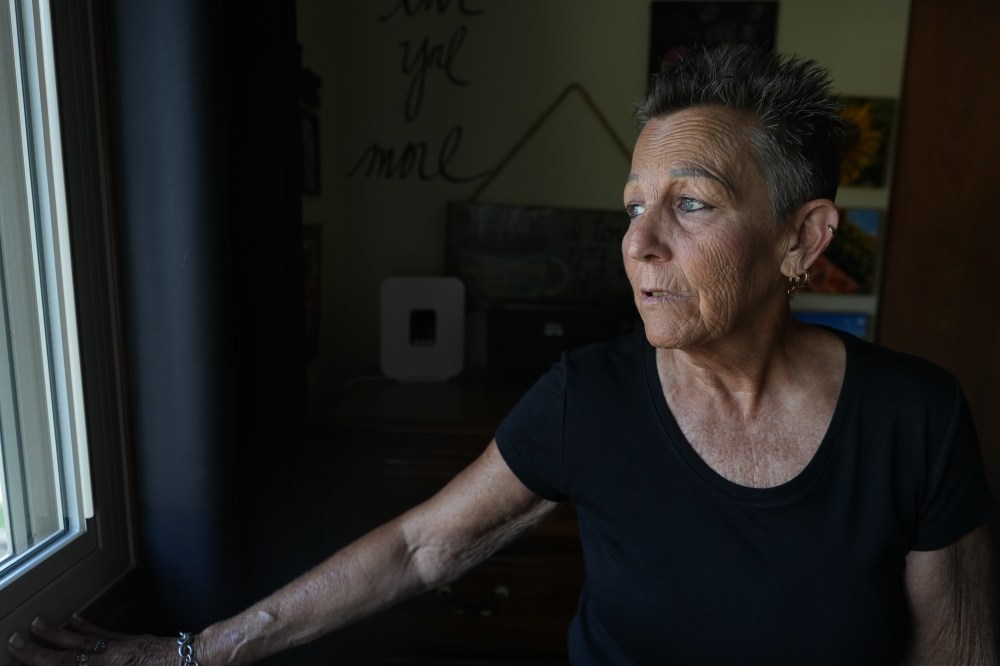
The Illinois measure is widely known as “Deb’s law,” honoring Deb Robertson, who has been living with a rare terminal illness. She pushed for the measure’s approval and testified to the suffering of people seeking the chance to decide for themselves how and when their lives should end.
“I believe that God gave me this extra time so that I could see this law through,” Robertson said. “I believe that people have the right to leave this Earth with dignity and on their own terms.”
Even Pope Leo XIV waded into the issue. The pope urged Gov. JB Pritzker not to sign the bill into law and said he was “very disappointed” that his home state of Illinois approved the law.
After signing “Deb’s law,” Pritzker said he had been moved by stories of patients suffering from terminal illness and their dedication to standing up for freedom and choice at the end of life in the midst of personal heartbreak.
Nilsa Centeno said she continued to advocate for a cause that was dear to her son, Miguel Carrasquillo, a chef who worked in Chicago and who died in 2016 at age 35 from an aggressive form of brain cancer. When she learned that the law had passed, she burst into tears.
“My joy was so immense. I cried because my son was an advocate for that law and as a good Puerto Rican, he would have shouted out: ‘Wepa! At last!’” Centeno said. For years, she witnessed her son suffer from painful treatments while the cancer spread.
Robert Drake, an interfaith hospice and palliative care chaplain, believes that when terminal suffering reaches an intolerable level, people must have a choice.
“At the end of the day, it gets down to respect for the sanctity and sovereignty of any individual and respect for their suffering and for their right to die in some way in congruence with the way they have lived,” he said.
“We’re not playing God by allowing a person to have their own choice. We’re trusting God to end that person and their relationship with whatever they think is sacred.”
The issue remains bitterly contested
Opponents, including many religious groups, lawmakers and disability advocates, have moral objections to someone ending their life. Some argue that even with safeguards in place, the decision could be made for the wrong reasons.
Catholic teaching holds that life must be defended from conception until natural death.
Chicago’s archbishop, Cardinal Blase Cupich, and Springfield Bishop Thomas Paprocki challenged “Deb’s law” in separate lawsuits and won limited protections without blocking the law from being enacted.
In the days before the law took effect, a judge temporarily blocked the state of Illinois from enforcing the law on some Catholic groups that challenged it in a lawsuit. They had argued the law could compel Catholic healthcare providers to refer or provide help against their faith in what they believe is assisted suicide.
Equating assisted dying with suicide is not only antiquated or misleading, but harmful, said Anita Hannig, a cultural anthropologist and author of “The Day I Die: The Untold Story of Assisted Dying in America.”
In a piece published by The Conversation, she wrote about how calling assisted dying suicide taps into social taboos and moral outrage.
The stigma, she said, can lead patients who are severely ill to be left without critical support because they hide their wish from loved ones for fear of being judged for “suiciding.” It also creates shame for those who want to be relieved from their suffering, but who worry that their religion deems suicide a sin. Her research, she said, shows that the conflation of assisted dying with suicide can also cause families to feel isolated as they process their grief.
___
Associated Press religion coverage receives support through the AP’s collaboration with The Conversation US, with funding from Lilly Endowment Inc. The AP is solely responsible for this content.
The Free Press acknowledges the financial support it receives from members of the city’s faith community, which makes our coverage of religion possible.