New perspectives
Interesting questions look at current events from different angle

Advertisement
Read this article for free:
or
Already have an account? Log in here »
To continue reading, please subscribe:
Digital Subscription
One year of digital access for only $1.44 a week*
- Enjoy unlimited reading on winnipegfreepress.com
- Read the E-Edition, our digital replica newspaper
- Access News Break, our award-winning app
- Play interactive puzzles
*Billed as $5.77 plus GST every four weeks. After 52 weeks, price increases to the regular rate of $19.95 plus GST every four weeks. Offer available to new and qualified returning subscribers only. Cancel any time.
To continue reading, please subscribe:
Add Free Press access to your Brandon Sun subscription for only an additional
$1 for the first 4 weeks*
- Enjoy unlimited reading on winnipegfreepress.com
- Read the E-Edition, our digital replica newspaper
- Access News Break, our award-winning app
- Play interactive puzzles
*Your next Brandon Sun subscription payment will increase by $1.00 and you will be charged $17.95 plus GST for four weeks. After four weeks, your payment will increase to $24.95 plus GST every four weeks.
Read unlimited articles for free today:
or
Already have an account? Log in here »
Hey there, time traveller!
This article was published 13/07/2019 (2662 days ago), so information in it may no longer be current.
Every week, items come across my desk that raise interesting questions. Here are a few of them.
What is a Mennonite, anyway? A Jewish friend who read my article about Mennonite Heritage Week expressed surprise that Mennonites today belong to many ethnic groups. “Can you be Mennonite without being descended from northern European Mennonites?” he asked.
Indeed, one certainly can. Today, there are 2.1 million Mennonites in 86 countries, with two-thirds living in the global south. Thirty-six per cent are in Africa, 30 per cent in North America, 20 per cent in Asia, 9.5 per cent in Latin America and just three per cent in Europe, where the movement originated.
In fact, Ethiopia, with 310,000 Mennonites, has over twice as many as in Canada (149,000). India has 257,000 and there are 225,000 in Congo.
The upshot? When Mennonite Heritage Week rolls around, there may be a lot of heritages being celebrated.
Why wasn’t religion mentioned in the Tina Fontaine report? The city was transfixed in March when the Manitoba Advocate for Children and Youth released its report about the tragic death of Tina Fontaine.
The comprehensive report covered many things related to her short life, but it said nothing about religion.
When I asked the office about it, Ainsley Krone, deputy Manitoba advocate for children and youth, said: “As far as religion’s connection to Tina, it’s not really something that we encountered as we investigated her story.”
Of course, nobody can be forced to attend religious programs or avail themselves of their programs or services. And there are, in fact, many church-related organizations involved in the north end of Winnipeg; maybe the office didn’t look hard enough.
But still, what does it say when an extensive review finds no evidence that any religious group tried to help her? That might be a question worth pondering.
How did a Christian praise song from the 1970s end up being the anthem of the Hong Kong protests? The round song, titled Sing Hallelujah to the Lord, was written by Linda Stassen in 1974. First sung by some Christian students, it has been a prominent feature of the mass demonstrations against a proposed extradition bill.
Why was it sung? One reason was practical: religious gatherings are exempt from the definition of a “gathering” or “assembly” under Hong Kong’s public ordinances.
But it turns out the song has also had a calming and peaceful effect, with protesters saying it often helps defuse tensions with the police.
“This was the one people picked up, as it is easy for people to follow, with a simple message and easy melody,” one protester said. Another said the song helps “us to stay calm and meditate.”
It seems to have worked. Except for a couple of violent actions, the protests, which have brought millions of people to the streets, have been peaceful. And it does make one wonder: why so little media coverage of this unique aspect of the protests?
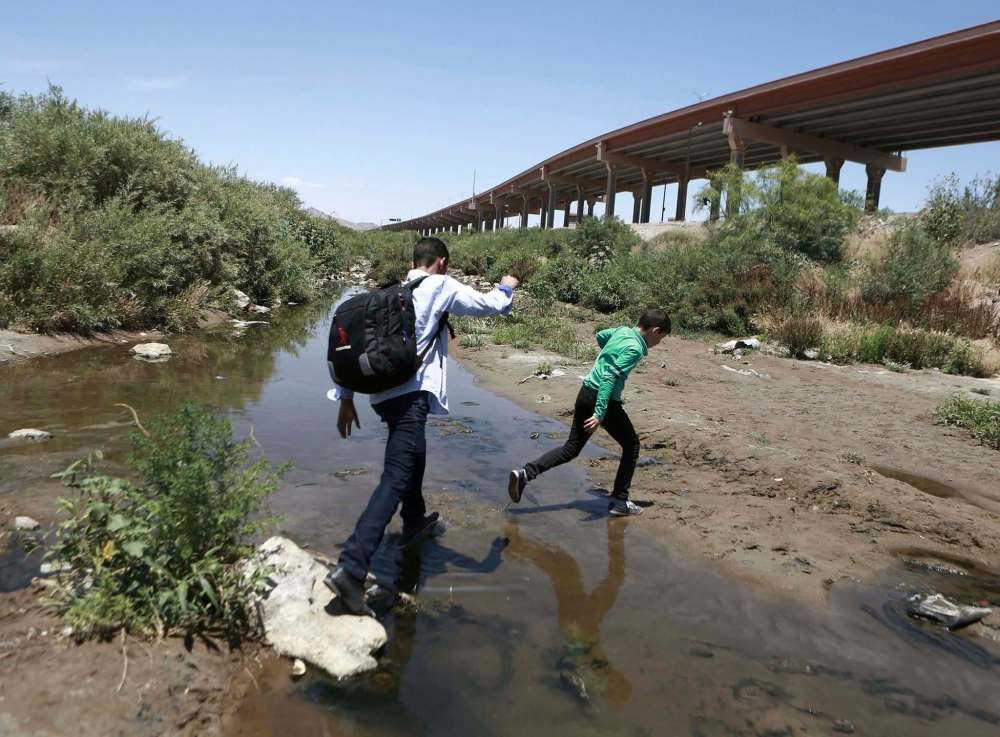
How should Christians treat Christians at the U.S. southern border? We often think of people like the Central American migrants at the U.S.-Mexico border as “the other,” people from different countries and cultures who are not like us.
But it turns out they are mostly Christians, and many are evangelicals. That’s what John Garland, pastor of the San Antonio Mennonite Church in Texas, wrote in Christianity Today.

“The church I pastor has, for years, hosted asylum-seeking families as they pass through,” he wrote. “Upon arrival, they sign our guest book and tell us their religious affiliation. The vast majority of these families arriving at our church — nearly 80 per cent — are evangelical Christians.”
When members of the church meet them for the first time, the migrants often ask them to read the Bible together, and many have large numbers of Bible verses committed to memory, he wrote.
Many American politicians who take hardline positions against Central American migrants claim to be Christians. I wonder what would happen if they knew many are their co-religionists — might it change their views? Some of the migrants might even belong to the same denominations they are members of. Would knowing they are followers of Jesus, just like they claim to be, cause them to be more generous and hospitable?
If you have any responses to those questions, feel free to let me know.
faith@freepress.mb.ca
The Free Press is committed to covering faith in Manitoba through our Religion in the News project. This reporting continues because readers like you step forward to fund it.
Donate now to support our reporting on religion.
Your donation is eligible for a charitable tax receipt.
BECOME A FAITH JOURNALISM SUPPORTER
Our newsroom depends on a growing audience of readers to power our journalism. If you are not a paid reader, please consider becoming a subscriber.
Our newsroom depends on its audience of readers to power our journalism. Thank you for your support.
The Free Press is committed to covering faith in Manitoba through our Religion in the News project. This reporting continues because readers like you step forward to fund it.
Donate now to support our reporting on religion.
Your donation is eligible for a charitable tax receipt.
BECOME A FAITH JOURNALISM SUPPORTER
Our newsroom depends on a growing audience of readers to power our journalism. If you are not a paid reader, please consider becoming a subscriber.
Our newsroom depends on its audience of readers to power our journalism. Thank you for your support.
Advertisement Advertise With Us
Advertisement Advertise With Us
The Free Press acknowledges the financial support it receives from members of the city’s faith community, which makes our coverage of religion possible.