Flying cars pave way for airborne road rage

Advertisement

Advertise with us

When I was an impressionable kid growing up on the West Coast. I knew exactly what the future was going to look like.

Read this article for free:

or

Already have an account? Log in here »

To continue reading, please subscribe:

Subscribe and receive a limited-edition Free Press branded hat or tote.

Digital Subscription

One year of digital access for only $205*

  • Enjoy unlimited reading on winnipegfreepress.com
  • Read the E-Edition, our digital replica newspaper
  • Access News Break, our award-winning app
  • Play interactive puzzles

*First annual payment billed as $205.00 + GST for one year. This annual subscription will automatically renew at $233.00 + GST every 52 weeks (10% off the regular annual price of $259.35). Offer available to new and qualified returning subscribers only. Cancel any time.

To continue reading, please subscribe:

Add Free Press access to your Brandon Sun subscription for only an additional

$1 for the first 4 weeks*

  • Enjoy unlimited reading on winnipegfreepress.com
  • Read the E-Edition, our digital replica newspaper
  • Access News Break, our award-winning app
  • Play interactive puzzles
Start now

*Your next Brandon Sun subscription payment will increase by $1.00 and you will be charged $17.95 plus GST for four weeks. After four weeks, your payment will increase to $24.95 plus GST every four weeks.

Opinion

Hey there, time traveller!
This article was published 12/07/2021 (1850 days ago), so information in it may no longer be current.

When I was an impressionable kid growing up on the West Coast. I knew exactly what the future was going to look like.

Back in the 1960s, a fabulous future was displayed in awe-inspiring, full-colour artist’s renditions in the pages of Popular Mechanics magazine, and in the ultra-cheesy science-fiction movies that I watched on the black-and-white TV in the basement of my family home.

Those glitzy magazine stories and movies promised that, by the year 2000 at the latest, we would all be living in fabulous domed underwater cities, feasting on five-course meals stuffed into pills, solving crimes with our wisecracking robot sidekicks and, best of all, zooming to work in our personal jetpacks.

TASR / Jaroslav Novak World premiere of the flight of the flying car Aircar - for the first time in the world, the flying car is flying between two international airports - from Nitra to Bratislava. In the picture, an Aircar at Airport in Bratislava on June 28, 2021.

But more than anything, the future was going to be all about flying cars.

I knew in my heart what flying cars were going to look like, because every kid on my block was glued to the 1960s animated TV show The Jetsons, wherein George Jetson commuted to work at Spacely Space Sprockets in his aerocar, which was a sort of flying saucer with a transparent bubble top.

In the 1960s, that amazing car was little more than a dream, but today the dream appears ready to take off, because on June 28, the AirCar Prototype 1 — a dual-mode car-aircraft vehicle designed by Slovakian tech company Klein Vision — completed its first historic inter-city flight.

The prototype AirCar spent 35 minutes in the air en route from Nitra to the Slovakian capital of Bratislava, and was piloted in this pivotal voyage by its inventor and CEO of Klein Vision, professor Stefan Klein.

My wife and I looked on in wonder as footage showed Klein safely landing and transforming the aircraft into a sleek road-legal sports car with the click of a button — a transformation that took less than three minutes. After retracting the wings, Klein drove his flying car off the runway into downtown Bratislava.

“This flight starts a new era of dual transportation vehicles,” is what the inventor said when he exited the vehicle. “It has turned science fiction into reality.”

Despite having spent much of my life dreaming of the day flying cars would finally arrive, I am a little skeptical.

Apparently I am not the only one. Here’s what a U.S. think tank called Centre for American Progress has to say about flying cars: “The inevitable reality is that flying cars will confer advantages on direct users while exacerbating the geographic isolation of elites — a spatial manifestation of deepening inequality that undermines the shared experiences that are necessary to sustain democracy.”

What exactly does that mean? I don’t have a clue. My main concern is I do not believe Winnipeggers are ready to get behind the wheel of a flying car, because Winnipeggers are arguably the world’s worst drivers. (I am not talking about you because, based on the sensitive manner in which you are reading today’s column, it is obvious you have NASCAR-level skills.)

Winnipeg is nothing like the futuristic city in which the Jetsons lived, wherein smiling cartoon characters could zip around safely in their flying bubble cars without ever experiencing “air rage” or slamming into the rear of another flying vehicle because they were mindlessly chatting on their video phone.

Drivers in this winter city would insist on zooming around in their flying cars without bothering to first sweep off the massive cap of snow covering the transparent bubbles, which means they would be flying blind, which I’m guessing would be a serious safety issue.

I’m terrified of a future in which snow-covered flying vehicles would be plummeting from the skies like icicles from a roof, which isn’t covered by CAA.

Also, drivers would forget to unplug their block-heater cords before they took off, which would “exacerbate the geographic isolation of elites,” and I’m sure the police hand out tickets for stuff like that.

doug.speirs@freepress.mb.ca
Report Error Submit a Tip

More Stories

Hydro CEO needs to reckon with winds of change

Dan Lett 5 minute read Preview

Hydro CEO needs to reckon with winds of change

Dan Lett 5 minute read Monday, Aug. 3, 2026

Methinks Hydro CEO Allan Danroth protests too much.

At a recent hearing in front of the Public Utilities Board, Danroth suggested Hydro’s plan to build a $3-billion natural-gas-powered generating plant near Brandon was being subjected to unfair criticism. The gas turbines are meant to bolster Hydro’s grid in the event that drought lowers output from hydro-generating stations.

After hearing submissions from interveners concerned about the gas-turbine plan, Danroth lashed out at the “constant, uninformed criticism” that has not only shaken trust in Hydro but also triggered threatening responses from the public.

Danroth said Hydro is monitoring “eight credible threats” against employees, five of which targeted the CEO himself. Although Danroth cited some specific incidents — employees being threatened with guns, and one where a homeowner set his dogs on a meter reader — he refused to elaborate on the circumstances.

Read
Monday, Aug. 3, 2026

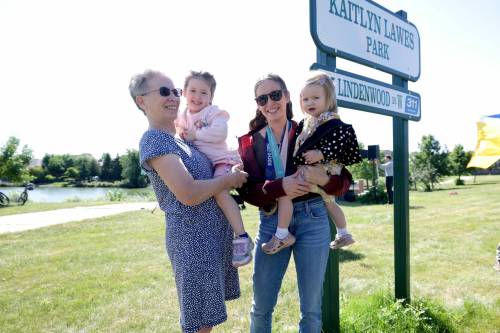
‘This is Mommy’s park’: city honours two-time Olympic champion curler Lawes

Zoe Pierce 4 minute read Preview

‘This is Mommy’s park’: city honours two-time Olympic champion curler Lawes

Zoe Pierce 4 minute read Yesterday at 1:21 PM CDT

When Kaitlyn Lawes drives through her childhood neighbourhood, she’ll now be able to point to a park bearing her name — and tell her daughters that anything is possible.

On Tuesday, the City of Winnipeg officially renamed Lindenwood Drive West Park in honour of the two-time Olympic gold medallist curler.

Lawes won her first Olympic gold medal in 2014 as part of Team Jennifer Jones at the Sochi Winter Olympics in Russia and captured a second gold medal in mixed doubles with John Morris at the 2018 Winter Olympics in PyeongChang, South Korea.

She has also won the 2018 World Women’s Curling Championship and the 2015 Scotties Tournament of Hearts, earned silver and bronze medals at the World Junior Curling Championships, and represented Manitoba at the Canada Games.

Read
Yesterday at 1:21 PM CDT

Once hailed as sign of strong bond, U.S. consulate in Winnipeg to close

Tyler Searle 6 minute read Preview

Once hailed as sign of strong bond, U.S. consulate in Winnipeg to close

Tyler Searle 6 minute read Yesterday at 6:21 PM CDT

There was much fanfare when the U.S. government re-established a permanent presence in Winnipeg in April 2001 as it unveiled its consulate and hailed it as a major achievement between two friendly nations.

“It is testimony not only to the importance the U.S. government attaches to our bilateral relationship with Canada but also to the increasing prominence of Winnipeg, Manitoba and the western region of the country in bilateral and multilateral affairs,” said U.S. Ambassador to Canada Gordon Giffin at a ceremony with then-premier Gary Doer.

Fast-forward to this week when it was learned the office at Portage and Main is set to close, meaning the U.S. will lose its primary advocate for American business and trade interests in Manitoba.

Dwight MacAulay was chief of protocol for the Manitoba government in 2001, calling it a time of celebration and strength between the countries.

Read
Yesterday at 6:21 PM CDT

Emergency room in Brandon short staffed

Alex Lambert 5 minute read 2:01 AM CDT

BRANDON — The health minister has acknowledged short staffing has created problems at the Brandon hospital emergency department.

“This is, I would say, a long-standing challenge and it’s also a national challenge. We know that there’s a national shortage of ED physicians,” Uzoma Asagwara told the Brandon Sun Tuesday.

The province is tackling the problem from “every possible angle,” including by offering financial incentives, they said.

“That incentive has … helped to stabilize the commitment of baseline hours for doctors in Brandon’s emergency department and it’s also resulted in an additional 700 (annual) hours being added to the schedule,” Asagwara said.

Homegrown grub: Resto turns to the Leaf for freshest ingredients

AV Kitching 4 minute read Preview

Homegrown grub: Resto turns to the Leaf for freshest ingredients

AV Kitching 4 minute read Yesterday at 3:39 PM CDT

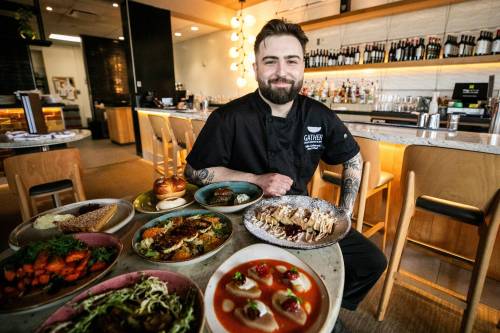
The term “eat local” has taken on a whole new meaning at Gather Craft Kitchen and Bar, where the journey from plot to plate is measured in footsteps rather than miles.

Head chef Mike Licharson has expanded the restaurant’s focus on local sourcing by incorporating fruit and vegetables grown in The Leaf’s biomes and outdoor kitchen garden into his menu.

Bananas from the tropical biomes star in his banana-bread French toast and accompanying banana compote. Leeks, braised slowly and paired with Manitoba-grown beluga lentils, and Swiss chard — which takes the place of grape leaves in Licharson’s play on classic meze dolmades, a nod to the chef’s Greek-Ukrainian-Irish heritage — are both grown in the outdoor kitchen garden.

The park’s produce complements the restaurant’s other locally sourced ingredients, Licharson says.

Read
Yesterday at 3:39 PM CDT

Toronto’s alternative crisis response model deemed a success

Scott Billeck 4 minute read Preview

Toronto’s alternative crisis response model deemed a success

Scott Billeck 4 minute read Yesterday at 2:01 AM CDT

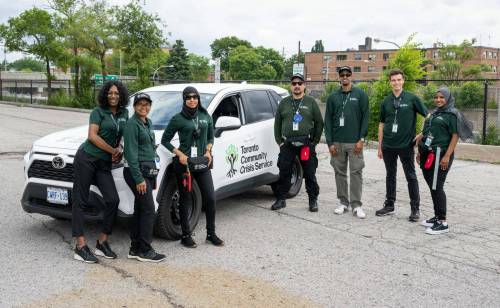
A Toronto emergency response program that helped inspire Winnipeg’s proposed alternative crisis response model has already expanded city-wide, just four years after launching as a pilot project.

The Toronto Community Crisis Service, launched in 2022, has become the city’s fourth emergency service, providing a 24-7, community-based response to people experiencing mental health crises. The service has handled nearly 50,000 calls through 911 and 211, dispatched mobile crisis teams to more than 41,000 incidents, made more than 11,600 referrals to health and social services and resolved the majority of eligible 911 calls without police involvement.

Winnipeg Mayor Scott Gillingham last week proposed creating a similar “fourth crisis response pathway” that would allow 911 calls that aren’t violent or criminal in nature to be transferred to community-based crisis teams.

Under the proposal, which has support from both the Winnipeg Police Service and the Winnipeg Fire Paramedic Service, a centralized crisis dispatch and co-ordination hub would receive triaged calls and match them with citywide response teams, staffed in part through existing community organizations, including the Downtown Community Safety Partnership and The Link’s mobile crisis teams. The goal is to divert appropriate calls away from the WPS and WFPS.

Read
Yesterday at 2:01 AM CDT