When it comes to our backsides, why are we so backwards?

Advertisement

Advertise with us

Some of us sit on elevated thrones, while others squat above holes. Some of us cleanse ourselves with dry paper, while others employ a nearby pitcher of water.

Read this article for free:


or

Already have an account? Log in here »

To continue reading, please subscribe:

Subscribe and receive a limited-edition Free Press branded hat or tote.

Digital Subscription

One year of digital access for only $205*

  • Enjoy unlimited reading on winnipegfreepress.com
  • Read the E-Edition, our digital replica newspaper
  • Access News Break, our award-winning app
  • Play interactive puzzles

*First annual payment billed as $205.00 + GST for one year. This annual subscription will automatically renew at $233.00 + GST every 52 weeks (10% off the regular annual price of $259.35). Offer available to new and qualified returning subscribers only. Cancel any time.

To continue reading, please subscribe:

Add Free Press access to your Brandon Sun subscription for only an additional

$1 for the first 4 weeks*

  • Enjoy unlimited reading on winnipegfreepress.com
  • Read the E-Edition, our digital replica newspaper
  • Access News Break, our award-winning app
  • Play interactive puzzles
Start now

*Your next Brandon Sun subscription payment will increase by $1.00 and you will be charged $17.95 plus GST for four weeks. After four weeks, your payment will increase to $24.95 plus GST every four weeks.

Hey there, time traveller!
This article was published 13/04/2014 (4501 days ago), so information in it may no longer be current.

Some of us sit on elevated thrones, while others squat above holes. Some of us cleanse ourselves with dry paper, while others employ a nearby pitcher of water.

Perhaps most notably: Some of us — let’s call them “the Japanese” — have invented a magical toilet seat, which transforms the act of excretion into a technologically enhanced pleasure ritual.

You may have heard about these Japanese toilet seats. Perhaps you’ve experimented with one on a trip to Tokyo. They boast remote controls, heated seats and bidet functions. Some models play whooshing white noise in an effort to obscure other, zestier sounds.
Bloomberg SLATE
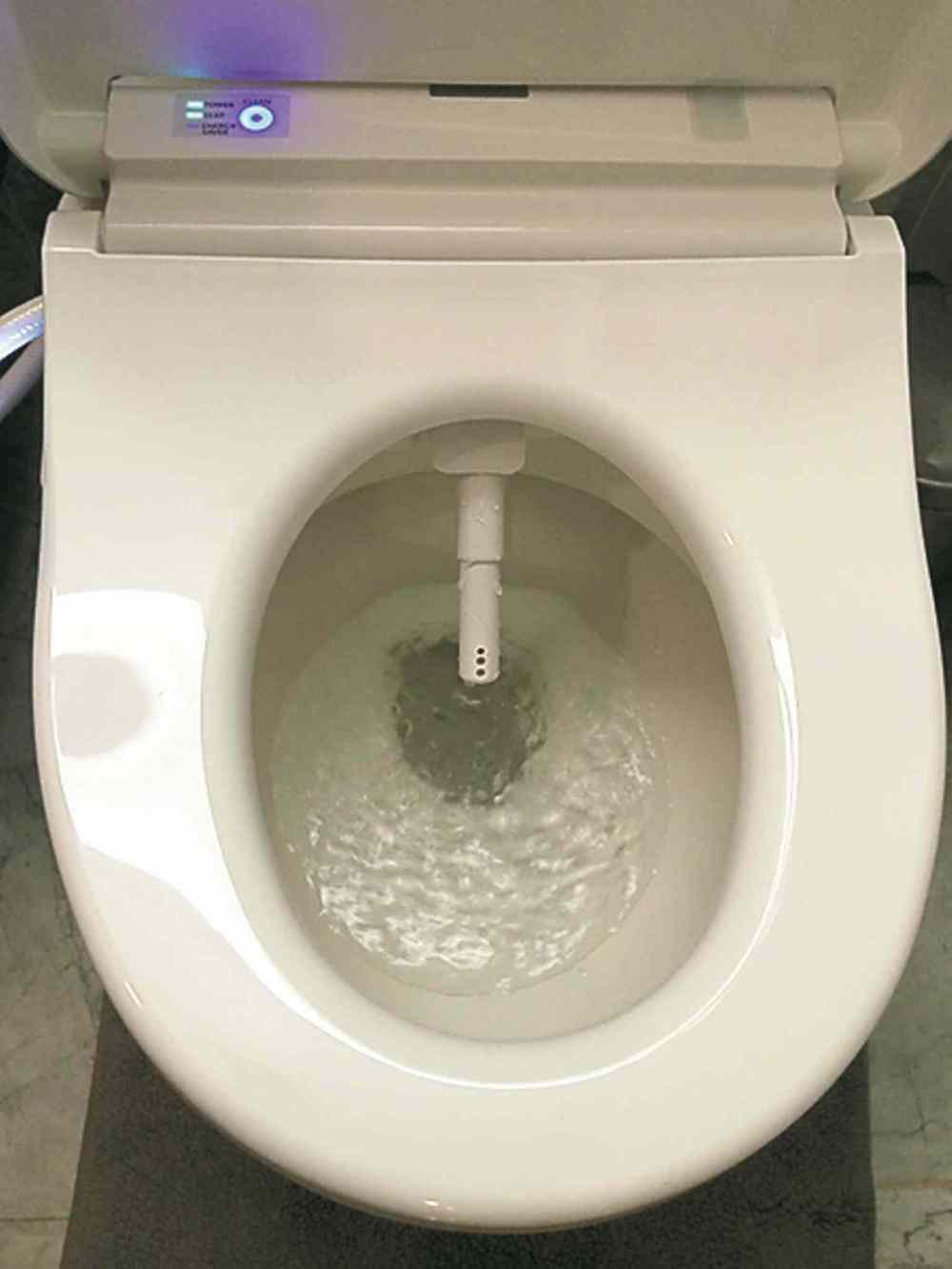
Toto: A Washlet S350 high-tech toilet. The company began marketing the Washlet in Japan in 1980. Now most Japanese households have toilets of the high-tech persuasion.
Bloomberg SLATE Toto: A Washlet S350 high-tech toilet. The company began marketing the Washlet in Japan in 1980. Now most Japanese households have toilets of the high-tech persuasion.

Toto, the leading brand, introduced its Washlet in 1982, and now more than 70 per cent of Japanese homes feature a toilet seat with enhanced capabilities. (Meanwhile, only 30 per cent have dishwashers.)

For some reason, we in North America have not yet boarded this fancy-toilet-seat train.

Given how often we use our toilets, and how much money we happily spend outfitting other corners of our houses with all manner of technologically advanced appliances, the lack of traction here for Toto seems curious.

I wondered: What do the Japanese know that we don’t? To find out, I borrowed a top-of-the-line Washlet S350e from Toto and installed it in my bathroom.

Installation was no big deal. You remove your existing toilet seat and replace it with the new one. I did this myself, in about 20 minutes.

I did occasionally bump my skull against porcelain, but I managed to shut off the water flow to my toilet tank, unscrew the flexible pipe that connects to the spigot in the wall, and screw in the adaptor valve Toto provides.

Now water would be routed not only to the tank but also to the toilet seat’s bidet nozzle and its separate bowl-cleaning sprayer.

I slid the batteries into the remote control and voila: All at once, my bathroom became a realm of surprise and delight. Press a button and the toilet seat lifts itself, hands-free. Press the button again and the seat smoothly descends into place, ready for action.

As it senses my approach, the Washlet sprays the inside of the toilet bowl with a preparatory mist of electrolyzed water — ensuring that, as the manual somewhat primly explains, “dirt” will not stick.

Prim readers can avert their eyes here: We now must describe the Washlet’s more intimate functions. Capabilities that one may experience only after one has dropped trou.

First, there is the heated seat. This is the sort of thing you don’t realize you need in your life until you’ve tried it and immediately decide you can no longer live without it.

It is truly a pleasure to press your hind flesh to an oval of cosy warmth, instead of receiving a mild, chilly shock. Using the Washlet’s remote, you can adjust the seat’s temperature up or down until your haunches are happy.

When the time comes, the bidet function is also at your command. This is of course the killer app of the Washlet. The “money shot.” What separates the Toto from other toilet seats. It’s also something that we, as North Americans, seem to be collectively intimidated by and/or squeamish about.

What lies behind our general discomfort with moist butt-cleaning? Do we feel that dry toilet paper is properly penitent — a fair punishment for our nasty, corporeal doings?

Is it that we’re embarrassed to devote special attention to this part of our bodies? That we feel it’s weird or deviant to expend additional time, or money, or effort tending to our backsides? Is it that we’re ashamed to let others see our bidets, as this would imply that we do indeed have anuses and that they are occasionally sub-pristine?
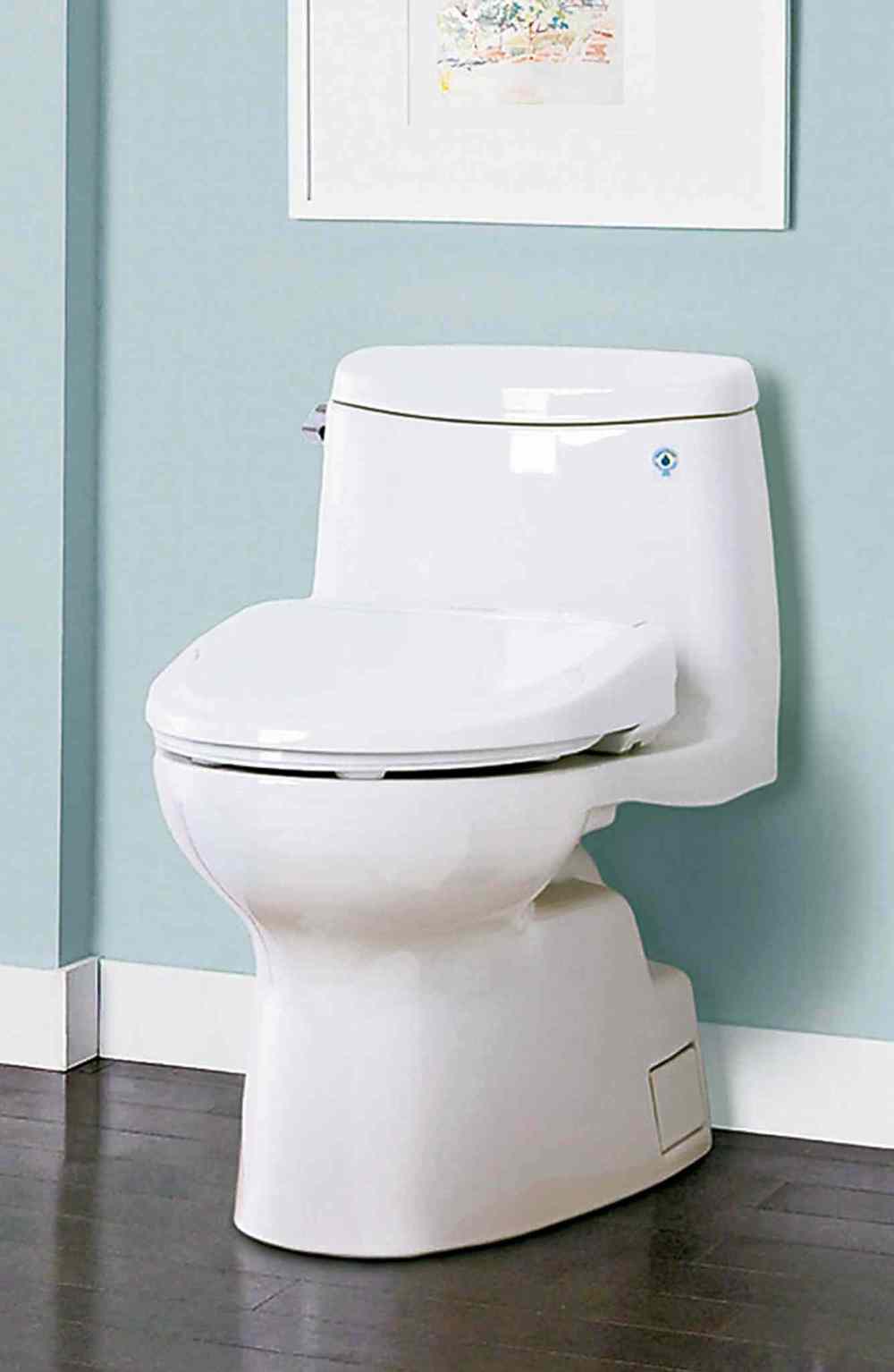
CP
Toto: A Washlet S350 high-tech toilet. The company began marketing the Washlet in Japan in 1980. Now most Japanese households have toilets of the high-tech persuasion.
CP Toto: A Washlet S350 high-tech toilet. The company began marketing the Washlet in Japan in 1980. Now most Japanese households have toilets of the high-tech persuasion.

Look no further than the disappointing sales of moist toilet tissue to see how freaked out we are by the thought of using anything beyond good old dry toilet paper.

Cottonelle’s latest ads for its moist, flushable wipes feature a British woman who wants you to “talk about your bum.”

Somehow her accent, and her cutesy toddler vocabulary, are defamiliarizing enough to disarm the folks she cajoles in the ads.

But the fact we require a foreign advocate just to make us even consider a moistened wipe is suggestive of the myriad societal obstacles inherent in this mission.

And indeed, efforts to market moist toilet paper in North America have been a failure so far, according to the research I could find. The stuff represents only three per cent of toilet paper sales, and growth has been stagnant.

People in other parts of the world think we’re insane to use only dry bumwad. Go to South or East Asia, in regions with squat toilets, and you’ll always find a small tub of water or a garden hose (a.k.a. the “bum gun”) to spray yourself clean with.

Even here, when we change an infant’s diaper, we recognize the utility of moisture. No parent would use dry paper instead of a moist wipe. Yet most of us deny our adult selves this basic comfort.

The problem for Toto: You don’t yet know that you want that nether-feeling a bidet provides. You can’t even conceive of it, until you’ve tried it.

And therein lies the problem. Must Toto provide a showroom with test drives? I confess I do not envy the firm’s marketing department. But their cause is just, and I believe, in time, it will wash away all of our doubts.


— Slate
Report Error Submit a Tip

More Stories

Trucking operation linked to fatality in Brandon shut down by Alberta government

Malak Abas 5 minute read Preview

Trucking operation linked to fatality in Brandon shut down by Alberta government

Malak Abas 5 minute read Yesterday at 5:24 PM CDT

The Alberta government has shut down Conquer Transport Inc., the trucking company linked to a crash near Brandon in which a 49-year-old woman, who had the right of way, was killed.

Devin Dreeshen, Alberta’s transport minister, said the province launched an investigation into Conquer Transport after one of its semi-trucks ran a stop sign on May 27, 2026 at Highway 110 at Richmond Avenue East.

The semi hit an SUV driven by Xiaoyun Zhang, a Chinese immigrant who worked at the nearby pork processing plant. She died at the scene and the truck driver, 35-year-old Brijpal Panwar, has been charged with dangerous driving causing death.

“Our investigative team went out and … saw numerous non-compliance issues, whether it was hours of service with their drivers not being recorded properly, vehicle maintenance and inspections being insufficient, their safety program also being insufficient.”

Read
Yesterday at 5:24 PM CDT

New lab a win for Winnipeg’s long game

Editorial 4 minute read Preview

New lab a win for Winnipeg’s long game

Editorial 4 minute read 2:01 AM CDT

It would be easy to overlook the announcement this week that the federal government was green-lighting a quarter-billion-dollar expansion of the National Microbiology Laboratory’s Canadian Science Centre for Human and Animal Health on Arlington Street.

Easy to overlook, in part, because it will take a decade to build the new 140,000-square-foot laboratory specializing in medical countermeasures.

But make no mistake, this latest investment from Ottawa galvanizes Winnipeg’s reputation as a global leader in the research of the world’s most infectious diseases. It also confirms that a wager made by Manitoba political leaders nearly 40 years ago is paying off in spades.

The existing NML was, to be frank, hastily conceived compensation for one of the most egregious examples of political pork-barrelling ever seen in Canada.

Read
2:01 AM CDT

50 years of rare tall grass prairie celebrated

Aaron Epp 4 minute read Preview

50 years of rare tall grass prairie celebrated

Aaron Epp 4 minute read 7:11 PM CDT

Kristin Bestvater is always glad when she heads to Winnipeg’s St. James neighbourhood and visits the Living Prairie Museum.

“It’s beautiful,” Bestvater said of the 13-hectare site, which is one of the last remaining tall grass prairies in North America. “I don’t know how many other cities would have something like this.”

The Island Lakes resident and her nine-year-old son were among the hundreds of people who gathered at the museum on Saturday to celebrate its 50th anniversary.

Designated a park in 1974, it officially became the Living Prairie Museum in 1976 with the opening of an interpretive centre which houses a gallery of exhibits, a gift shop and an observation deck.

Read
7:11 PM CDT

Main Street restaurant Boujee burns for the second time in one week

Aaron Epp 2 minute read Preview

Main Street restaurant Boujee burns for the second time in one week

Aaron Epp 2 minute read 3:15 PM CDT

A former restaurant on Main Street is set to be demolished after a fire broke out for the second time in less than a week.

Winnipeg Fire Paramedic Service crews responded to reports of a fire at Boujee Restaurant and Bar, a vacant, single-storey building on the 100 block of Main Street shortly before 6 a.m. Saturday. The same building was most recently damaged in a fire last Sunday.

At the scene, crews found heavy smoke coming from the building. After attacking the fire using aerial ladders that sprayed water from above, firefighters arranged an emergency demolition of the building. Demolition is expected to be completed today, the WFPS said in a news release.

No injuries were reported and the fire is under investigation.

Read
3:15 PM CDT

Jefferson, face of the Bombers defensive line, shares game day routine

Taylor Allen 8 minute read Preview

Jefferson, face of the Bombers defensive line, shares game day routine

Taylor Allen 8 minute read Yesterday at 5:48 PM CDT

Clearly, Willie Jefferson’s game-day routine works wonders.

The future Hall of Famer is still as dominant as ever at age 35 and is currently tied for the CFL lead with six sacks.

But what does the lead-up to kickoff at Princess Auto Stadium typically look like for the face of the Winnipeg Blue Bombers’ defence?

The Free Press had a lengthy chat with the defensive end before the bye week to find out.

Read
Yesterday at 5:48 PM CDT

Israel: the new political divide?

David McLaughlin 5 minute read Preview

Israel: the new political divide?

David McLaughlin 5 minute read 2:01 AM CDT

Abdul won and Avi is thrilled.

Federal NDP Leader Avi Lewis emerged from electoral hiding to tell us how it is “exhilarating to witness” a “wave of progressive populism” in the United States. He was referring to the upset winner of Tuesday’s heavily-watched Michigan Senate primary race, Abdul El-Sayed, who barely prevailed over his establishment opponent for the Democratic nomination.

Premier Wab Kinew’s favourite New Democrat (after himself) steadfastly hesitates to take a risk and run for a House of Commons seat in a byelection to kickstart Canada’s version of progressive populism. No hesitation, though, in Lewis immediately basking in the reflected glory of those international comrades and fellow travellers who do.

Writing about the state of Canada’s New Democrats feels like a hate crime — you hate wasting your time — and this is no exception. A better story is what’s driving this modest but undeniable political movement in U.S. politics and whether it might gain traction here in Canada.

Read
2:01 AM CDT