Common mites found on Manitoba trees and shrubs

Advertisement

Advertise with us

There are thousands of known mite species around the world. Mites are, as their name suggest, very small. They are definitely not insects. Most are less than 0.3 mm long. Under a 100 power microscope they look like squashed cylinders or even cigar shaped. The most common of the mite groups in our area are the eriophyids. The adults have a mouth area at one end of their body and two pairs of legs at the other end of the body. Most other mite groups usually have four legs. We can’t see these mites with our eyes, only the damage they do to plants.

Read this article for free:

or

Already have an account? Log in here »

To continue reading, please subscribe:

Subscribe and receive a limited-edition Free Press branded hat or tote.

Digital Subscription

One year of digital access for only $205*

  • Enjoy unlimited reading on winnipegfreepress.com
  • Read the E-Edition, our digital replica newspaper
  • Access News Break, our award-winning app
  • Play interactive puzzles

*First annual payment billed as $205.00 + GST for one year. This annual subscription will automatically renew at $233.00 + GST every 52 weeks (10% off the regular annual price of $259.35). Offer available to new and qualified returning subscribers only. Cancel any time.

To continue reading, please subscribe:

Add Free Press access to your Brandon Sun subscription for only an additional

$1 for the first 4 weeks*

  • Enjoy unlimited reading on winnipegfreepress.com
  • Read the E-Edition, our digital replica newspaper
  • Access News Break, our award-winning app
  • Play interactive puzzles
Start now

*Your next Brandon Sun subscription payment will increase by $1.00 and you will be charged $17.95 plus GST for four weeks. After four weeks, your payment will increase to $24.95 plus GST every four weeks.

Hey there, time traveller!
This article was published 09/07/2016 (3679 days ago), so information in it may no longer be current.

There are thousands of known mite species around the world. Mites are, as their name suggest, very small. They are definitely not insects. Most are less than 0.3 mm long. Under a 100 power microscope they look like squashed cylinders or even cigar shaped. The most common of the mite groups in our area are the eriophyids. The adults have a mouth area at one end of their body and two pairs of legs at the other end of the body. Most other mite groups usually have four legs. We can’t see these mites with our eyes, only the damage they do to plants.

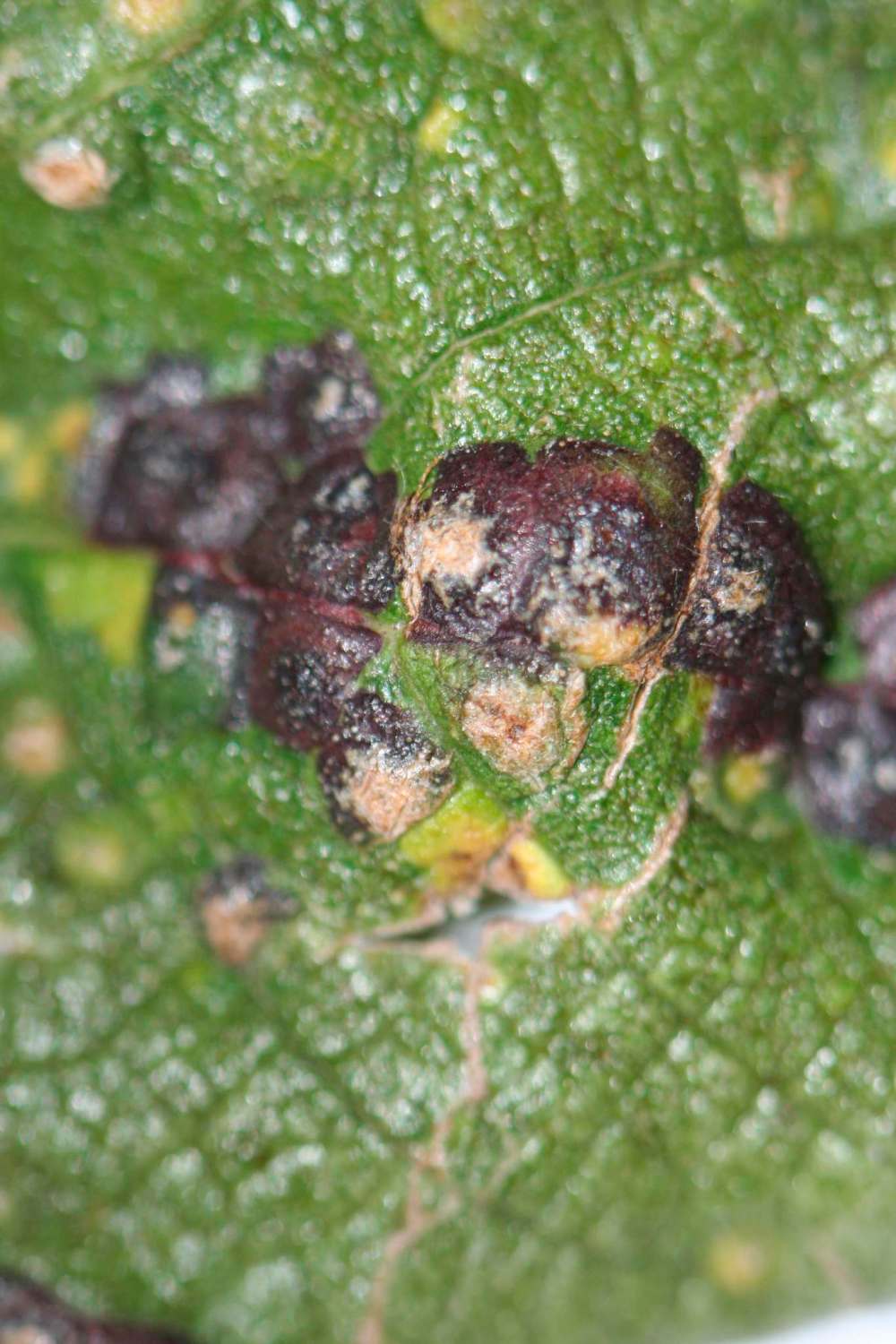
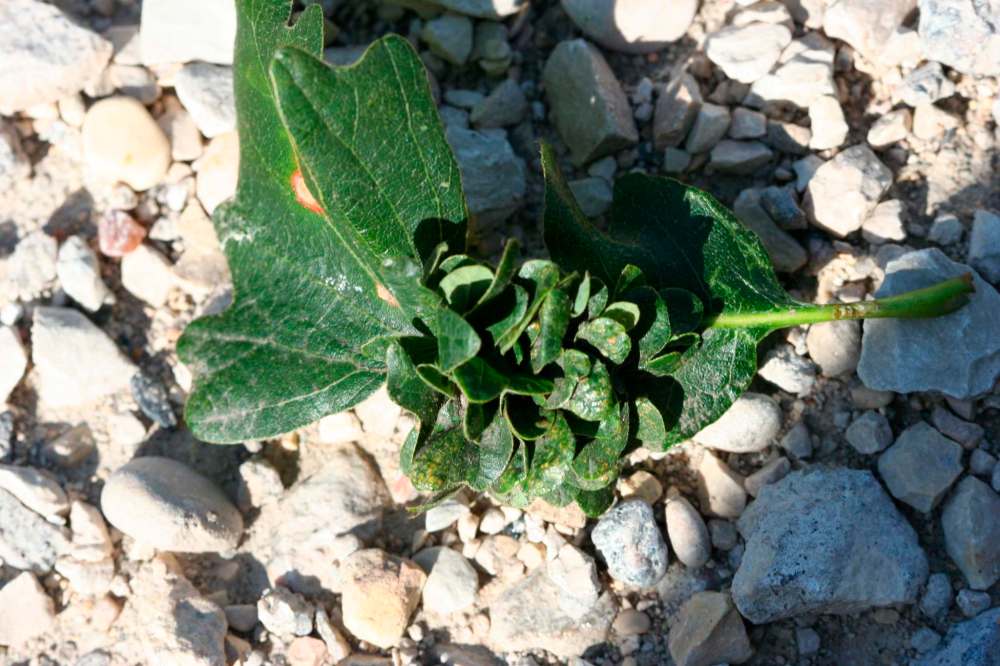
Not all trees and shrubs in our area are affected. They normally feed on leaves, but fine twigs can also be attacked causing a variety of distorted features. Most commonly tree leaves such as those on oaks, maples, hackberries, plums and poplars are targeted. They are also very common on cranberry shrubs. Their feeding patterns can vary quite a bit depending on the species of plant on which they are feeding. On maple and hackberry leaves the feeding characteristics typically show up as tiny squashed balls. On oak leaves their feeding can have a number of different appearances — from cottony pink and white ball-like clusters to flattened swellings to tiny multiple distorted leaf clusters. On the leaves of plums, they typically produce long, spindle like swellings appearing like tiny distorted roots. On some maple and cranberry leaves in particular, a red felt-like flattened surface feature can appear on the underside of the leaf upon which they are feeding. This red feature is called an erineum. It is most common on silver maple and European cranberry leaves.

The mites usually lay clusters of eggs often up to a hundred at a time. The tiny mites can be carried by various insects from one susceptible plant part to another. Aphids tend to be the most common carriers, but mites can attached themselves to the legs of other small insects such as leaf hoppers. Feeding by mites rarely causes death of the host plant, but they can kill individual leaves. Usually damage is restricted to unusual growth of the leaves or isolated patches of mite colony appearance on the leaves.
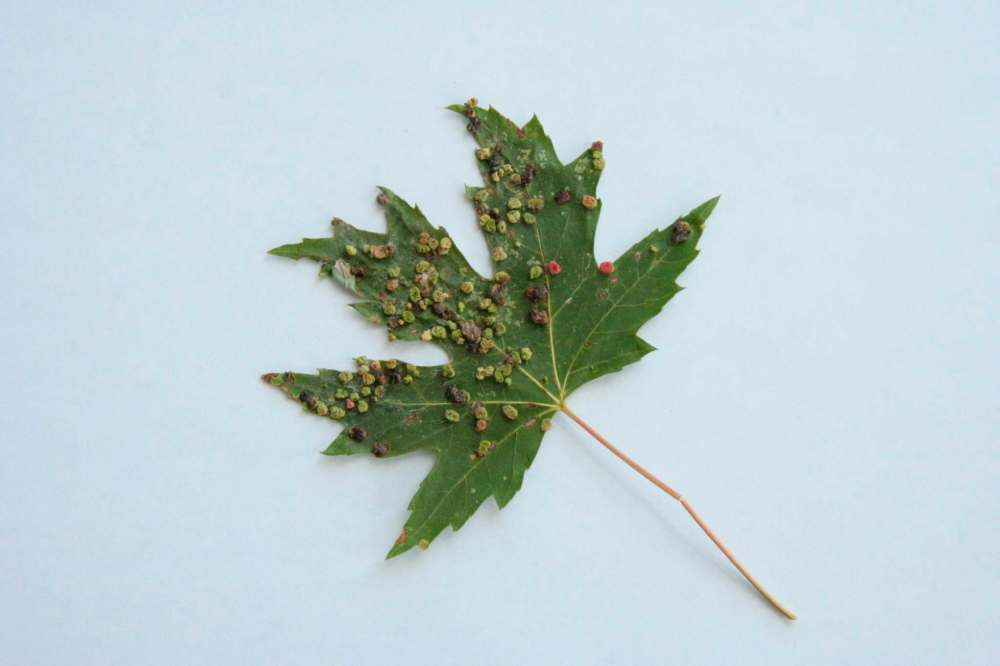
Maple bladder mite
Maple bladder mite

There are mites that infect poplar trees which produce a woody gall consisting of a colony of mites along a short piece of twig. Woody galls tend to be very rare on trees in my experience. Giant galls located commonly on the trunks of trees are usually referred to as burls. They are commonly associated with bacterial infection and insect infestation.

As mites are not insects, insecticides are not effective in their control. Once the damage is observed, there is very little that can be done to undo the damage. I have not been successful in finding miticides to control these pests. Miticides are generally very specific, but mostly they are not generally available in our area.

If you have suspected feeding damage this year, the following procedures should be followed to prevent them from returning the following year. Remove all fallen leaves and twigs from your yard whether they are on grass or soil. These fallen plant materials will likely have mite eggs on them. It is unlikely you will see these very tiny egg masses. This task can be very difficult especially if you have a large oak or silver maple tree, since almost every leaf can be infested.

Sometimes this removal may not be necessary. I have seen oak woodlands in one year in which nearly every tree leaf was infested with mites. In the following year, hardly any of the leaves had signs of infestation on them. I wish I had a good answer for that phenomenon.

The other means of control is to spray a horticultural dormant oil product over the entire tree or shrub in April to smother the over-winter eggs before they hatch in the spring. This is definitely the most recommended treatment to control mites.
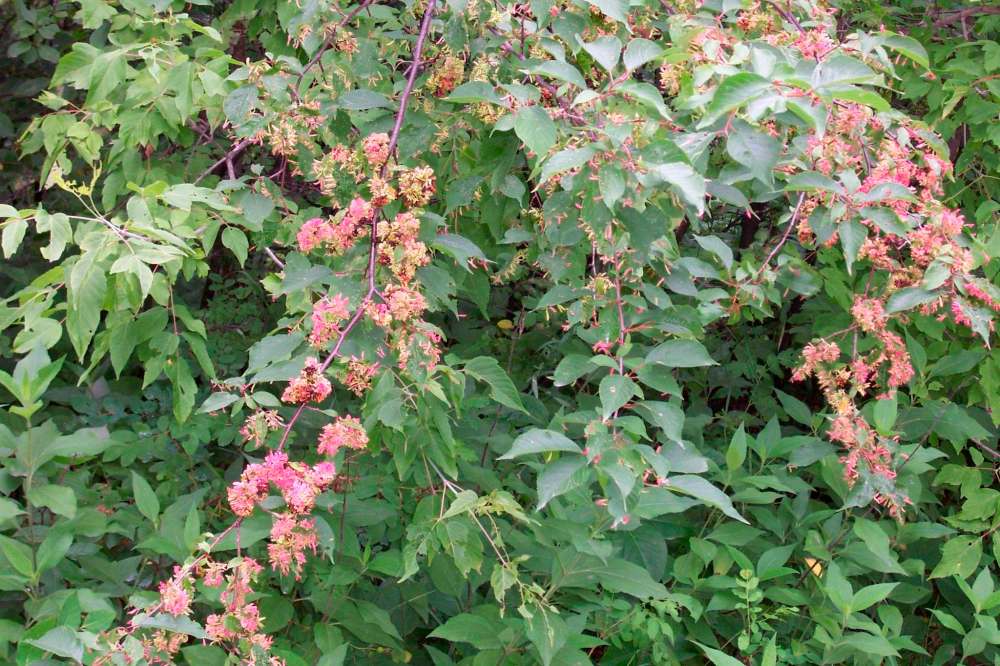
Plum bladder galls and Hawthorn rust

viburnumtrees@shaw.ca

Michael Allen M.Sc.F., RPF (ret’d) is a consulting urban forester, tree diagnostician and certified arbourist. He owns Viburnum Tree Experts. He can be reached at 204-831-6503 or 204-223-7709. His website is www.treeexperts.mb.ca
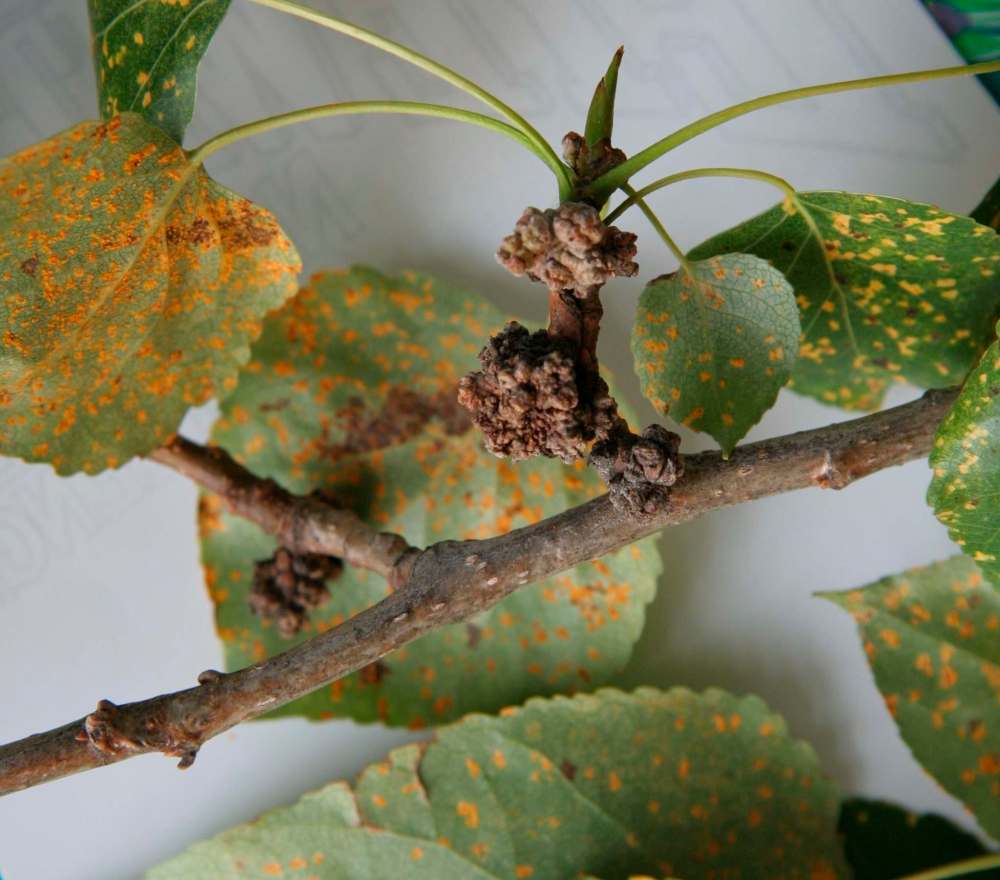
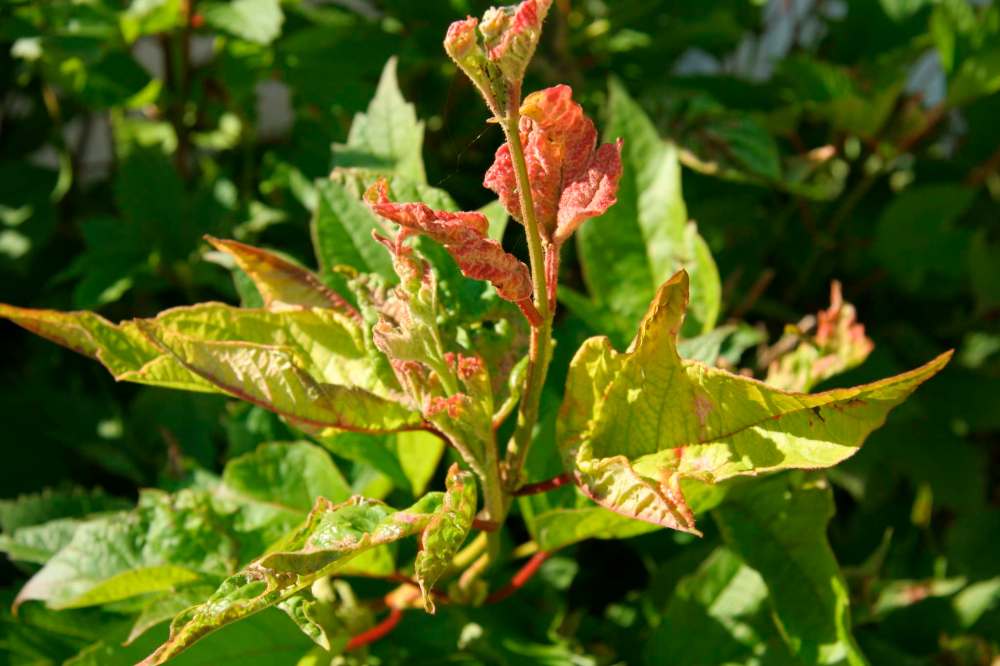
Twig gall mite and leaf rust
European cranberry gall mite
Hackberry leaf mite colony
Oak Rosette mite
Oak Rosette mite
Report Error Submit a Tip

More Stories

Sea Bears say Allen recovering from nightclub assault

Joshua Frey-Sam 6 minute read Preview

Sea Bears say Allen recovering from nightclub assault

Joshua Frey-Sam 6 minute read Yesterday at 6:03 PM CDT

The Winnipeg Sea Bears are preparing for the Canadian Elite Basketball League playoffs without the services of its Most Valuable Player.

The club announced on Tuesday that star guard Teddy Allen has been ruled out for Thursday’s Western Conference semifinal against the Saskatoon Mamba at Canada Life Centre (7:30 p.m.) as he recovers from “significant health injuries” suffered after being assaulted by security staff at a downtown nightclub on Sunday.

“We continue to co-operate with the Winnipeg Police Service on its investigation and have referred them individuals and information based on what has been provided to us from those on the scene,” a statement from the club read.

“What we’ve seen and heard to date leads us to believe that Teddy was the victim of an assault at the hands of security at a downtown nightclub.”

Read
Yesterday at 6:03 PM CDT

Concordia doctor denies responsibility for Calgary man’s permanent disability

Erik Pindera 4 minute read Preview

Concordia doctor denies responsibility for Calgary man’s permanent disability

Erik Pindera 4 minute read Yesterday at 3:52 PM CDT

A Concordia Hospital doctor accused in a negligence lawsuit after a Calgary man was left permanently disabled when he was given a massive overdose of a powerful sedative has denied she ordered he be given the drug.

Zachary Hoogerdyk’s father, Edward Hoogerdyk, and the Alberta government filed their statement of claim earlier this year in Court of King’s Bench naming the Winnipeg Regional Health Authority, provincial health agency Shared Health, Concordia Hospital, Dr. Anna Ziomek and two other hospital staff as defendants.

Hoogerdyk, who was 23 at the time, went to Concordia’s urgent-care centre with flu-like symptoms and worsening breathing difficulties on March 25, 2024 while he was in Winnipeg on business and to visit family, the lawsuit says.

The claim alleges Ziomek diagnosed Hoogerdyk with low levels of oxygen in his blood and a strain of the flu, before ordering him to be intubated.

Read
Yesterday at 3:52 PM CDT

Bell sheds 19 more Manitoba employees

Gabrielle Piché 3 minute read Preview

Bell sheds 19 more Manitoba employees

Gabrielle Piché 3 minute read Yesterday at 6:30 PM CDT

At least 19 Manitoba jobs were lost recently during Bell Canada’s ongoing restructuring.

Parent company BCE Inc. confirmed in June it’d axe nearly 700 jobs through organizational changes. Those changes began last year.

A dozen Manitoba staff were laid off on July 30, according to Team-IFPTE Local 161, the union representing the workers.

Another seven union members left voluntarily though a departure program, the union reported Tuesday.

Read
Yesterday at 6:30 PM CDT

Today’s horoscope

Georgia Nicols 4 minute read Preview

Today’s horoscope

Georgia Nicols 4 minute read 2:00 AM CDT

MOON ALERT: There are no restrictions to shopping or important decisions. The moon is in Taurus.

ARIES (March 21-April 19)

Resist the urge to get tangled up in financial disagreements with your kids, a friend, a group or a romantic partner. (Actually, anyone who wants to get in a fight with you.) You don’t need this. Focus on social outings. Keep things light.

TAURUS (April 20-May 20)

Read
2:00 AM CDT

Toronto’s alternative crisis response model deemed a success

Scott Billeck 4 minute read Preview

Toronto’s alternative crisis response model deemed a success

Scott Billeck 4 minute read Yesterday at 2:01 AM CDT

A Toronto emergency response program that helped inspire Winnipeg’s proposed alternative crisis response model has already expanded city-wide, just four years after launching as a pilot project.

The Toronto Community Crisis Service, launched in 2022, has become the city’s fourth emergency service, providing a 24-7, community-based response to people experiencing mental health crises. The service has handled nearly 50,000 calls through 911 and 211, dispatched mobile crisis teams to more than 41,000 incidents, made more than 11,600 referrals to health and social services and resolved the majority of eligible 911 calls without police involvement.

Winnipeg Mayor Scott Gillingham last week proposed creating a similar “fourth crisis response pathway” that would allow 911 calls that aren’t violent or criminal in nature to be transferred to community-based crisis teams.

Under the proposal, which has support from both the Winnipeg Police Service and the Winnipeg Fire Paramedic Service, a centralized crisis dispatch and co-ordination hub would receive triaged calls and match them with citywide response teams, staffed in part through existing community organizations, including the Downtown Community Safety Partnership and The Link’s mobile crisis teams. The goal is to divert appropriate calls away from the WPS and WFPS.

Read
Yesterday at 2:01 AM CDT

Homegrown grub: Resto turns to the Leaf for freshest ingredients

AV Kitching 4 minute read Preview

Homegrown grub: Resto turns to the Leaf for freshest ingredients

AV Kitching 4 minute read Yesterday at 3:39 PM CDT

The term “eat local” has taken on a whole new meaning at Gather Craft Kitchen and Bar, where the journey from plot to plate is measured in footsteps rather than miles.

Head chef Mike Licharson has expanded the restaurant’s focus on local sourcing by incorporating fruit and vegetables grown in The Leaf’s biomes and outdoor kitchen garden into his menu.

Bananas from the tropical biomes star in his banana-bread French toast and accompanying banana compote. Leeks, braised slowly and paired with Manitoba-grown beluga lentils, and Swiss chard — which takes the place of grape leaves in Licharson’s play on classic meze dolmades, a nod to the chef’s Greek-Ukrainian-Irish heritage — are both grown in the outdoor kitchen garden.

The park’s produce complements the restaurant’s other locally sourced ingredients, Licharson says.

Read
Yesterday at 3:39 PM CDT