Advocacy group campaigns for Canada, U.S. unity on right whale conservation

Advertisement

Advertise with us

An ocean advocacy group is calling for unified action from Canadian and U.S. governments to protect the dwindling North Atlantic right whale population from extinction.

Read this article for free:


or

Already have an account? Log in here »

To continue reading, please subscribe:

Subscribe and receive a limited-edition Free Press branded hat or tote.

Digital Subscription

One year of digital access for only $205*

  • Enjoy unlimited reading on winnipegfreepress.com
  • Read the E-Edition, our digital replica newspaper
  • Access News Break, our award-winning app
  • Play interactive puzzles

*First annual payment billed as $205.00 + GST for one year. This annual subscription will automatically renew at $233.00 + GST every 52 weeks (10% off the regular annual price of $259.35). Offer available to new and qualified returning subscribers only. Cancel any time.

To continue reading, please subscribe:

Add Free Press access to your Brandon Sun subscription for only an additional

$1 for the first 4 weeks*

  • Enjoy unlimited reading on winnipegfreepress.com
  • Read the E-Edition, our digital replica newspaper
  • Access News Break, our award-winning app
  • Play interactive puzzles
Start now

*Your next Brandon Sun subscription payment will increase by $1.00 and you will be charged $17.95 plus GST for four weeks. After four weeks, your payment will increase to $24.95 plus GST every four weeks.

Hey there, time traveller!
This article was published 12/09/2019 (2549 days ago), so information in it may no longer be current.

An ocean advocacy group is calling for unified action from Canadian and U.S. governments to protect the dwindling North Atlantic right whale population from extinction.

Oceana is launching its campaign in Toronto and Washington, D.C. on Thursday.

The group is asking both countries to expand existing protection measures for the marine mammals, with a particular focus on preventing ship strikes and fishing gear entanglement.

In this Wednesday March 28, 2018 photo, a North Atlantic right whale feeds on the surface of Cape Cod bay off the coast of Plymouth, Mass. An ocean advocacy group is campaigning for unified action from Canadian and U.S. governments to save North Atlantic right whales from extinction. THE CANADIAN PRESS/AP-Michael Dwyer

Twenty-eight right whales have died in North American waters since 2017, including eight in Canadian waters this summer, of a population numbering only about 400 animals.

Kim Elmslie, campaign director for Oceana Canada, said the bi-national campaign is asking officials for urgent, collaborative responses to the worsening crisis, as the world’s oceans experience the effects of climate change.

“The species is still at risk of extinction, so we need to find solutions for this species across borders,” Elmslie said in a phone interview from Ottawa on Wednesday.

Recommendations include reductions in vertical lines used in fixed-gear fisheries and fishery closures that would come into effect once right whales are detected in an area.

Oceana is also lobbying for stronger tracking of fishing vessels, limits on seismic blasting in right whale territory, an expanded task force of right whale experts and more long-term funding for research, including necropsies, which probe an animal’s cause of death.

A supplementary report by Oceana Canada describes the history of the animal — named “right whales” because their slow swimming speeds and proximity to shore made them the “right” whales to hunt. After being hunted to near-extinction in the mid-1900s, the species made a slight rebound, but its status has taken a sharp decline in recent years.

Oceana Canada’s report also details the agonizing deaths right whales suffer when entangled in fishing gear, taking six months on average to die, usually from drowning or starvation.

The campaign comes after a summer in which a spate of right whale deaths highlighted the cross-border policy considerations that complicate ocean conservation efforts.

Last week, Massachusetts’ attorney general wrote to political leaders in eastern North America urging unity and action on right whale protections. In late August, the Maine Lobstermen’s Association said it would pull out of an agreement that sought to reduce risk to right whales, arguing the rules were too restrictive and that Canadian fisheries and vessels posed the greatest risk.

Elmslie said complicated issues of intergovernmental collaboration are typical in marine conservation work, where large animals like right whales move through ocean regions governed by different laws.

Another challenge is the unpredictable impact of climate change in oceans, Elmslie said, making it difficult to draft effective policies as animals adjust their behaviour.

Right whales like to feed on small fish called copepods, and scientists believe the whales are following their prey into the Gulf of St. Lawrence in larger numbers, as temperatures rise in the more southern waters they used to frequent. This migration has put right whales at greater risk of ship strikes.

“They’re encountering threats they’ve never encountered before, because their food is shifting, and we could continue to see further shifts in the years coming,” Elmslie said. “That’s what makes it challenging, is the unknown, and trying to be predictive in what you’re doing.”

Some of Oceana’s recommendations aim to illuminate those unknowns, like funding more detailed necropsies on right whales killed in the Atlantic. Elmslie said this funding would fill in gaps about the greatest risks to the animals and would provide support for the scientists who carry out the physically and emotionally difficult work.

Canada strengthened its marine mammal protections last year, including vessel speed limits and minimum approach distances. Elmslie said Oceana’s campaign is about expanding and improving existing protections.

She said she is optimistic that whoever forms government after October’s federal election will remain committed to saving the species.

“There’s no silver bullet to this,” she said. “It is going to take multiple departments, multiple organizations, multiple scientists, multiple industry groups to continue to work on this and solve this.”

Report Error Submit a Tip

More Stories

Manitoba’s next power plant already under construction

Colleen Kuruluk 4 minute read 2:00 AM CDT

Across Manitoba, we’re rapidly moving toward a more electrified future, as homes, businesses, industries, and transportation increasingly turn to electricity. This transition offers a significant opportunity to reduce greenhouse gas emissions, but it also requires us to rethink how we plan for and participate in our energy future.

Manitoba Hydro’s 2025 integrated resource plan (IRP), currently under review with the Public Utilities Board, projects that our province will need significant additional capacity over the next decade to meet growing electricity demand. Much of the public discussion following the IRP has focused on how to meet that growing demand and what new generation sources may need to be built.

These are important conversations, but I believe there’s another question that deserves just as much attention.

How much of that growing demand can we address by using energy more efficiently?

No more playing around, make 30 km/h school zones permanent

Tom Brodbeck 5 minute read Preview

No more playing around, make 30 km/h school zones permanent

Tom Brodbeck 5 minute read Yesterday at 2:07 PM CDT

Winnipeg has already decided that 30 kilometres per hour is the right speed around schools.

It’s time to stop pretending that decision should expire every summer.

The city’s reduced school-zone speed limits returned Tuesday, a full week before the 2026-27 school year begins. They apply on weekdays from 7 a.m. to 5:30 p.m., from Sept. 1 until July 1.

Then, for two months, they disappear.

Read
Yesterday at 2:07 PM CDT

Woman who saved child, father from Red River uncomfortable with hero label

Scott Billeck 6 minute read Preview

Woman who saved child, father from Red River uncomfortable with hero label

Scott Billeck 6 minute read Wednesday, Sep. 2, 2026

A Winnipeg woman who’s been hailed as a hero by police for saving a father and his young child from the Red River says she doesn’t feel like one.

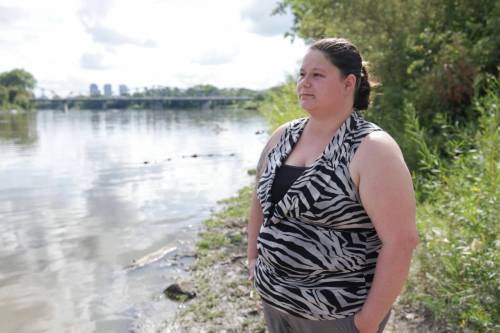
“I’m a mom… and I would do it again,” said Jayclyn Morrissette, who was walking with her neighbour through St. John’s Park on Aug. 24 when they spotted a young girl flailing in the nearby river. “I was meant to be there and that was supposed to happen.”

Morrissette, who spoke to the Free Press Wednesday after police released details about the rescue, said she and her neighbour began looking for the child’s parents and found them at the nearby playground searching for her.

Morrissette waved them over. The father, who she said could not swim, jumped into the river first and immediately began to sink.

Read
Wednesday, Sep. 2, 2026

Explaining Canada’s superior employment rate

Wayne Simpson 5 minute read Preview

Explaining Canada’s superior employment rate

Wayne Simpson 5 minute read 2:00 AM CDT

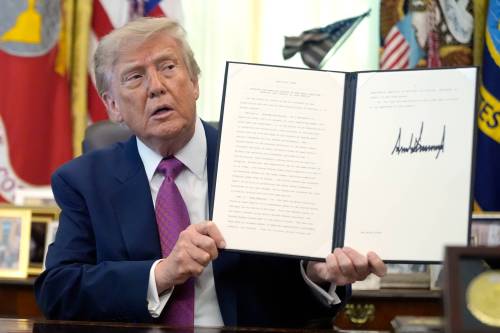
Donald Trump regularly makes outrageous claims. Fentanyl was pouring across the northern border from Canada and had to be stopped. Canada is nasty to deal with and has the highest tariffs in the world. Canada needs the U.S. but the U.S. doesn’t need Canada. Canadians want to become the 51st state. And so on.

In the latest trade dispute, after Mark Carney walked away from negotiations, Trump made a new claim that Canada’s unemployment rate was 10 per cent and climbing rapidly. Insofar as the unemployment rate is closely monitored, reported monthly, and given similar attention to the rates of inflation and economic growth, the comment was likely intended to signal Canada’s weakness. It fits Trump’s narrative that Canada needs the U.S. for its livelihood and protection and would be better off more directly under U.S. influence as a 51st state, or perhaps a protectorate like the Philippines or Panama in the past.

Fact checkers quickly reported that Canada’s unemployment rate is really 6.4 per cent for July, not 10 per cent, has fallen from 6.9 per cent in April, and is at its lowest rate since May 2024. Some astute observers pointed out that Canada’s method for the calculation of the unemployment rate leads to a higher rate than the U.S. by about one per cent. Under the American methodology, then, our unemployment rate would be 5.4 per cent, not that far off the U.S. July rate of 4.1 per cent.

Detection of unemployment is less straightforward that might appear, as it is sandwiched between the labour force statuses of employment and inactivity at a particular point in time. The internationally established standard for determination of unemployment is the notion of searching for work — you are unemployed if you do not have paid employment and you are looking for work without success. Surveys have been developed to categorize respondents as employed, unemployed or inactive, including the labour force survey (LFS) in Canada and the current population survey (CPS) in the U.S.

Read
2:00 AM CDT

Designer building following making models of everyone from celebs to ordinary Winnipeggers

Aileen Goos 5 minute read Preview

Designer building following making models of everyone from celebs to ordinary Winnipeggers

Aileen Goos 5 minute read Wednesday, Sep. 2, 2026

Kevin Takatch was getting groceries in Los Angeles when he stumbled into an art sale celebrating 25 years of Jackass.

The Winnipeg designer behind BeLove suddenly found himself surrounded by famous faces, carrying one of his own jackets and wondering who he could get to wear it.

Then he spotted comedian Eric André, who appears as himself in the reality stunt/prank franchise, and asked him to model the jacket.

“I knew I couldn’t (wimp) out, like I did with the first celebrity I saw,” says Takatch, who declined to give his age.

Read
Wednesday, Sep. 2, 2026

The ‘Buy Canadian’ trade war challenge

Editorial 4 minute read Preview

The ‘Buy Canadian’ trade war challenge

Editorial 4 minute read 2:00 AM CDT

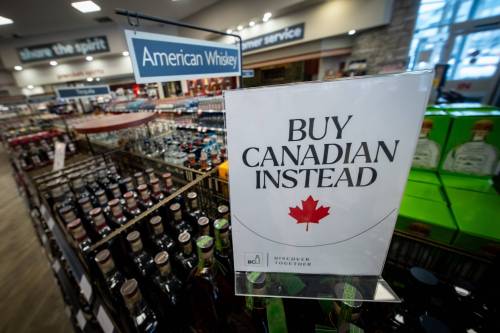
“Buy Canadian,” they tell us, as trade tensions escalate between Canada and the United States. “Elbows up,” the pithy slogan advises again and again, in response to the latest daily affront from increasingly unbalanced U.S. President Donald Trump.

And there’s no question Canadians from coast to coast to coast have bought into the patriotic mindset that politicians, from Prime Minister Mark Carney right on down to elected officials at the municipal level, have implored us to adopt.

“We were attacked,” is how Carney described the Aug. 21 unraveling of trade talks, after U.S. negotiators reportedly inserted last-minute demands the Canadian side viewed as both unreasonable and unacceptable. “You’re at war when you get attacked. We got attacked.”

The breakdown led to the immediate imposition by Trump of steep new tariffs on $29 billion worth of Canadian goods headed to south-of-the-border markets. A targeted, dollar-for-dollar Canadian tariff response will take effect after the Labour Day weekend. In the meantime, Canadians are more motivated than ever to stand firm against Trump’s tyrannical tactics.

Read
2:00 AM CDT