As UN climate conference begins, Alberta has much on the line
Advertisement
Read this article for free:
or
Already have an account? Log in here »
To continue reading, please subscribe:
Digital Subscription
One year of digital access for only $1.44 a week*
- Enjoy unlimited reading on winnipegfreepress.com
- Read the E-Edition, our digital replica newspaper
- Access News Break, our award-winning app
- Play interactive puzzles
*Billed as $5.77 plus GST every four weeks. After 52 weeks, price increases to the regular rate of $19.95 plus GST every four weeks. Offer available to new and qualified returning subscribers only. Cancel any time.
To continue reading, please subscribe:
Add Free Press access to your Brandon Sun subscription for only an additional
$1 for the first 4 weeks*
- Enjoy unlimited reading on winnipegfreepress.com
- Read the E-Edition, our digital replica newspaper
- Access News Break, our award-winning app
- Play interactive puzzles
*Your next Brandon Sun subscription payment will increase by $1.00 and you will be charged $17.95 plus GST for four weeks. After four weeks, your payment will increase to $24.95 plus GST every four weeks.
Read unlimited articles for free today:
or
Already have an account? Log in here »
Hey there, time traveller!
This article was published 30/10/2021 (1817 days ago), so information in it may no longer be current.
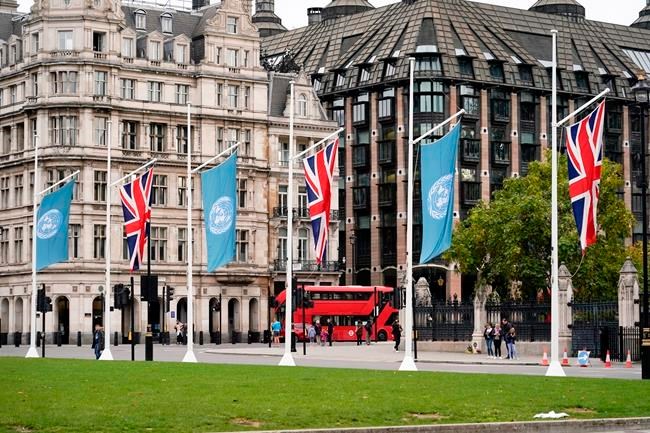
CALGARY – As world leaders descend on Glasgow this week for the start of the 2021 UN Climate Conference, Alberta — the Canadian jurisdiction with perhaps the most on the line — will be watching.
COP26, as it is known, will be the most significant global climate change summit since Paris in 2015.
At that time, Canada committed to reducing the country’s greenhouse gas emissions by 30 per cent below 2005 levels by 2030, with the aim of keeping global warming below 1.5 degrees Celsius.
That target led directly to a number of actions taken by the Trudeau government, including the introduction of a federal price on carbon and a clean fuel standard that is on the way.
The federal government has since raised the bar for its own emissions reductions ambitions, saying it now aims for a 40 to 45 per cent reduction by 2035. To help meet that target, the government has announced five-year emissions reductions targets for the oil and gas industry as well as regulations around methane.
These types of policy implications are the reason why many in Alberta — home to Canada’s oil and gas industry — will be closely watching to see what comes of the Glasgow summit.
“It’s important. It does have influence on policy and the development of the resources,” said Tristan Goodman, president of the Explorers and Producers Association of Canada, a lobby group that represents oil and gas companies.
Goodman said while in the past, the oil and gas industry may have looked to the UN climate summits with a sense of trepidation, that’s no longer the case. Since Paris, Goodman said, the industry has undergone a sea change in its understanding of the climate change issue, with many companies making net-zero commitments of their own and investing in everything from hydrogen to carbon capture and storage to wind power.
“Most of the energy companies in Canada, they know they’re going through an energy transition. And they’ve moved well past acceptance of that, into looking at the opportunities,” Goodman said.
The Canadian Association of Petroleum Producers (CAPP) will send its own delegation to the Glasgow summit, including CAPP president Tim McMillan.
However, neither Alberta Premier Jason Kenney nor any of his cabinet ministers will attend the climate summit. In an email, Environment Minister Jason Nixon said the UCP government is avoiding non-essential travel right now, adding, “one more politician flying into Glasgow is not going to make any meaningful difference.”
Nixon said Alberta takes climate change seriously, pointing to the province’s own methane reduction targets as well as its ahead-of-schedule phase-out of coal-fired electricity.
But he said Alberta, and the province’s energy industry, are frustrated with Canada’s “ever-changing emissions targets” and needs clarity and predictability when it comes to climate policy.
Gary Mar, president and chief executive of the Calgary-based non-partisan think tank The Canada West Foundation, said many Albertans are concerned that COP26 will mean an evermore aggressive push towards the total phase-out of fossil fuels. He said the energy industry is making real strides on emissions reductions, but it’s foolish for anyone to suggest it can flip on a dime overnight or be replaced tomorrow by renewables.
“You can’t actually make a transition just by taking things away. You actually have to know what it’s going to be replaced by,” Mar said.
Critics, however, say Alberta is not doing all it can on the climate front. The province doesn’t even have an overall emissions goal in place, said Simon Dyer, deputy executive director of the Pembina Institute, a clean-energy think tank.
“Alberta is responsible for the largest proportion of Canada’s total emissions, the oil and gas sector is the largest single economic subsector, so Canada cannot achieve the emissions reductions it needs to achieve without the jurisdiction that’s responsible for the largest portion of those emissions,” Dyer said.
Dan Balaban, chief executive of Alberta-based renewable energy company Greengate Power, said Canada needs to use the Glasgow summit as a prompt to move past talk and into action. He said it’s important to get government funds flowing to the renewable energy sector, though that may involve tough choices.
“There are all sorts of industries that are out there vying for government support of some kind. The fossil fuel industry as well as the renewable energy industry,” Balaban said.
“And if we’re going to achieve our net zero ambitions, we need to make very clear who we intend to support going forward.”
This report by The Canadian Press was first published Oct. 30, 2021.