Trudeau takes carbon pricing debate to the global stage at COP26
Advertisement
Read this article for free:
or
Already have an account? Log in here »
To continue reading, please subscribe:

Digital Subscription
One year of digital access for only $205*
- Enjoy unlimited reading on winnipegfreepress.com
- Read the E-Edition, our digital replica newspaper
- Access News Break, our award-winning app
- Play interactive puzzles
*First annual payment billed as $205.00 + GST for one year. This annual subscription will automatically renew at $233.00 + GST every 52 weeks (10% off the regular annual price of $259.35). Offer available to new and qualified returning subscribers only. Cancel any time.
To continue reading, please subscribe:
Add Free Press access to your Brandon Sun subscription for only an additional
$1 for the first 4 weeks*
- Enjoy unlimited reading on winnipegfreepress.com
- Read the E-Edition, our digital replica newspaper
- Access News Break, our award-winning app
- Play interactive puzzles
*Your next Brandon Sun subscription payment will increase by $1.00 and you will be charged $17.95 plus GST for four weeks. After four weeks, your payment will increase to $24.95 plus GST every four weeks.
Read unlimited articles for free today:
or
Already have an account? Log in here »
Hey there, time traveller!
This article was published 02/11/2021 (1793 days ago), so information in it may no longer be current.
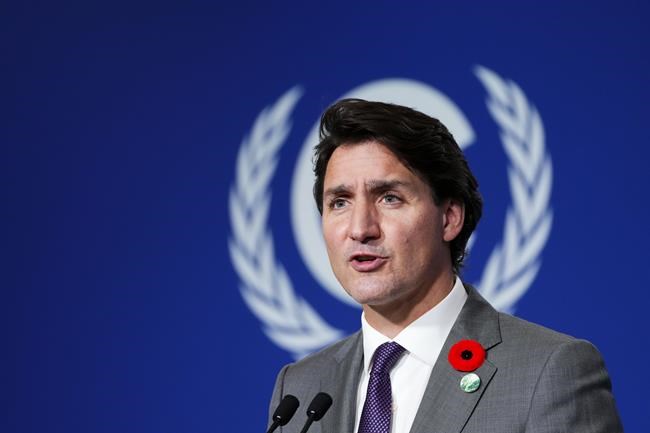
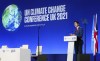
GLASGOW, United Kingdom – Prime Minister Justin Trudeau is pushing the world to impose a global price on carbon by 2030 that would cover 60 per cent of the planet’s greenhouse gas emissions.
Trudeau spent the second of two days of meetings and negotiations at the United Nations COP26 climate talks Tuesday extolling the virtues of Canada’s carbon pricing system, and urging the rest of the world to jump on board.
“We recognize right now that only about 20 per cent of global emissions are covered by a price on pollution,” he said during a speech Tuesday at the climate talks in Glasgow.
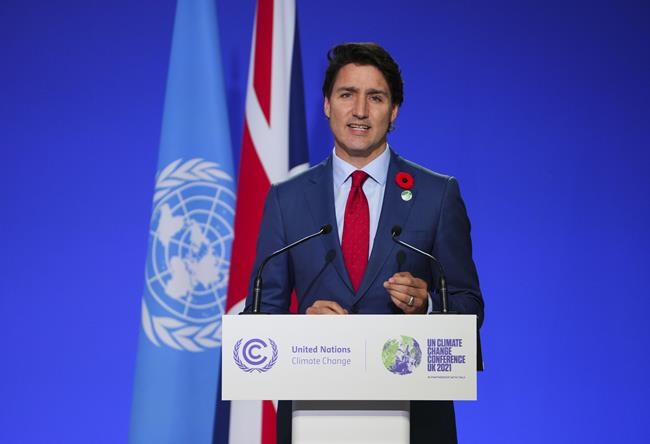
“We should be ambitious and say as of right here today that we want to triple that to 60 per cent of global emissions should be covered by a price on pollution in 2030.”
Trudeau assembled a stacked panel to back his call in a morning event on the sidelines of COP26, which is seen to be a critical juncture for ramping up policies to cut greenhouse gas emissions, if the world is going to limit global warming to no more than 1.5 C above pre-industrial temperatures.
Above 1.5 C the impact on the world’s climate starts to accelerate rapidly, and the higher it gets the more difficult it is to undo.
Throwing their weight behind Trudeau’s ask today were European Commission President Ursula von der Leyen, World Trade Organization Director General Ngozi Okonji-Iweala, International Monetary Fund managing director Kristalina Georgieva, and UN climate finance envoy Mark Carney, whose influence in the investment world as the former governor of both the Bank of Canada and the Bank of England is significant.
The notion of a global carbon price is not new. The IMF proposed such a system last spring.
“The average global price of carbon today is $3,” Georgieva said Tuesday. “If we are to make a dent on emissions in a meaningful way to retain our hope for 1.5 degree, close to1.5 degrees Celsius, by 2030 we have to be at $75 or more.”
She said a minimum global carbon price would first force large emitters to have “compatible pricing of carbon” and that the price should be equitable so big emitters and wealthier countries pay more, and less developed and poorer nations pay smaller amounts.
Von der Leyen, with whom Trudeau met one-on-one at the G20 leaders’ summit in Rome leading into COP26, said the European carbon trading market in place since 2005 has had tremendous success lowering emissions from industry and energy and has proven that the economy can grow without emissions growing.
She said in Europe broadly speaking since 1990, emissions are down 30 per cent and economic growth is up 60 per cent.
Von der Leyen said “in a perfect world I would love to have a global price on carbon for everybody and everything globally.” But for those that don’t, Europe is introducing a border carbon adjustment that will mean “if you come with a dirty product to our market, you have to pay a price as if you were in the emission trading system in the European Union.”
“But we prefer you keep the money in your economy by putting a price on carbon in your economy,” she said.
The Trudeau government launched consultations on a border carbon adjustment almost a year ago, seeking input on how to do it, and whether it would be effective.
Trudeau said Tuesday whether it’s a carbon price or a carbon tariff the goal is the same: an incentive to curb greenhouse gas emissions and a level playing field.
“We are right now competing with aluminum around the world that can be sold at even cheaper prices, because it is done in dirtier ways with significantly lower labour standards,” he said. “I don’t think that’s the kind of world we want where people who do the right things the right way, get penalized and people who do wrong things the wrong way get advantages.”

Canada has had a carbon price since 2019. It’s currently $40 a tonne and will rise to $170 by 2030. It adds about nine cents to a litre of gas, and about eight cents to a cubic metre of natural gas.
Canadians get rebates through the tax system that for most people are worth more than they pay in carbon tax, but the incentive remains to save even more money by burning fewer fossil fuels.
There are more than two dozen countries with national carbon pricing programs and the only two developed countries without one at the national level are the United States and Australia.
Carbon pricing is not part of U.S. President Joe Biden’s current plan to combat climate change but Trudeau expressed confidence that other countries will come to realize that other ways to reduce emissions are more expensive and less effective.
This report by The Canadian Press was first published Nov. 2, 2021.
Related Articles
Can’t rely on billionaires for low-carbon solutions COP26: G20 leaders needed to give climate summit a push. Instead they came up short


Advertisement Advertise With Us
Advertisement Advertise With Us