Colorado coal town grapples with future as plant shuts down
Advertisement
Read this article for free:
or
Already have an account? Log in here »
To continue reading, please subscribe:

Digital Subscription
One year of digital access for only $205*
- Enjoy unlimited reading on winnipegfreepress.com
- Read the E-Edition, our digital replica newspaper
- Access News Break, our award-winning app
- Play interactive puzzles
*First annual payment billed as $205.00 + GST for one year. This annual subscription will automatically renew at $233.00 + GST every 52 weeks (10% off the regular annual price of $259.35). Offer available to new and qualified returning subscribers only. Cancel any time.
To continue reading, please subscribe:
Add Free Press access to your Brandon Sun subscription for only an additional
$1 for the first 4 weeks*
- Enjoy unlimited reading on winnipegfreepress.com
- Read the E-Edition, our digital replica newspaper
- Access News Break, our award-winning app
- Play interactive puzzles
*Your next Brandon Sun subscription payment will increase by $1.00 and you will be charged $17.95 plus GST for four weeks. After four weeks, your payment will increase to $24.95 plus GST every four weeks.
Read unlimited articles for free today:
or
Already have an account? Log in here »
Hey there, time traveller!
This article was published 19/01/2022 (1702 days ago), so information in it may no longer be current.
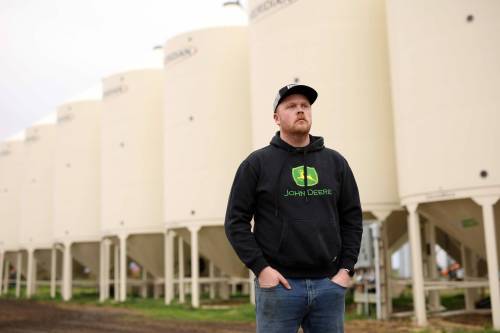
CRAIG, Colorado (AP) — In a quiet valley tucked away from Colorado’s bustling ski resorts, far from his hometown in northern Mexico, Trinidad Loya found a way to support his family’s American dream: Coal.
He, his son and grandson — all named Trinidad Loya — worked for the coal plant in Craig, Colorado, with the eldest Loya starting more than 30 years ago. The plant currently employs 180 people, paying higher salaries and bringing far more job security than most other jobs in the area.
But that’s all about to change.
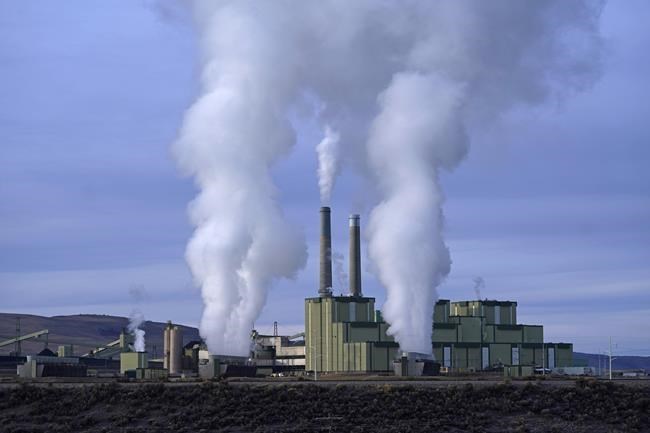
The coal plant is closing, along with the mine that feeds it and has nearly 115 more employees, and all the workers will lose their jobs over the next decade, according to Tri-State Generation and Transmission Association Inc. which partially owns and operates the Craig Station.
That will mean a tough transition for the Loyas and other workers who’ve made a life in Craig, a rural town with a population 9,000 that draws elk hunters from around the world to its scenic surroundings.
“A power plant job, especially in a rural community like Craig — those are what I call cradle to grave jobs,” said Richard Meisinger, business manager of the 111 chapter of International Brotherhood of Electrical Workers union which represents the bargaining unit at the Craig plant and nearly 4,200 members across Colorado and Wyoming. “People hire on there when they’re young anticipating that they are going to work at that power plant there their entire workable lifespan.”
The same scenario is playing out in other small towns across the U.S. After decades of relying on coal for their workforce, tax base and way of life, the towns face uncertain futures as new state and national legislation forces the retirement of fossil fuels because of the worsening effects of human-caused climate change. Only a few towns have a viable plan to transition to cleaner energy, like one in Wyoming chosen for a Bill Gates-backed nuclear power plant.
The impact spreads beyond the plants workers and is felt by the rest of the community, too. In Craig, much of the infrastructure of the county is supported by the coal plant workers, who make an average of $100,000 a year, compared with a $40,000 average salary across the county.
Now, some workers will retire, while others, like the younger Loyas, must find a new way to support their families, and possibly leave Craig behind.
On Monday, the youngest Loya, started an apprenticeship position at another Tri-State owned facility across the state in Pueblo — some 300 miles (483 kilometers) away from Craig where he lives with his wife and two children, ages 7 and 3. When he’s not working as a sub-station technician there, he plans on making the five-hour drive to come home and see his family. He took a pay cut for the position.
He’s holding out hope a job opens at the Craig plant due to job movement within the plant. In the meantime, he’ll stay with a sister in Pueblo and hope for the best.
“It felt right to our family at the time,” Loya said.
___
Craig sits in the heart of Colorado’s western front, only 40 miles (64 kilometers) from the popular Steamboat Springs ski area.
Cows and lambs graze on farmlands. Creeks stream out of the nearby rivers. Deer traverse downtown Craig at night, munching on grass and curiously peeking around closed storefronts and offices. The rural escape is why many of those who grow up in Craig choose to stay.
In winter months, the town, known as the elk hunting capital of the world, houses thousands of hunter groups donned in camouflage and bright orange who come to the area in search of game. Tens of thousands of hunters stay in the town’s hotels and frequent the local restaurants. According to a Colorado Parks and Wildlife report, the hunting industry brought $136 million to northwest Colorado in 2017.
Moffat County is made up of millions of acres of public lands, and its mineral deposits of high-volatility and low-sulfur coal brought the industry to town and sustained families for decades.
The town has reinvented itself before.
What was once a last stop on the Denver and Salt Lake Railway which allowed for nationwide agricultural exports like wool, soon the area became a money-maker for the oil industry and then a source of uranium. The oil fields and uranium mills left Craig by the 1960s as demands changed, but by the 1970s, coal was king in Colorado with companies buying up mines and others like Colorado-Ute Electric Association purchasing lands to build a power plant. This would eventually become the Craig Station.
Now, the town is changing again.
The owners of the Craig Station decided to close the 1,285-megawatt, three-unit plant over a ten-year period. Unit 1 and 2, owned by PacifiCorp, Platte River Power Authority, Salt River Project, Tri-State Generation and Transmission Association and Xcel Energy, are set to close in 2025 and 2028. Unit 3, solely owned by Tri-State, will retire by 2030.
As the coal industry goes, so will nearly half of Moffat County’s gross domestic product, Peterson said. It could affect services like healthcare, fire departments, infrastructure and upkeep for neighborhoods and roadways.
According to Ray Beck, former Moffat County commissioner and mayor of Craig, the county’s biggest source of revenue is property tax. Moffat County’s 2020 assessed value was nearly $430 million with 62% coming from the top 10 taxpayers, all energy-related businesses.
“We can’t recover from that,” Beck said.
A scenario put together by the Moffat County assessor found that the economic situation would only get worse as the plant’s three units shut down over time. According to the forecast, in 10 years when the entire powerplant shuts down, it would take 65 Super Walmarts and 93 Hampton Inns to replace the assessed value, Beck said.
The loss of coal jobs in a community like Craig also will hurt small businesses whose customers are primarily coal workers and have disposable income, said Jennifer Holloway, executive director of the Craig Chamber of Commerce.
That’s bad news for Gino’s Pizzeria, the West Twin Cinema and Thunder Rolls Bowling Center.
When discussions about the end of coal began, many in the town were in denial and some thought the decision would waver with the political winds.
But that hasn’t happened, and people are now facing the reality of the loss of their way of life.
“We’re taking people who generationally have been taught that they are the heroes in this story and suddenly they don’t differentiate between coal is bad and they are bad,” said Sasha Nelson, executive director of workforce education and economic development at Colorado Northwestern Community College in Craig. “That is the message that we’re sending to some extent and that’s a hard one for proud people, for hard-working people, people who struggled, to be receiving. And there’s a lot of resistance and pushback.”
___
Tim Osborn, the power plant manager, estimates that they’ll lose another 10 or so workers in 2022.
“I forecasted all the way out to 2029 and we should have about 100 people here — if they’re all here in 2029 — that are age 55 and up,” Osborn said. “Attrition is the driver, that’s what I’m counting on throughout the process. It appears we can do that.”
The attrition of workers retiring or moving on is already being felt. Many plant workers described picking up additional hours of overtime as well as doubling their work during shifts due to the lack of bodies available in certain plant positions.
Many of the plant workers are finding their morale has gone down as the closure date inches closer.
“It’s hard to get out of bed every day to go to work,” said Ron Geary, an electrician at the plant with a full gray beard and self-deprecating humor who treasures the work he does and the people he works with. One of his fears during this transition is the mental health of his colleagues who are losing a part of their identity and job security with retirement plan.
“The coal miners, like my dad, they’re invested in that work because it’s a way for them to participate in our nation and be patriots. I mean you’re providing electricity for the rest of the country to develop and grow and become successful,” said Holloway, 49, who grew up in the area and stayed to work at the Chamber of Commerce.
Many coal workers are frustrated and angry at the decisions made by Denver-based politicians that affect rural communities. They see other nations like China and India continuing to build new coal mines and think it’s hypocritical.
Two-thirds of the world’s coal is used for electric power, according to Carlos Fernandez Alvarez, a senior energy analyst for the International Energy Agency. For western, more developed nations which have diversified their power systems and become more efficient, energy demands are not increasing. But for developing counties such as China and India, power demand is rising due to population growth and wider electrification efforts, so the transition is more difficult, he said.
Power demand in India is expected to grow faster than anywhere in the world over the next two decades as the economy grows and ever more extreme heat increases demand for air conditioning that so much the rest of the world takes for granted.
“It’s OK as long as it’s not on American soil, but they’re gonna shut us down because we produce a little too much (carbon dioxide) when they’re doing the same thing there?” Wes Lytle, a coal worker at the Craig plant, said about other nations.
One of the hardest parts of losing the plant is helping people find new jobs with employment benefits that provide a comparable lifestyle that coal families currently enjoy.
For the Loyas, as for other coal families, the power plant afforded them a lifestyle they wouldn’t have had otherwise.
Nelson is trying to figure out how to help coal workers find their next opportunity. Over the last year, she has created a catalog of courses with industry-recognized credentials and apprenticeship-like training for members of the community who need help figuring out what’s next.
As she’s studied other transition communities, Nelson says worker transitions are typically split into three categories: one-third will have the means to retire between now and the final closure date, one-third will follow the industry or a similar field and one-third will retrain for a new career, open a business and some will become unemployed.
In Spoon River College in Canton, Illinois, the community was given a four-month notice before two coal plants closed in 2019. Twenty percent of workers sought retraining with help from the community college. But 14% didn’t find new jobs and were unemployed in summer 2021.
“That 14% of folks that become unemployed, that concerns me,” Nelson said. “Who are those folks and how do we help them and support them?”
In Craig, some workers are trying to plan ahead. Christine Schneider, 50, a water chemistry technician, has already sold her home and is living in an apartment. She’s also started training for a commercial driver’s license and is considering moving to Texas to be with her daughter.
“There’s a chance I might still make it to 62 out there but I’m not wagering everything on that,” she said.
___
Plenty of people are trying to make sure it’s not the end for Craig or the workers.
Discussions are underway to decide what comes next for the plant facilities. Osborn, the plant manager, says the ideal situation would be to repurpose some of the plant’s equipment for renewable energy projects and keep people in the town employed.
“There’s technology that doesn’t even exist right now that we would hopefully be able to study and implement and design and keep people employed here in town and still be a viable place of employment,” Osborn said.
Sean Hovorka, a production superintendent at the Trapper Mine and recently elected member of the town’s city council, sees a future in mining because of renewables.
“You look at windmills, solar panels, any of that — you’ve gotta have mining for it,” he said. “You’ve gotta have the lithium that goes into the batteries for your Teslas and all that stuff. Mining is, it’s gonna be a critical field and we knew that we were gonna be part of the green energy movement.”
“With the direction that the green energy is going you’re only gonna need more copper, you’re only going to need more, nickel, cobalt, lithium – all of those other things that have to be mined,” Hovorka said.
Brent Wanner, head of power sector modelling and analysis for the World Energy Outlook, an annual publication by the International Energy Agency, said the power sector is in a good position to lead the change in large-scale clean energy transitions. The industry leads the way in emissions declines and is already transitioning away from coal to new options.
The older Loya said it’s disappointing to see the end of the plant, which holds his family’s American legacy, but he prefers not to see it as a doomsday scenario.
“There’s always a light at the end of the tunnel,” he said. “Maybe this will become a hydrogen plant.”
____

The story has been updated to correct the spelling of the last names of Sean Hovorka and Christine Schneider, and the spelling of Moffat County.
____
To read AP’s coverage of global climate change issues: https://apnews.com/hub/climate
____
Nieberg is a corps member for the Associated Press/Report for America Statehouse News Initiative. Report for America is a nonprofit national service program that places journalists in local newsrooms to report on under-covered issues.