Indigenous conservation Canada’s way of the future, Guilbeault says
Advertisement
Read this article for free:
or
Already have an account? Log in here »
To continue reading, please subscribe:

Digital Subscription
One year of digital access for only $205*
- Enjoy unlimited reading on winnipegfreepress.com
- Read the E-Edition, our digital replica newspaper
- Access News Break, our award-winning app
- Play interactive puzzles
*First annual payment billed as $205.00 + GST for one year. This annual subscription will automatically renew at $233.00 + GST every 52 weeks (10% off the regular annual price of $259.35). Offer available to new and qualified returning subscribers only. Cancel any time.
To continue reading, please subscribe:
Add Free Press access to your Brandon Sun subscription for only an additional
$1 for the first 4 weeks*
- Enjoy unlimited reading on winnipegfreepress.com
- Read the E-Edition, our digital replica newspaper
- Access News Break, our award-winning app
- Play interactive puzzles
*Your next Brandon Sun subscription payment will increase by $1.00 and you will be charged $17.95 plus GST for four weeks. After four weeks, your payment will increase to $24.95 plus GST every four weeks.
Read unlimited articles for free today:
or
Already have an account? Log in here »
Hey there, time traveller!
This article was published 25/06/2022 (1561 days ago), so information in it may no longer be current.
Tanya Ball began her career as a social worker for the Kaska Dene First Nation. Now she runs a land guardian program, working to monitor and protect a vast stretch of the band’s northern British Columbia wilderness.
But she’s still a social worker, in a way.
“Land guardians can help the land heal,” she said. “And the land can help the guardians heal.”
Ball is at the forefront of the new way Canada protects its remaining healthy rivers, lakes, forests, mountains and plains. Crown governments would once rope off an area deemed particularly scenic or good for outdoor recreation and call it a park.
No longer.
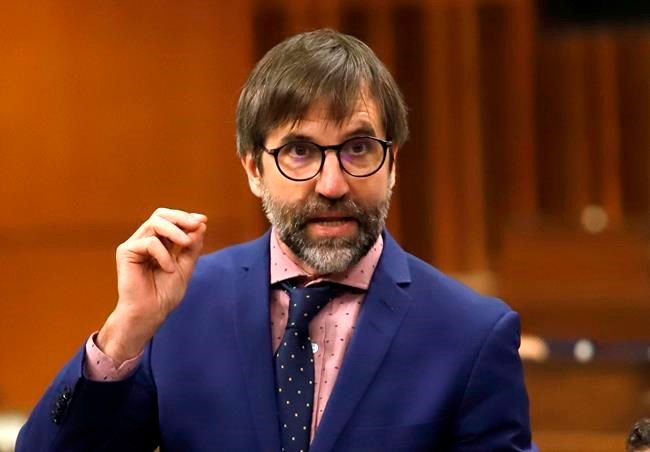
“There’s no future when it comes to conservation where the federal government is involved (and) Indigenous people aren’t involved from the get-go,” said federal Environment Minister Steven Guilbeault. “This traditional model is a thing of the past.”
Conservation is now something Indigenous people lead instead of something done to them. Most protected areas in Canada are now being proposed by Indigenous groups, who aim to look after those lands themselves.
There are now about 80 protected areas in Canada monitored by the people to whom the lands originally belonged. Some are designated only by the local First Nation and some are part of the national parks system.
But more — many more — are on their way.
The most recent federal budget contains funding for at least another 27 Indigenous Protected and Conserved Areas. Ottawa just signed a memorandum of agreement with the Nunatsiavut government in Labrador to develop one with both parties involved from the start.
It’s the only way Canada is going to fulfil its international promise to protect 30 per cent of its land mass, said Sandra Schwartz of the Canadian Parks and Wilderness Society.
“Achieving those protection targets for Canada are realistic,” she said. “Many of those opportunities are on Indigenous land.”
Indigenous conservation comes from the historic cultural attachment to the land and the political desire for a land base, said Val Courtois of the Indigenous Leadership Initiative, who has been involved in the movement for years.
“The assertion of rights in Canada has always been about that relationship to place. This is just a new way of describing that responsibility.”
Indigenous Protected and Conserved Areas have been created under federal, provincial and band structures and vary widely in how they function and what they do. Some don’t meet international conservation area standards and won’t count toward Canada’s 30 per cent goal.
But they all involve some level of Indigenous co-management, they all involve land-use planning and they all involve guardians — local First Nations people charged and trained with stewarding the land.
Ball said her staff of eight takes water samples, makes maps, monitors hunting, delineates archeological sites, keeps track of visitor impacts, watches animal movements, assists conservation officers and runs research projects.
“They’re very busy,” she said.
One thing they don’t do is put up fences. Indigenous Protected Areas aren’t meant to keep anyone out, Courtois said.
“I would fall off my chair if I heard of an Indigenous group that is saying ‘let’s exclude everybody,'” she said. “There may be small portions that are particularly sacred, but the idea of exclusion of people is an antithesis of how we understand these places.”
Decisions on local development are made locally, she said.
Tara Shea of the Mining Association of Canada said her group generally supports Indigenous protection — as long as the process is transparent and potential mineral tenures are considered in advance.
“We strongly believe mineral development and biodiversity conservation can go hand-in-hand.”
There are challenges. While the federal government has set aside more than $300 million since 2018 for Indigenous conservation, Guilbeault acknowledges a source of permanent funding for such programs is still being sought.
“We don’t do permanent programs. The philanthropic world has played a huge role in conservation and will continue to. We welcome their involvement.”
Ottawa, the Northwest Territories, area First Nations and the U.S.-based Pew Charitable Trusts are currently negotiating a way for Pew money to finance the guardian program at the Edehzhie National Park and Indigenous Protected Area.
Another obstacle is the varying degrees of support from provincial governments, which control most of Canada’s Crown land.
“The level of enthusiasm varies,” said Guilbeault, who declined specifics. “Some provincial governments don’t believe in the government-to-government relationship.”
Courtois agrees.
“It’s tough for provinces,” she said. “They’re used to being in the driver’s seat.”
Ball believes Indigenous conservation is important for the whole country as a crucial component of reconciliation. She sees what happens if people from her First Nation go out on the land they once again help manage.
“Sometimes people want to come out just for the day. I just see a difference in people by the end of the day. Their behaviour changes, their mood has lifted,” Ball said.
“I think that’ll really help with social issues, too.”
This report by The Canadian Press was first published June 25, 2022.
— Follow Bob Weber on Twitter at @row1960