Qatar’s promise of ‘carbon-neutral’ World Cup raises doubts
Advertisement
Read this article for free:
or
Already have an account? Log in here »
To continue reading, please subscribe:

Digital Subscription
One year of digital access for only $205*
- Enjoy unlimited reading on winnipegfreepress.com
- Read the E-Edition, our digital replica newspaper
- Access News Break, our award-winning app
- Play interactive puzzles
*First annual payment billed as $205.00 + GST for one year. This annual subscription will automatically renew at $233.00 + GST every 52 weeks (10% off the regular annual price of $259.35). Offer available to new and qualified returning subscribers only. Cancel any time.
To continue reading, please subscribe:
Add Free Press access to your Brandon Sun subscription for only an additional
$1 for the first 4 weeks*
- Enjoy unlimited reading on winnipegfreepress.com
- Read the E-Edition, our digital replica newspaper
- Access News Break, our award-winning app
- Play interactive puzzles
*Your next Brandon Sun subscription payment will increase by $1.00 and you will be charged $17.95 plus GST for four weeks. After four weeks, your payment will increase to $24.95 plus GST every four weeks.
Read unlimited articles for free today:
or
Already have an account? Log in here »
Hey there, time traveller!
This article was published 07/11/2022 (1427 days ago), so information in it may no longer be current.
WASHINGTON (AP) — In the 12-year run-up to hosting the 2022 men’s World Cup soccer tournament, Qatar has been on a ferocious construction spree with few recent parallels.
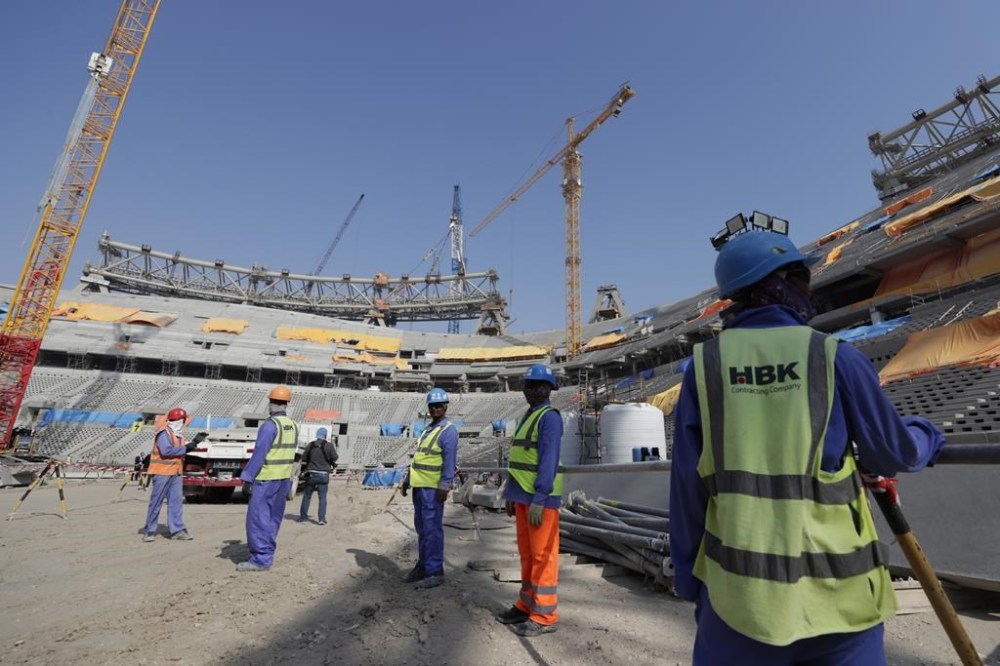
It built seven of its eight World Cup stadiums, a new metro system, highways, high-rises and Lusail, a futuristic city that ten years ago was mostly dust and sand.
For years, Qatar promised something else to distinguish this World Cup from the rest: It would be ‘carbon-neutral,’ or have a negligible overall impact on the climate. And for almost as long, there have been skeptics — with outside experts saying Qatar and FIFA’s plan rests on convenient accounting and projects that won’t counteract the event’s carbon footprint as they advertise.
“It’s not very helpful for this type of event to market itself as carbon-neutral,” said Gilles Dufrasne, a researcher at the Brussels-based non-governmental organization Carbon Market Watch, which authored a report questioning Qatar’s sustainability plan. “It gives the impression that we can build massive state-of-the-art stadiums … and fly people from all over the world to watch football matches and that’s somehow compatible with reaching climate targets.”
COUNTING EMISSIONS
In an official report estimating the event’s emissions, Qatari organizers and FIFA projected that the World Cup will produce some 3.6 million metric tons of carbon dioxide from activities related to the tournament between 2011 and 2023. That’s about 3% of Qatar’s total emissions in 2019 of roughly 115 million metric tons, according to World Bank data.
Qatar famously moved the tournament to the winter to protect players and spectators from extreme heat. Even so, the gas-rich nation will air condition seven stadiums that are open to the sky. For water, it will mostly rely on energy-guzzling desalination plants that take ocean water and make it drinkable to satisfy the more than 1.2 million fans expected to touch down for the monthlong event. The Gulf Arab sheikdom is normally home to 2.9 million people.
Qatar and FIFA say the largest source of emissions will be travel — mostly the miles flown from overseas. That will make up 52% of the total. Construction of the stadiums and training sites and their operations will account for 25%, the report said. Operating hotels and other accommodations for the five weeks, including the cruise ships Qatar hired as floating hotels, will contribute 20%.
But in its report, Carbon Market Watch said those figures are not the whole story. It said Qatar vastly underestimated the emissions from building the seven stadiums by dividing the emissions from all that concrete and steel by the lifespan of the facilities in years, instead of just totaling them.
“This is problematic,” Carbon Market Watch said, questioning the likelihood that Qatar, which is smaller than the U.S. state of Connecticut, would have erected seven large stadiums without the World Cup.
Qatar defended its math and said it has worked hard to avoid creating “white elephant” venues that often sit idle in host countries after a tournament has ended. It says it has developed plans for each stadium after the games are over.
“No other country has engaged so deeply with its citizens to ensure a sustainable legacy is left behind after a FIFA World Cup,” a spokesperson for the Qatari Supreme Committee for Delivery and Legacy said.
But last-minute hiccups continue to undercut the country’s climate promises. For years, Qatar said the country’s small size would reduce the amount of travel needed between stadiums and games. But despite all the construction, the country is still short of hotel rooms and thousands of fans who are unable to find lodging in Qatar will sleep in nearby Dubai — 45 minutes away by plane — and other Gulf cities.
Qatari organizers did not respond to a request for comment about whether they will count the flights in pollution totals, instead saying in a statement that any discrepancies would be explained after the World Cup.
A spokesperson for the Supreme Committee for Delivery and Legacy called the methodology behind Qatar’s carbon-neutral pledge “best in practice.”
CARBON OFFSETS QUESTIONED
Central to Qatar’s plan to reduce World Cup emissions are carbon offsets. Sometimes called carbon credits, these promise to cancel out or absorb the same amount of greenhouse gases emitted by a company or event, so that it’s as if the event emitted nothing.
In theory, that would mean every mile flown into the country and every construction project related to the games would be countered by an equal amount of carbon dioxide reduced by planting trees or improvements made elsewhere.
So far, Qatari organizers have pledged to buy 1.8 million carbon offsets from the Global Carbon Council, a Doha-based carbon credit registry where renewable projects are verified and listed. One carbon credit is equal to one metric ton of carbon dioxide avoided or removed from the atmosphere.
But carbon analysts have said the credits issued by the registry are of dubious quality because it’s unclear that they are “additional,” or fund carbon-reducing projects that would not have otherwise existed. As renewable energy infrastructure grows cheaper and more common across the world, it becomes less likely that investing in them through carbon credits is actually benefitting the environment, experts say. Approved projects registered to Qatari World Cup organizers so far include wind and hydropower energy projects in Turkey and Serbia.
“They’re relying on arguably some of the lowest quality credits that exist today,” said Danny Cullenward, an energy economist and lawyer who directs policy at CarbonPlan, a California-based nonprofit that evaluates climate programs. He said there are “severe problems with additionality” with the credits Qatar and FIFA are using, which he evaluated.
Cullenward and other experts say carbon credits often promise more than they deliver. The global carbon credits market remains largely unregulated.
“It’s not clear that the strategy of carbon offsetting is actually meaningful,” Cullenward said.
QATAR’S EFFORTS
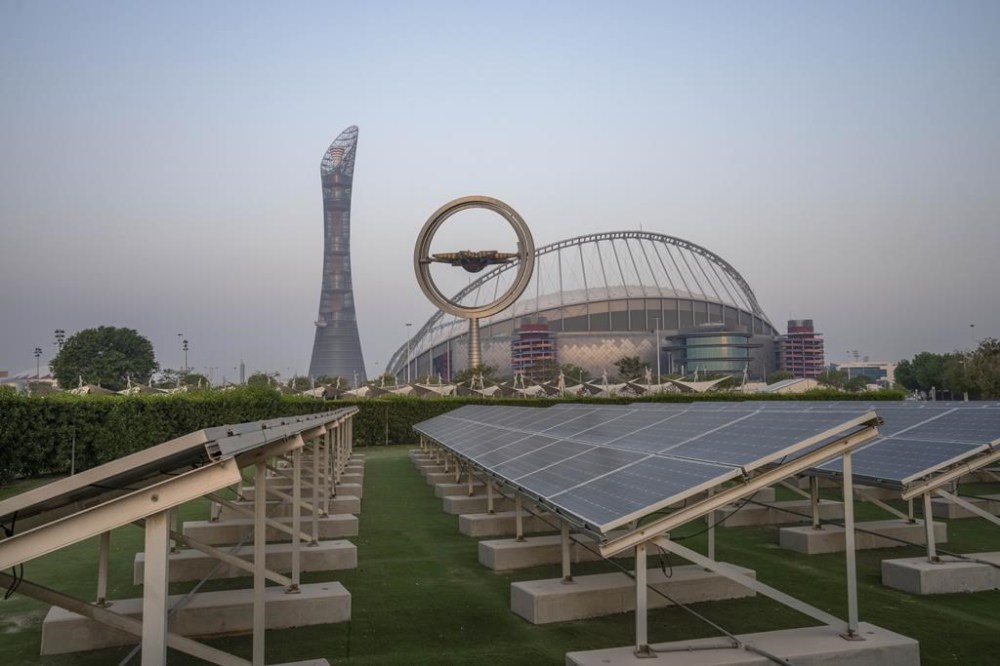
Still, Qatari organizers insist the country is on track to host the first carbon-neutral World Cup. They point to the visibly green elements of Qatar’s clean purchases: 800 new electric buses, 16,000 trees and nearly 700,000 nursery-grown shrubs, plus a new 800-megawatt solar power plant that was recently connected to the grid.
“It’s really enhanced the energy basket for Qatar,” said Saud Ghani, an engineering professor at Qatar University who designed the stadiums’ air-conditioning systems. “Before we only burned gas to generate power.”
Organizers have repeatedly said the country’s decision to offset the event’s carbon emissions “should be recognized rather than criticized.”
Karim Elgendy, a fellow at London’s Chatham House think tank who previously worked as a climate consultant for the World Cup, said Qatar’s efforts at ‘greening’ the tournament “show a positive trend for a sporting event.”

It indicates that Qatar, one of the world’s top natural gas exporters, is taking steps to improve its climate credentials, Elgendy said. Even if the country is “doing that in a way that works with them.”
___
Follow Suman Naishadham on Twitter: @SumanNaishadham
___
AP World Cup coverage: https://apnews.com/hub/world-cup and https://twitter.com/AP_Sports
Related Articles
Reece James 'devastated' to miss out on the World Cup









Advertisement Advertise With Us
Advertisement Advertise With Us