California lowers incentives for rooftop solar panels
Advertisement
Read this article for free:
or
Already have an account? Log in here »
To continue reading, please subscribe:

Digital Subscription
One year of digital access for only $205*
- Enjoy unlimited reading on winnipegfreepress.com
- Read the E-Edition, our digital replica newspaper
- Access News Break, our award-winning app
- Play interactive puzzles
*First annual payment billed as $205.00 + GST for one year. This annual subscription will automatically renew at $233.00 + GST every 52 weeks (10% off the regular annual price of $259.35). Offer available to new and qualified returning subscribers only. Cancel any time.
To continue reading, please subscribe:
Add Free Press access to your Brandon Sun subscription for only an additional
$1 for the first 4 weeks*
- Enjoy unlimited reading on winnipegfreepress.com
- Read the E-Edition, our digital replica newspaper
- Access News Break, our award-winning app
- Play interactive puzzles
*Your next Brandon Sun subscription payment will increase by $1.00 and you will be charged $17.95 plus GST for four weeks. After four weeks, your payment will increase to $24.95 plus GST every four weeks.
Read unlimited articles for free today:
or
Already have an account? Log in here »
Hey there, time traveller!
This article was published 15/12/2022 (1392 days ago), so information in it may no longer be current.
SACRAMENTO, Calif. (AP) — California utility regulators on Thursday approved major changes to the state’s booming rooftop solar market that they say will more evenly spread the cost of energy and help reduce the state’s reliance on fossil fuels in the evening.
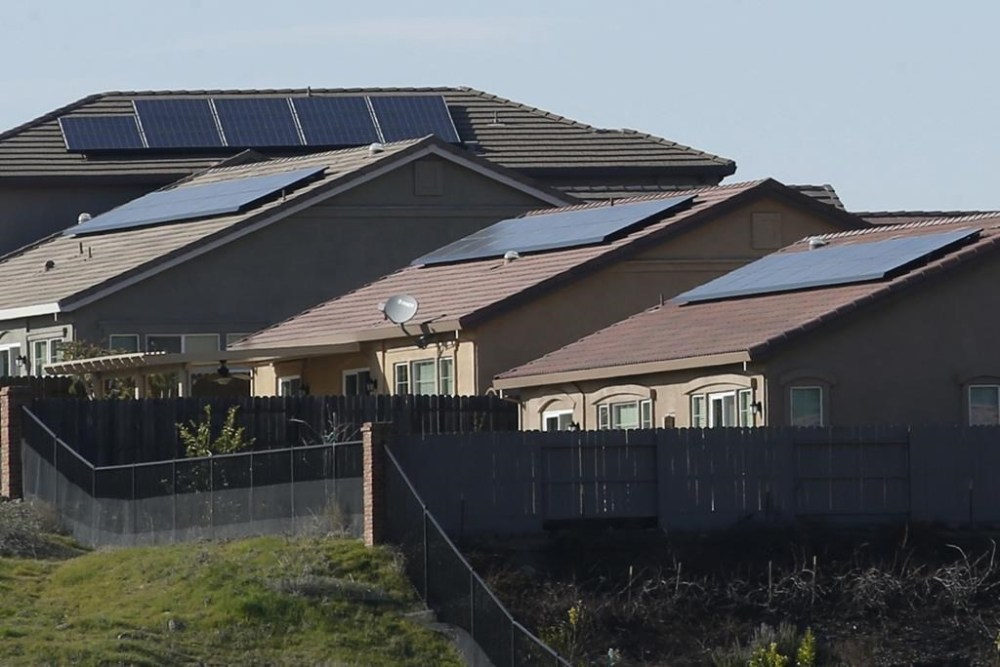
The state has long led the nation in adoption of rooftop solar panels, and today more than 1.5 million California homes and other buildings have them. Under a decades-old program, people with solar panels can get paid by their power companies by sharing excess solar energy they don’t need, leading some solar homes to pay minimal electric bills.
That’s led to criticism that rooftop solar customers aren’t paying their fair share into the rest of the energy grid, which many still rely on for power when the sun goes down. Power rates also include things like transmission equipment and wildfire prevention work, and regulators approve a set amount of money that utilities can recover from customers.
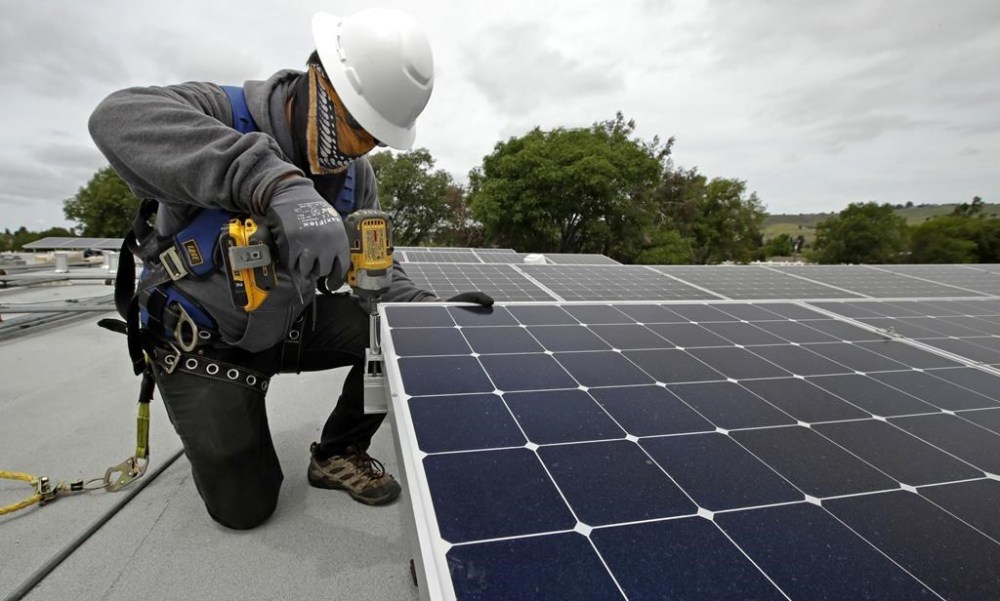
The policy approved unanimously by the California Public Utilities Commission lessens the overall payment for selling excess power. It also revamps electric rates to try to encourage people to build home storage systems alongside their panels, so they can tap that stored power at night or feed it back to the grid, either of which would help the system rely less on fossil fuels.
“For the rooftop solar industry to remain sustainable, we must place greater value on exports during the truly fossil-heavy time of day,” Commissioner John Reynolds said. “In short, we are making this change because of our commitment to addressing climate change.”
Although solar provides a lot of California’s power during the day, fossil fuels largely take over in the evening and during the night. Sometimes, California has more solar power than it can use during the day. Existing rooftop systems are capable of generating about 12,000 megawatts of power, according to the commission, nearly six times what the state’s last remaining nuclear plant generates.
But battery storage is not yet widespread. Today about 16% to 20% of the 150,000 households that install solar panels annually in California add battery storage systems, according to industry estimates. As of 2020, California started requiring all newly built homes to have solar panels, but there is no requirement for storage.
The commission’s vote followed sustained criticism over three hours of public comment in which some speakers accused the commission — and Democratic Gov. Gavin Newsom’s administration — of hindering the state’s climate efforts.
California has pushed forward with ambitious targets for weaning the state off oil and gas. Also Thursday, state air regulators approved a climate roadmap that says California must quadruple its solar and wind power to achieve carbon neutrality by 2045.
The fight over the solar changes has gone on for nearly two years, pitting the state’s three major utilities against the solar industry, with many environmental groups caught somewhere in between. The changes will apply only to customers of Pacific Gas & Electric, Southern California Edison and San Diego Gas & Electric,, which collectively serve a majority of customers in the states. They would not affect people who already have rooftop solar.
A utility-backed coalition called Affordable Clean Energy for All estimates that $4 billion in costs are shifted from solar to non-solar customers. Since the change doesn’t apply to existing solar customers, the cost shift will continue putting pressure on energy bills for everyone else, the coalition argued.
“Numerous independent studies and testimony from diverse parties make clear the current solar subsidy program forces low-income families, renters, seniors and anyone who doesn’t have rooftop solar to bankroll wealthier Californians’ solar systems. Today’s vote ensures this indefensible cost-shift will continue indefinitely,” Kathy Fairbanks, a spokesperson for the coalition, said in a statement.
The solar industry disputes that number, saying it doesn’t account for the benefits that rooftop solar provides for everyone, like making the grid more resilient and reducing the need for utilities to build more costly legacy power equipment.
Broadly, solar companies have warned that fewer people will add home solar because the overall value of rooftop solar is going down.
“The solar and storage industry remains concerned that the transition from net metering to the new net billing structure is too abrupt and threatens to slow the deployment of rooftop solar in California,” Sean Gallagher, vice president of state and regulatory affairs for the Solar Energy Industries Association, said in a statement.
The policy includes a transition period that gives extra incentives to people who install panel and storage systems in the next five years. Low-income utility customers as well as people living in disadvantaged neighborhoods and tribal communities will get double the credits to install home systems. Still, some solar advocates argued the price of solar will be too expensive for those households.
The average household solar and storage system costs about $26,000 when taking into account federal tax credits that cover about 30% of the cost, said Bernadette Del Chiaro, executive director of the California Solar & Storage Association

But the Public Advocates Office, a consumer advocacy group with the utilities commission, supports the change, pointing to commission estimates that show the proposal will still save residential solar customers an estimated $100 on their monthly bills, or $136 a month if they also install storage systems.
“Clean energy use during the day must be extended into the evening. Solar with batteries does exactly that. It’s the next step toward a clean energy future that will improve the air we breathe, the communities we live in, and our overall quality of life,” Matt Baker, the office’s director, said in a statement.
With those payments, it would take no more than nine years for someone to recoup the cost of installing the solar and battery systems through reduced energy costs, the commission said.
___
This story has been corrected to reflect that the state’s 1.5 million rooftop solar installations are on homes and other buildings, not just homes.
Related Articles
Firm seeks to build solar panel manufacturing plant in Manitoba
Advertisement Advertise With Us
Advertisement Advertise With Us