Paris aims to keep Olympians cool without air conditioners
Advertisement
Read this article for free:
or
Already have an account? Log in here »
To continue reading, please subscribe:

Digital Subscription
One year of digital access for only $205*
- Enjoy unlimited reading on winnipegfreepress.com
- Read the E-Edition, our digital replica newspaper
- Access News Break, our award-winning app
- Play interactive puzzles
*First annual payment billed as $205.00 + GST for one year. This annual subscription will automatically renew at $233.00 + GST every 52 weeks (10% off the regular annual price of $259.35). Offer available to new and qualified returning subscribers only. Cancel any time.
To continue reading, please subscribe:
Add Free Press access to your Brandon Sun subscription for only an additional
$1 for the first 4 weeks*
- Enjoy unlimited reading on winnipegfreepress.com
- Read the E-Edition, our digital replica newspaper
- Access News Break, our award-winning app
- Play interactive puzzles
*Your next Brandon Sun subscription payment will increase by $1.00 and you will be charged $17.95 plus GST for four weeks. After four weeks, your payment will increase to $24.95 plus GST every four weeks.
Read unlimited articles for free today:
or
Already have an account? Log in here »
Hey there, time traveller!
This article was published 20/03/2023 (1280 days ago), so information in it may no longer be current.
The Paris Olympics is going underground to find a way to keep athletes cool at the 2024 Games without air conditioners.
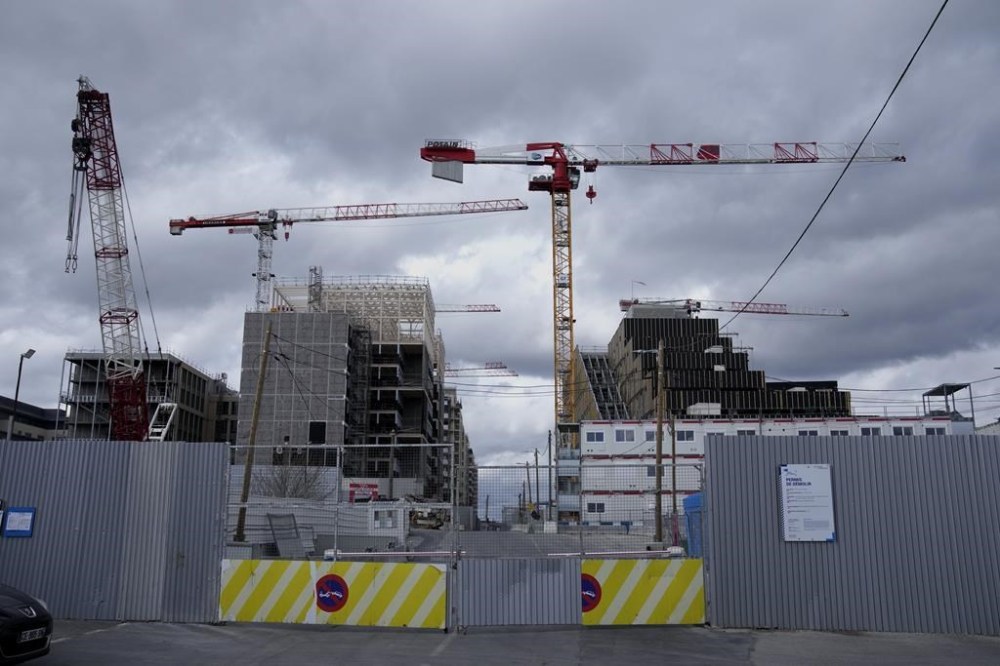
Organizers are planning to use a water-cooling system under the Athletes Village — much like the one that has helped the Louvre Museum cope with the sweltering heat that broke records last year — to keep temperatures in check for the Olympians and Paralympians who stay there.
The decision is part of the organizing committee’s goal to cut the carbon footprint of the Paris Games by half and stage the most sustainable Olympics to date by installing a special technology to use natural sources to keep everyone cool even during a potential heat wave.
“I want the Paris Games to be exemplary from an environmental point of view,” said Paris Mayor Anne Hidalgo, who has resolved to tackle climate change with an ambitious action plan that aims to drastically reduce greenhouse gas emissions and make the City of Lights carbon neutral by 2050.
Compared to a conventional project, the carbon impact will be reduced by 45% for the Athletes Village during the construction phase and over the entire Olympic cycle, she said.
For two months between July and September 2024, the Athletes Village north of Paris will host 15,600 athletes and sports officials during the Olympics and 9,000 athletes and their supporting teams during the Paralympics. After the games, the 50-hectare (125-acre) site next to the River Seine in the popular district of Seine-Saint-Denis will become a zero-carbon, eco-friendly residential and commercial neighborhood with 6,000 news inhabitants — the first ones moving in as soon as 2025.
In anticipation of hot weather, organizers have been studying heatwaves block by block in the Athletes Village. They have simulated conditions in the parts of the accommodation most exposed to the sun and have tested the effectiveness of the cooling system with an objective to keep the indoor temperature between 23 and 26 degrees Celsius (73 and 79 degrees Fahrenheit).
The geothermal energy system will ensure that the temperature in the athlete apartments in the Seine-Saint-Denis suburb does not rise above 26 degrees Celsius (79 degrees Fahrenheit) at night, including during a potential a heat wave, said Laurent Michaud, the director of the Olympic and Paralympic Villages.
He said organizers have conducted tests in rooms that are located on the highest floors of the residences and are facing south and exposed to direct sun on two sides. They also considered directions of winds in the region and the water temperature in the Seine. They have worked closely with France’s national weather agency to develop temperature forecasts.
“Despite outdoor temperatures reaching 41 degrees Celsius (106 degrees Fahrenheit), we had temperatures at 28 degrees (82 degrees Fahrenheit) in most of these rooms,” Michaud told The Associated Press, detailing the results of a heatwave simulation. “In other rooms, we clearly had lower temperatures.”
In addition to the underfloor cooling, the insulation built into the buildings will enable residents to keep the cold obtained during the night throughout the day, Michaud said. To keep the coolness inside, the athletes will have to follow some basic rules, he added, including making sure the window blinds are shut during the day.
Laurent Monnet, who is in charge of the green transition at Saint-Denis City Hall, Paris’ northern suburb where the main Olympic Village will be located, said all rooms should be 6 degrees Celsius (11 degrees Fahrenheit) cooler than the outside temperature, without an AC unit. Although some Olympic hopefuls have already expressed concern about the lack of air conditioning, Monnet said athletes should adapt and help contribute to fight against climate change.
“We need athletes to set an example when they use the buildings,” Monnet said. “We can build the most virtuous village we want, it is also the use that will be made of it that will weigh on our carbon footprint.”
Eliud Kipchoge, a two-time Olympic champion and marathon world record holder, endorsed the Paris sustainability plan. The Kenyan is one the sport’s most vocal proponents of environmental justice and has repeatedly sounded the alarm on climate change and the impact of global warming.
“It’s a good thought, because we all need to reduce our carbon,” Kipchoge said in an interview with the AP.
He called on fellow athletes to help combat climate change by reducing their carbon impact during competition, training and their lives in general because “we are all going to go through the same scenario.”
Paris organizers have been in touch with national Olympic committees and said they will have the option of setting up their own AC units in specific cases and on condition that the devices comply with the organizing committee’s technical criteria.
Most national Olympic officials have responded to the plans to keep their athletes cool during the Paris Games with a wait-and-see attitude. Some Olympic officials are not excluding bringing their own air conditioners to France — or paying for one on the spot — depending on the weather at the time.
The Australian Olympic Committee said it will keep an eye on the weather patterns in Paris over the coming year to ensure “the optimal high-performance environment for our athletes, including heat and humidity mitigation that may be required.”
Michaud, the director of the Olympic Village, said organizers want to be kind to the environment, but not endanger the health of athletes. Some athletes, especially in Paralympic events, have difficulty regulating their body’s core temperature and if they reside in rooms in which it proves impossible to keep at 26 degrees Celsius (79 degrees Fahrenheit) at night, national delegations will be able to install a portable AC system.
“It will be on a case-by-case basis, and for health and safety of the athletes,” Michaud said, adding that ventilators vaporizing water droplets could be installed instead of traditional air conditioning nits.
Hidalgo, the Paris mayor, is adamantly against turning next year’s event into the bring-your-own-air-conditioning Olympics — health exceptions aside.
“I can assure you that we will not change course and that there will be no changes to the construction program of the village regarding air conditioning,” Hidalgo said.

Regarding the option of organizers providing national teams with an additional cooling mechanism, she said: “I am not in favor of it. We must be consistent with our objectives.”
___
AP Sports Writers Jimmy Golen in Boston and Dennis Passa in Brisbane contributed to this report.
___
More AP Olympics: https://apnews.com/hub/2024-paris-olympic-games and https://twitter.com/AP_Sports