World on ‘thin ice’ as UN climate report gives stark warning
Advertisement
Read this article for free:
or
Already have an account? Log in here »
To continue reading, please subscribe:

Digital Subscription
One year of digital access for only $205*
- Enjoy unlimited reading on winnipegfreepress.com
- Read the E-Edition, our digital replica newspaper
- Access News Break, our award-winning app
- Play interactive puzzles
*First annual payment billed as $205.00 + GST for one year. This annual subscription will automatically renew at $233.00 + GST every 52 weeks (10% off the regular annual price of $259.35). Offer available to new and qualified returning subscribers only. Cancel any time.
To continue reading, please subscribe:
Add Free Press access to your Brandon Sun subscription for only an additional
$1 for the first 4 weeks*
- Enjoy unlimited reading on winnipegfreepress.com
- Read the E-Edition, our digital replica newspaper
- Access News Break, our award-winning app
- Play interactive puzzles
*Your next Brandon Sun subscription payment will increase by $1.00 and you will be charged $17.95 plus GST for four weeks. After four weeks, your payment will increase to $24.95 plus GST every four weeks.
Read unlimited articles for free today:
or
Already have an account? Log in here »
Hey there, time traveller!
This article was published 20/03/2023 (1276 days ago), so information in it may no longer be current.
BERLIN (AP) — Humanity still has a chance, close to the last, to prevent the worst of climate change’s future harms, a top United Nations panel of scientists said Monday.
But doing so requires quickly slashing nearly two-thirds of carbon pollution by 2035, the Intergovernmental Panel on Climate Change said. The United Nations chief said it more bluntly, calling for an end to new fossil fuel exploration and for rich countries to quit coal, oil and gas by 2040.
“Humanity is on thin ice — and that ice is melting fast,” United Nations Secretary-General Antonio Guterres said. “Our world needs climate action on all fronts — everything, everywhere, all at once.”
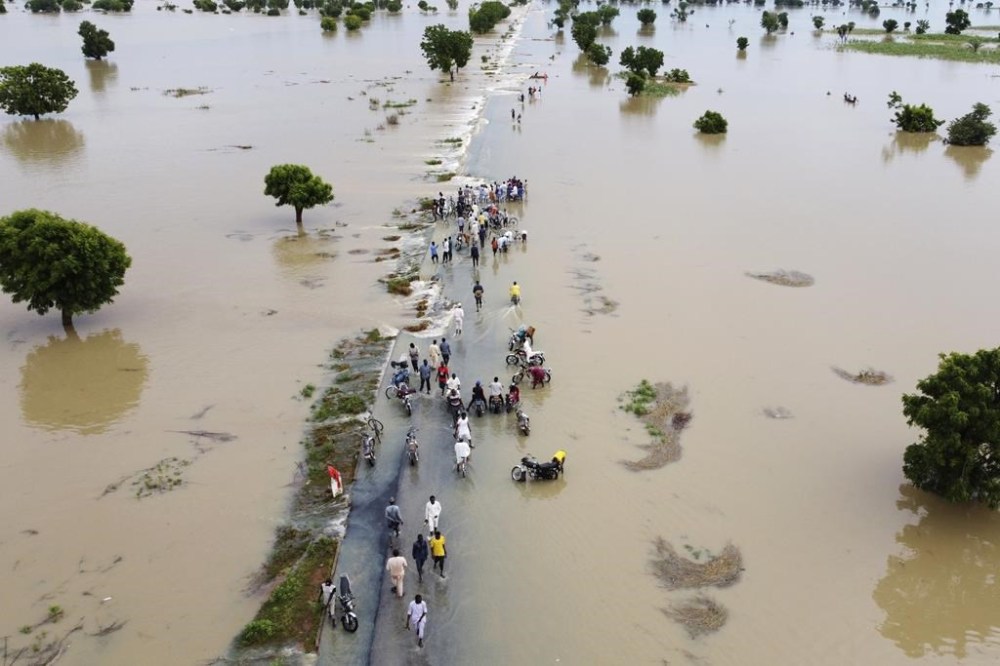
Stepping up his pleas for action on fossil fuels, Guterres called for rich countries to accelerate their target for achieving net zero emissions to as early as 2040, and developing nations to aim for 2050 — about a decade earlier than most current targets. He also called for them to stop using coal by 2030 and 2040, respectively, and ensure carbon-free electricity generation in the developed world by 2035, meaning no gas-fired power plants either.
That date is key because nations soon have to come up with goals for pollution reduction by 2035, according to the Paris climate agreement. After contentious debate, the U.N. science report approved Sunday concluded that to stay under the warming limit set in Paris the world needs to cut 60% of its greenhouse gas emissions by 2035, compared with 2019, adding a new target not previously mentioned in six previous reports issued since 2018.
“The choices and actions implemented in this decade will have impacts for thousands of years,” the report said, calling climate change “a threat to human well-being and planetary health.”
“We are not on the right track but it’s not too late,’’ said report co-author and water scientist Aditi Mukherji. “Our intention is really a message of hope, and not that of doomsday.’’
With the world only a few tenths of a degree away from the globally accepted goal of limiting warming to 1.5 degrees Celsius (2.7 degrees Fahrenheit) since pre-industrial times, scientists stressed a sense of urgency. The goal was adopted as part of the 2015 Paris climate agreement and the world has already warmed 1.1 degrees Celsius (2 degrees Fahrenheit).
This is likely the last warning the Nobel Peace Prize-winning collection of scientists will be able to make about the 1.5 mark because their next set of reports may well come after Earth has either passed the mark or is locked into exceeding it soon, several scientists, including report authors, told The Associated Press.
After 1.5 degrees “the risks are starting to pile on,” said report co-author Francis X. Johnson, a climate, land and policy scientist at the Stockholm Environment Institute. The report mentions “tipping points” around that temperature of species extinction, including coral reefs, irreversible melting of ice sheets and sea level rise of several meters (several yards).
“1.5 is a critical critical limit, particularly for small islands and mountain (communities) which depend on glaciers,” said Mukherji.
“The window is closing if emissions are not reduced as quickly as possible,” Johnson said in an interview. “Scientists are rather alarmed.”
Many scientists, including at least three co-authors, said hitting 1.5 degrees is inevitable.
“We are pretty much locked into 1.5,” said report co-author Malte Meinshausen, a climate scientist at the University of Melbourne in Australia. “There’s very little way we will be able to avoid crossing 1.5 C sometime in the 2030s ” but the big issue is whether the temperature keeps rising from there or stabilizes.
Guterres insisted “the 1.5-degree limit is achievable.” Science panel chief Hoesung Lee said so far the world is far off course.

If current consumption and production patterns continue, Lee said, “the global average 1.5 degrees temperature increase will be seen sometime in this decade.”
Scientists emphasize that the world or humanity won’t end suddenly if Earth passes the 1.5 degree mark. Mukherji said “it’s not as if it’s a cliff that we all fall off.” But an earlier IPCC report detailed how the harms — including even nastier extreme weather — are much worse beyond 1.5 degrees of warming.
“It is certainly prudent to be planning for a future that’s warmer than 1.5 degrees,” said IPCC report review editor Steven Rose, an economist at the Electric Power Research Institute in the United States.
If the world continues to use all the fossil fuel-powered infrastructure either existing now or proposed, Earth will warm at least 2 degrees Celsius since pre-industrial times, the report said.
Because the report is based on data from a few years ago, the calculations about fossil fuel projects already in the pipeline do not include the increase in coal and natural gas use after Russia’s invasion of Ukraine. It comes a week after the Biden Administration in the United States approved the huge Willow oil-drilling project in Alaska, which could produce up to 180,000 barrels of oil a day.
The report highlights the disparity between rich nations, which caused much of the problem because carbon dioxide emissions from industrialization stay in the air for more than a century, and poorer countries that get hit harder by extreme weather. Residents of poorer climate-vulnerable nations are “up to 15 times more likely to die in floods, droughts and storms,” Lee said.
If the world is to achieve its climate goals, poorer countries need a three-to-six times increase in financial help to adapt to a warmer world and switch to non-polluting energy, Lee said. Countries have made financial pledges and promises of a damage compensation fund.
Developed nations “are expected to speed up the fight against climate change and do their decarbonization much faster than developing countries like Brazil. However, this does not take away our responsibility to do our part,” Brazil’s climate change chief, Ana Toni, said. “It will be our populations in developing countries, which are more vulnerable.”
The report offers hope if action is taken, using the word “opportunity” nine times in a 27-page summary. But that word is overshadowed by 94 uses of the word “risk.”
“The pace and scale of what has been done so far and current plans are insufficient to tackle climate change,” IPCC chief Lee said. ”We are walking when we should be sprinting.”
Lee said the panel doesn’t tell countries what to do to limit worse warming, adding “it’s up to each government to find the best solution.”
“The solutions are at hand,” U.S. Vice President Kamala Harris said in a conference call about wildfires. “So let that be an alarm that lets us know that we must act with haste.”
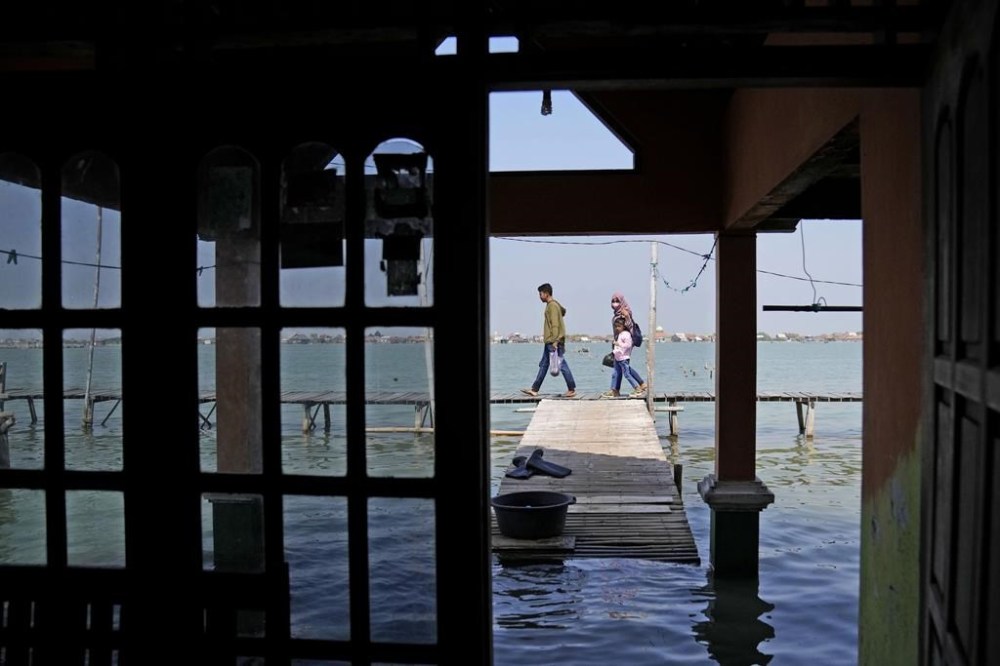
“How many reports that chill us to the bone do we need to read before we make the changes required?” asked Tina Stege, climate envoy for Marshall Islands, which are vulnerable to rising seas. “These changes will require some sacrifice — but aren’t they worth it when a liveable future on this planet is what is at stake?”
___
Fabiano Maisonnave in Rio de Janeiro, Brazil, contributed to this report. Borenstein reported from Kensington, Maryland.
___
Follow Seth Borenstein and Frank Jordans on Twitter at @borenbears and @wirereporter
___
Follow AP’s climate and environment coverage at https://apnews.com/hub/climate-and-environment
___
Associated Press climate and environmental coverage receives support from several private foundations. See more about AP’s climate initiative here. The AP is solely responsible for all content.
Related Articles
Climate change a polarizing topic in the province, poll reveals
Advertisement Advertise With Us
Advertisement Advertise With Us