African nations consider swapping debt for climate funding

Advertisement

Advertise with us

MOMBASA, Kenya (AP) — African countries saddled with debt and ravaged by losses and damages from weather events like cyclones, drought and extreme temperatures have agreed to consider swapping debt to invest in climate action in a meeting of finance ministers in the Ethiopian capital Addis Ababa.

Read this article for free:


or

Already have an account? Log in here »

To continue reading, please subscribe:

Subscribe and receive a limited-edition Free Press branded hat or tote.

Digital Subscription

One year of digital access for only $205*

  • Enjoy unlimited reading on winnipegfreepress.com
  • Read the E-Edition, our digital replica newspaper
  • Access News Break, our award-winning app
  • Play interactive puzzles

*First annual payment billed as $205.00 + GST for one year. This annual subscription will automatically renew at $233.00 + GST every 52 weeks (10% off the regular annual price of $259.35). Offer available to new and qualified returning subscribers only. Cancel any time.

To continue reading, please subscribe:

Add Free Press access to your Brandon Sun subscription for only an additional

$1 for the first 4 weeks*

  • Enjoy unlimited reading on winnipegfreepress.com
  • Read the E-Edition, our digital replica newspaper
  • Access News Break, our award-winning app
  • Play interactive puzzles
Start now

*Your next Brandon Sun subscription payment will increase by $1.00 and you will be charged $17.95 plus GST for four weeks. After four weeks, your payment will increase to $24.95 plus GST every four weeks.

Hey there, time traveller!
This article was published 21/03/2023 (1252 days ago), so information in it may no longer be current.

MOMBASA, Kenya (AP) — African countries saddled with debt and ravaged by losses and damages from weather events like cyclones, drought and extreme temperatures have agreed to consider swapping debt to invest in climate action in a meeting of finance ministers in the Ethiopian capital Addis Ababa.

The “debt-for-climate swap” option is an economic tool that allows a country’s debt to be reduced in exchange for commitments on green investments. It was among several alternative green financing models discussed at the ongoing United Nations conference for finance and economic ministers that supporters say would boost funds to adapt to climate harms, protect nature and finance local communities.

It comes as many African nations are battling with the effects of costly climate change-fueled events like the ongoing drought in eastern Africa that has killed thousands and decimated livelihoods reliant on rain-fed agriculture and the aftermath of the devastating Cyclone Freddy in the south that’s left hundreds dead and thousands of others displaced.
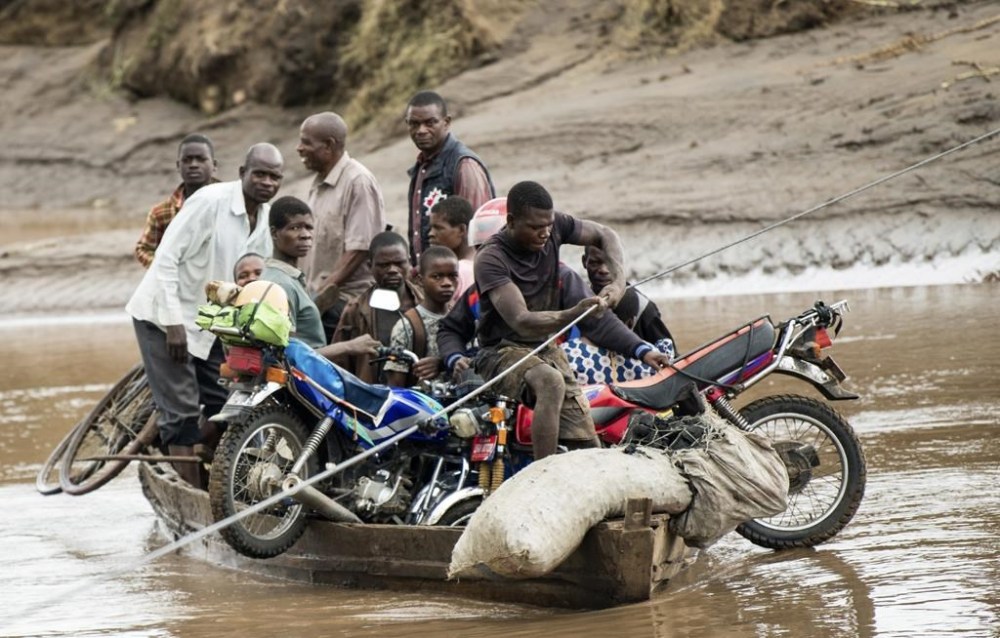
FILE - Men transport their salvaged belongings in Chiradzulu, southern Malawi, March 17, 2023. During a conference in the Ethiopian capital of Addis Ababa on Monday, March 20, 2023, leaders of African countries hit hard by climate change discussed finance options that would allow for the forgiveness of debt in exchange for investment in green energies. (AP Photo/Thoko Chikondi, File)

Egyptian finance minister Mohamed Maait said that his country is one of many that is now having to add heavy climate costs to budgets stretched thin by external debt — which takes up to 17% of countries’ spending in some cases — and other basic needs.

“What am asking every day and every hour is where do I get the money to protect our people from climate extremes,” Maait said, adding that borrowing was often the only option for some nations.

Yet “many countries simply cannot access international financial markets because of rising interest rates,” Hanan Morsy, the chief economist of the U.N. Economic Commission for Africa told the roundtable Monday evening. Morsy added that private sector investments in climate finance are lower in Africa than in any other part of the world.

Ministers also discussed bonds that would help increase private financial flows as well as “blended finance” models that would combine development funds and private capital as potential solutions for climate funding.

Interest in green finance has been growing, along with criticism that current mechanisms don’t work for countries ravaged by climate extremes but have contributed little to the planet-warming emissions in the atmosphere.

In 2022 the International Monetary Fund established a $50 billion climate loan pot to help low and middle-income nations access affordable and longer-term financing to respond to shocks associated with climate change. Rwanda became the first African nation to receive a loan of $319 million.

But another $50 billion pot pledged by the World Bank is only sending around 5% of its funds to the ten most climate vulnerable countries, according to a recent study by the Center for Global Development. Four of the ten nations identified — Mali, Niger, Sudan and Liberia — were in Africa.

The ministers’ roundtable coincided with the Green Climate Fund board meeting, a group within the U.N. climate agency that financially supports nations to adapt to or curb climate change. On Monday the fund approved $580 million in new climate finance for developing nations.

___

Associated Press climate and environmental coverage receives support from several private foundations. See more about AP’s climate initiative here. The AP is solely responsible for all content.

Report Error Submit a Tip

More Stories

Letters, Aug 24

7 minute read Preview

Letters, Aug 24

7 minute read Updated: 8:45 AM CDT

The article says the Wolseley Residents Association has fundraised about $20,000 to inoculate publicly owned trees in Wolseley against Dutch elm disease. Ian Dyck is a member of the association’s tree committee, and he says that the Wolseley Residents Association hopes that others will follow their lead. This project will pay for 150 American elms to be protected against the disease for about three years.

Read
Updated: 8:45 AM CDT

Five Things: PM Carney explains why Canada left the U.S. negotiating table

David Baxter, The Canadian Press 5 minute read Preview

Five Things: PM Carney explains why Canada left the U.S. negotiating table

David Baxter, The Canadian Press 5 minute read Saturday, Aug. 22, 2026

OTTAWA - Canada is preparing to hit the U.S. with dollar-for-dollar tariffs in response to new 50 per cent duties on $28 billion worth of Canadian products that took effect when talks between the two nations collapsed as negotiations neared the finish line. 

Prime Minister Mark Carney was quiet publicly during the final days of negotiations, but now has now explained his rationale for telling the Canadian negotiating team, led by Canada-U.S. Trade Minister Dominic LeBlanc and chief negotiator Janice Charette, to leave the table.

Restrictions on further trade deals

"The U.S. Introduced at the last hours, in the last hours, efforts to restrict our ability to have other trade deals. You heard me say a moment ago, what we've accomplished in the past year, 20 new deals, economic and security partnerships, the prospect of doubling our market access because we believe in free trade. We're the partner of choice in many respects for countries around the world and the Americans wanted to restrict that. They had language that what they wanted to restrict that, unacceptable," Carney said during a press conference on Parliament Hill.

Read
Saturday, Aug. 22, 2026

Conservatives call on government to release U.S. trade offer details

Nick Murray, The Canadian Press 4 minute read Preview

Conservatives call on government to release U.S. trade offer details

Nick Murray, The Canadian Press 4 minute read Updated: Yesterday at 3:17 PM CDT

OTTAWA - Federal conservatives are calling on the government to release the full details of the trade offer from the United States that Canada rejected this week.

In a letter to Trade Minister Dominic LeBlanc, Canada-U.S. relations critic Shuvaloy Majumdar said while his party supports the government's decision to reject the deal, Parliament is in the dark on what was on the table.

"If there was a draft text of any agreement that both governments have seen, please release it. The U.S. administration has seen it. Your government has seen it. Canadians deserve to see it," Majumdar wrote.

"Even after addressing Canadians and the media, the public and Members of Parliament still remain in the dark on your government's demands in negotiations with the Trump administration.

Read
Updated: Yesterday at 3:17 PM CDT

Free Press arts team shares books for passing the dog days

4 minute read Preview

Free Press arts team shares books for passing the dog days

4 minute read 6:00 AM CDT

When most people mention a “summer read” or a “beach book,” the types of writing they’re referring to is lighter fare most of us would consider enjoyable but not overly profound: think cosy mysteries, historical bodice rippers, otherworldy romantasies, fast-paced whodunits, chilling (but not too chilling) horror and, notably as of late, romance novels of all persuasions — perhaps, say, between two hockey players?

But not everyone dives into such popular picks over the summer months. Here’s what the Free Press arts and life team has been poring over in the past months…

Temporary Palaces, by Jeff Miller

If you spent your youth in the late 1990s/early 2000s going to protests, making zines, DIY art or punk rock — or, failing that, reading about it all in Adbusters magazine — and consider yourself a hopeless romantic, this new novel from Nova Scotia’s Jeff Miller is for you. Themes of idealism, artistic integrity, heartbreak and shared trauma are all on the menu for this will-they-won’t they pairing of punk rocker Ben and visual artist Alex, set amid the squats of Ottawa and the art lofts of Montreal.

Read
6:00 AM CDT

H.P. Tergesen & Sons General Market surpasses 127 years as family-run business in Gimli

Aaron Epp 7 minute read Preview

H.P. Tergesen & Sons General Market surpasses 127 years as family-run business in Gimli

Aaron Epp 7 minute read 6:00 AM CDT

GIMLI — Walk into the store. Meander past the clothing, candy and candles. Find him in the corner, his eyes scanning the bookshelves, a smile on his face as a half-dozen people explore this side of the shop.

Wearing grey shorts and a light blue shirt, Stefan Tergesen, the fourth-generation proprietor of H.P. Tergesen & Sons General Market, is explaining his vision for what’s widely recognized as the oldest general store in Western Canada.

“First and foremost, I want everybody to enjoy being in here,” he says. “I want you at some point to look and go, ‘Oh, cool!’ after seeing something that gets your blood flowing.”

If you ever find yourself on the west side of Lake Winnipeg, some 80 kilometres north of Manitoba’s capital, and you realize you forgot to pack something, there’s a good chance you’ll find it at Tergesen’s.

Read
6:00 AM CDT

African nations consider swapping debt for climate funding

Wanjohi Kabukuru, The Associated Press 4 minute read Preview

African nations consider swapping debt for climate funding

Wanjohi Kabukuru, The Associated Press 4 minute read Tuesday, Mar. 21, 2023

MOMBASA, Kenya (AP) — African countries saddled with debt and ravaged by losses and damages from weather events like cyclones, drought and extreme temperatures have agreed to consider swapping debt to invest in climate action in a meeting of finance ministers in the Ethiopian capital Addis Ababa.

The “debt-for-climate swap” option is an economic tool that allows a country’s debt to be reduced in exchange for commitments on green investments. It was among several alternative green financing models discussed at the ongoing United Nations conference for finance and economic ministers that supporters say would boost funds to adapt to climate harms, protect nature and finance local communities.

It comes as many African nations are battling with the effects of costly climate change-fueled events like the ongoing drought in eastern Africa that has killed thousands and decimated livelihoods reliant on rain-fed agriculture and the aftermath of the devastating Cyclone Freddy in the south that's left hundreds dead and thousands of others displaced.

Egyptian finance minister Mohamed Maait said that his country is one of many that is now having to add heavy climate costs to budgets stretched thin by external debt — which takes up to 17% of countries' spending in some cases — and other basic needs.

Read
Tuesday, Mar. 21, 2023