Takeaways from AP examination of Peru carbon credit program
Advertisement
Read this article for free:
or
Already have an account? Log in here »
To continue reading, please subscribe:

Digital Subscription
One year of digital access for only $205*
- Enjoy unlimited reading on winnipegfreepress.com
- Read the E-Edition, our digital replica newspaper
- Access News Break, our award-winning app
- Play interactive puzzles
*First annual payment billed as $205.00 + GST for one year. This annual subscription will automatically renew at $233.00 + GST every 52 weeks (10% off the regular annual price of $259.35). Offer available to new and qualified returning subscribers only. Cancel any time.
To continue reading, please subscribe:
Add Free Press access to your Brandon Sun subscription for only an additional
$1 for the first 4 weeks*
- Enjoy unlimited reading on winnipegfreepress.com
- Read the E-Edition, our digital replica newspaper
- Access News Break, our award-winning app
- Play interactive puzzles
*Your next Brandon Sun subscription payment will increase by $1.00 and you will be charged $17.95 plus GST for four weeks. After four weeks, your payment will increase to $24.95 plus GST every four weeks.
Read unlimited articles for free today:
or
Already have an account? Log in here »
Hey there, time traveller!
This article was published 30/03/2023 (1264 days ago), so information in it may no longer be current.
SAN MARTÍN, Peru (AP) — In the nearly 15 years that a carbon credit program has been run to safeguard one of Peru’s most valuable national parks, more than 28 million credits have been sold to fossil fuel producers like Shell and TotalEnergies.
The project was supposed to stop deforestation in the Cordillera Azul National Park, helping to stem carbon emissions contributing to climate change.
But an analysis by independent experts and reporting by The Associated Press raises doubts about whether the project has delivered on its promise to counter-balance emissions by oil companies and others. And the tree loss has more than doubled, according to satellite analysis.
Some takeaways from the AP’s investigation:
LAUNCH OF THE PROGRAM
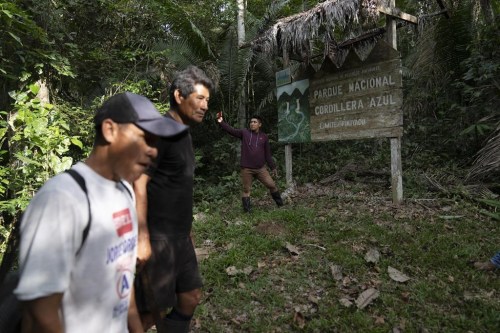
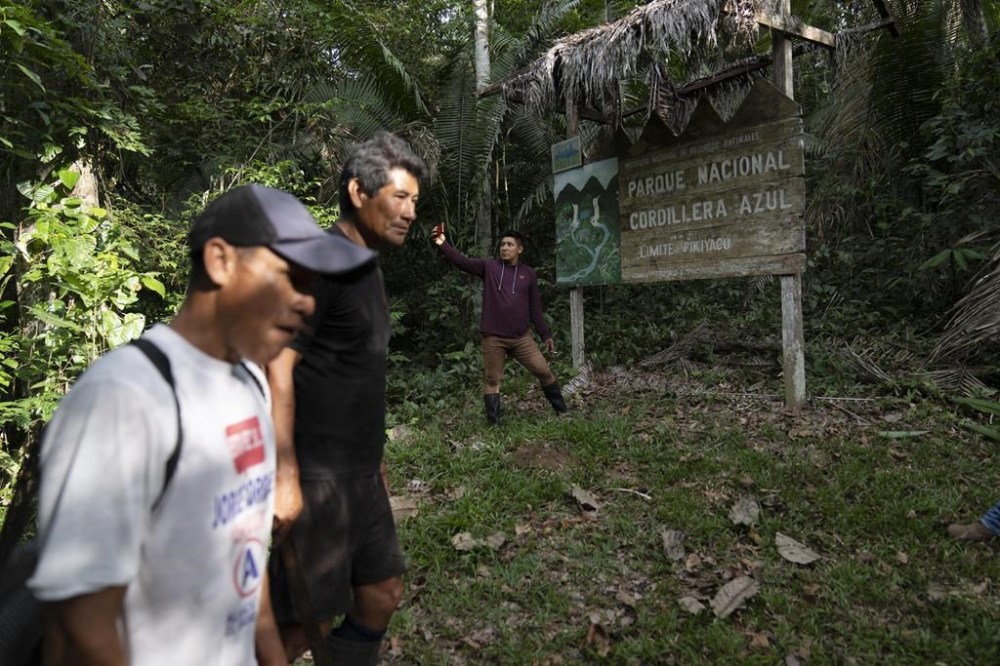
Cordillera Azul National Park covers more than 5,000 square miles (12,950 square kilometers) on the eastern flank of the Peruvian Andes. The national park designation in 2001 gave it legal protection, but the carbon credits program was launched in 2008 after supporters argued that the park designation alone wasn’t enough to protect it from pressures including migrants seeking to clear land for farming. It is thought to be the world’s fifth-biggest forest protection carbon credit project.
Money raised from sale of the credits pays for forest patrols and education of local communities to try to stop deforestation. The more than 28 million credits sold for the Cordillera Azul project, in theory, offset 28 million tons of carbon dioxide emitted by their buyers.
WHAT HAPPENED WITH TREE LOSS
A stated goal of the project was to prevent “all deforestation” in the park. But satellite mapping shows tree canopy loss has actually increased.
Space Intelligence, a company that maps forest carbon credit projects to aid in verification, found tree loss more than doubled to an annual average of 572 hectares (1,400 acres) after the program launched until 2021, the last year for which data is available.
CIMA, the Spanish acronym for the independent nonprofit that runs the park for the Peruvian government, said natural phenomena such as landslides caused the tree loss, rather than human activity like logging, farming or mining.
The satellite data does show many landslides, but deforestation is a major cause of landslides, which are far more likely where deforestation has occurred. Forest loss was also double in areas close to a park boundary or rivers — areas that are most accessible, and therefore more vulnerable to logging or agriculture, than the rest of the park. More than a third of all the tree loss mapped in the gigantic park was within 0.6 miles (1 kilometer) of park boundaries or rivers. Experts say natural causes cannot be ruled out, but the evidence suggests “human disturbance of the forest” that made the landslides more likely.
DUBIOUS EMISSIONS ‘SAVINGS’
Experts say the Cordillera Azul program inflated projected benefits from the start. They doubt CIMA’s claims in 2008 that almost 29 million tons of carbon dioxide would have been released from deforestation there over 10 years without the project.
Coming up with the figure was complicated. Industry standard guidelines required CIMA to compare the project to a reference area to come up with estimates of what would happen without its protection.
Simon Counsell analyzed the areas CIMA selected for this comparison for Friends of the Earth Netherlands. He said CIMA’s reference area oversampled lowland valleys and floodplains, which are far more attractive to farmers than the rest of the park’s more rugged terrain.
That led to an inflated estimate of land likely to be cleared for farming, leading to a higher figure for prevented emissions. That enabled more credits to be sold.
Counsell also said CIMA’s numbers overestimated population growth in the reference area, also boosting estimates of prevented emissions.
IN DEFENSE OF THE PROGRAM
CIMA’s executive director, Gonzalo Varillas, said selling credits brought in enough money to almost fully fund the park’s operating costs and robustly defended the way it was set up.
Steve Zwick is a spokesman for the nonprofit Verra, which nets a fee for each credit certified in forest carbon projects including Cordillera Azul. He said the program was a “lifeline” for the park.
Zwick also said estimates for prevented emissions were chosen by the best available processes and with the best available data.
Verra has recently said it will bring in a new rainforest carbon credit methodology by 2025.
The project’s biggest buyers, Shell and TotalEnergies, defended their participation. A TotalEnergies spokesman said by email that comparing tree loss before and after the project gave the misleading impression it had failed, because deforestation cannot be halted instantaneously. The spokesman declined to allow his name to be used.

A Shell spokesman said “catastrophic deforestation” would have occurred without the program. But the spokesman, who also declined to allow his name to be used, said Shell will conduct an additional review before further purchases.
___
Follow Ed Davey on Twitter: https://twitter.com/EdDavey1
___
Associated Press climate and environmental coverage receives support from several private foundations. See more about AP’s climate initiative here. The AP is solely responsible for all content.