Report by feds, anglers cites offshore wind impacts on fish

Advertisement

Advertise with us

ATLANTIC CITY, N.J. (AP) — A joint study by two federal government scientific agencies and the commercial fishing industry documents numerous impacts that offshore wind power projects have on fish and marine mammals, including noise, vibration, electromagnetic fields and heat transfer that could alter the marine environment.

Read this article for free:


or

Already have an account? Log in here »

To continue reading, please subscribe:

Subscribe and receive a limited-edition Free Press branded hat or tote.

Digital Subscription

One year of digital access for only $205*

  • Enjoy unlimited reading on winnipegfreepress.com
  • Read the E-Edition, our digital replica newspaper
  • Access News Break, our award-winning app
  • Play interactive puzzles

*First annual payment billed as $205.00 + GST for one year. This annual subscription will automatically renew at $233.00 + GST every 52 weeks (10% off the regular annual price of $259.35). Offer available to new and qualified returning subscribers only. Cancel any time.

To continue reading, please subscribe:

Add Free Press access to your Brandon Sun subscription for only an additional

$1 for the first 4 weeks*

  • Enjoy unlimited reading on winnipegfreepress.com
  • Read the E-Edition, our digital replica newspaper
  • Access News Break, our award-winning app
  • Play interactive puzzles
Start now

*Your next Brandon Sun subscription payment will increase by $1.00 and you will be charged $17.95 plus GST for four weeks. After four weeks, your payment will increase to $24.95 plus GST every four weeks.

Hey there, time traveller!
This article was published 31/03/2023 (1282 days ago), so information in it may no longer be current.

ATLANTIC CITY, N.J. (AP) — A joint study by two federal government scientific agencies and the commercial fishing industry documents numerous impacts that offshore wind power projects have on fish and marine mammals, including noise, vibration, electromagnetic fields and heat transfer that could alter the marine environment.

It comes as the offshore wind industry is poised to grow rapidly on the U.S. East Coast, where it is facing growing opposition from those who blame it for killing whales — something numerous scientific agencies say is not true.

The National Oceanic and Atmospheric Administration, the Bureau of Ocean Energy Management and the Responsible Offshore Development Alliance issued their report Wednesday after a 2 1/2-year-long study of the impacts existing offshore wind projects have on fish and marine mammals.
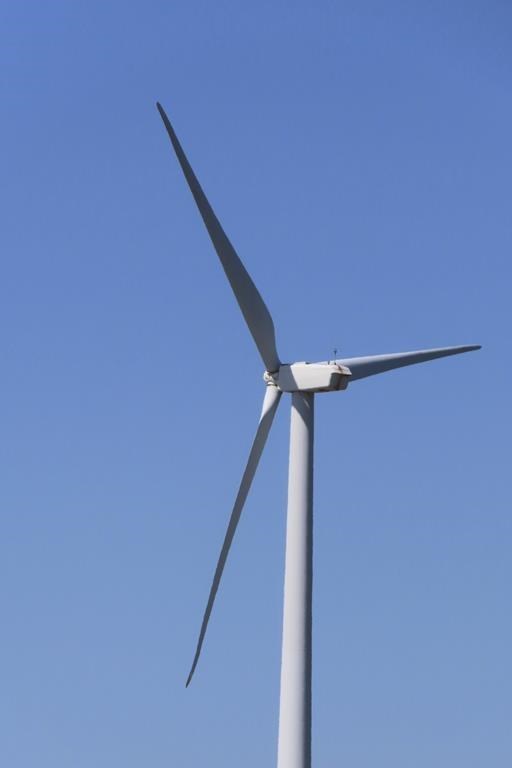
A land-based wind turbine spins in Atlantic City N.J. on April 28, 2022. A report issued March 29, 2023 by two federal marine science agencies and the commercial fishing industry highlighted several potential negative aspects of offshore wind energy development on the fishing industry and called for additional research. (AP Photo/Wayne Parry)

The goal was to solidify existing knowledge of the impacts and call for further research in many areas.

NOAA and BOEM are among agencies that say there is no link between offshore wind preparation and whale deaths. Their co-authorship of a report detailing potential negative impacts on fish and marine mammals may intensify an already highly politicized controversy.

Asked Friday about the likelihood of this happening, NOAA spokesperson Lauren Gaches reiterated the agency’s position that offshore wind is not causing the whale deaths, which remain under investigation.

“We will also continue to explore how sound, vessel, and other human activities in the marine environment impact whales and other marine mammals,” she said.

The fishing industry is concerned that fish near construction sites may be killed or chased away for prolonged periods even after the turbines are built, according to the report.

“Physical changes associated with (offshore wind) developments will affect the marine environment — and, subsequently, the species that live there — to varying degrees,” the report read. ”These include construction and operation noise and vibration, electromagnetic fields, and thermal radiation from cables, as well as secondary gear entanglement.

In an interview, Fiona Hogan, research director for the Responsible Offshore Development Alliance, said: “We wanted to document what was known and not known. As far as we know, this is the first cooperatively developed report that cites all aspects of the potential interactions between fisheries and offshore wind.”

The alliance is a fishing industry group trying to improve the compatibility of offshore wind with fishing operations.

The American Clean Power Association, an offshore wind industry group, said Friday it was still studying the 388-page report.

Andy Lipsky, who oversees the wind energy team at NOAA’s Northeast Fisheries Science Center, is a co-author of the report. He said it helps the agencies define the type of monitoring required for long-term study of offshore wind’s effects and points out “needed research on how offshore wind energy changes marine habitats and fisheries.”

Several concerns raised in the report mirror many of those raised by opponents of offshore wind, including those who blame preparation for offshore wind farms for killing whales along the East Coast. Since December, 30 whales have washed ashore there.

The report said offshore wind turbines can attract fish and marine life, but also repel them. The large underwater platforms are rapidly colonized by smaller marine life which in turn attracts larger predators to the area. Water cloudiness from turbine operations, noise, vibrations and electromagnetic fields could also make them leave the area.

Hogan said some disagreement remains on whether wind platforms will be a net attraction or deterrent to fish.

Regarding noise, the report said sounds emitted from pile-driving during construction “can be severe, resulting in mortality or injury of hearing tissues.” Noise levels from ongoing operation of the turbines once constructed “are not associated with direct physical injury, (but) long-term exposures may have negative effects on communication, foraging, and predator detection.”

In almost every instance, the report called for additional research. The study only dealt with fixed-location wind turbines; a second study will examine wind projects that float on the water’s surface.

The $150,000 survey was funded by NOAA.

___

Follow Wayne Parry on Twitter at www.twitter.com/WayneParryAC

Report Error Submit a Tip

More Stories

Puzzles Palace

1 minute read Monday, Jul. 27, 2026

To solve our puzzles, please subscribe with this special offer: |

Kent Monkman debuts beaver sculpture in Toronto’s ambitious new waterfront park

Alex Nino Gheciu, The Canadian Press 2 minute read Preview

Kent Monkman debuts beaver sculpture in Toronto’s ambitious new waterfront park

Alex Nino Gheciu, The Canadian Press 2 minute read Updated: 3:33 PM CDT

TORONTO - Kent Monkman’s first-ever public art installation is dam good.

The celebrated Cree artist’s new permanent sculpture, dubbed “The Colony,” debuts Wednesday in Toronto’s east end.

The 15-foot-high bronze structure features beavers dancing, feasting and celebrating, evoking Indigenous ceremonies.

It highlights the vital role of beavers in the natural, Indigenous and colonial histories of Turtle Island, says a release.

Read
Updated: 3:33 PM CDT

U of W Collegiate students thank residential school survivors with the lessons they’ve learned

Maggie Macintosh 6 minute read Preview

U of W Collegiate students thank residential school survivors with the lessons they’ve learned

Maggie Macintosh 6 minute read 6:49 PM CDT

It’s become a back-to-school tradition for teachers to invite Indigenous elders to their classrooms to share first-hand accounts about the ongoing impacts of Canada’s residential school system.

This fall, the University of Winnipeg Collegiate was among the schools that sent an invitation — but its purpose wasn’t to educate students about the system’s horrors.

“Truth and Reconciliation week is so emotional and draining for residential school survivors,” said Christine M’Lot, a longtime instructor of the school’s Grade 9 truth and reconciliation course.

“I wanted to do something a little bit different and offer a thank you.”

Read
6:49 PM CDT

Fewer health system critical incidents reported in 2025 than in previous two years, data shows

Chris Kitching 5 minute read Preview

Fewer health system critical incidents reported in 2025 than in previous two years, data shows

Chris Kitching 5 minute read 5:48 PM CDT

The number of critical incidents reported within Manitoba’s health-care system declined again in 2025, with delays, gaps and “missed opportunities” among the most common circumstances of deaths or injuries.

Quarterly reports from Manitoba Health listed 121 critical incidents, including 32 deaths, in hospitals, personal-care homes and other settings, down from 134 incidents in 2024, when 32 deaths were also reported, and 166 incidents (42 deaths) in 2023.

“We’d obviously like to see those at zero,” said Jason Linklater, president of the Manitoba Association of Health Care Professionals, which represents more than 7,700 allied health workers.

“It’s good that they’ve come down. What we really want to see is those numbers drastically reduced overall, and I just fear that’s not going to happen until staffing is dealt with.”

Read
5:48 PM CDT

Jets bench boss Arniel talks rebuilding from last season’s struggles

Mike McIntyre and Ken Wiebe 12 minute read Preview

Jets bench boss Arniel talks rebuilding from last season’s struggles

Mike McIntyre and Ken Wiebe 12 minute read Yesterday at 5:42 PM CDT

Scott Arniel has a lot on his plate these days.

But the head coach of the Winnipeg Jets took some time Thursday to sit down with Free Press hockey writers Mike McIntyre and Ken Wiebe to discuss a number of topics on the eve of a new hockey season. This interview has been condensed and edited for clarity.

Wiebe: What was the evaluation of last season like? What did you personally do in an attempt to improve after going from first-overall to 26th-overall?

I just went back and looked at things and made sure my communication was where it needed to be with my players. Was my communication where it needed to be with my boss, with my general manager (Kevin Cheveldayoff)? How our coaching staff worked. How we handled highs and lows. Things I felt I could have done better.

Read
Yesterday at 5:42 PM CDT

Health minister warns $1.2 billion in annual federal funding set to expire in March

Scott Billeck 4 minute read Preview

Health minister warns $1.2 billion in annual federal funding set to expire in March

Scott Billeck 4 minute read Yesterday at 6:58 PM CDT

Manitoba’s health minister is warning of possible cuts to health care with $1.2 billion in annual funding from Ottawa set to expire next year.

“We’re very concerned that what would be the largest cut to health care in a generation is right in front of us,” Health Minister Uzoma Asagwara said Thursday at the Manitoba legislature. “It means that services that Manitobans depend on will be in jeopardy and be at risk.

“Any reductions, any cuts from Canada, will have direct impacts on the health outcomes of Manitobans.”

Asagwara, who serves as the provincial and territorial health minister lead, chaired a virtual meeting Tuesday with provincial and territorial health ministers to discuss federal funding for health care, mental health care and substance use services, which is scheduled to expire March 31, 2027.

Read
Yesterday at 6:58 PM CDT