Oil drilling in Gulf safer, but concerns linger, report says

Advertisement

Advertise with us

Thirteen years after the massive Deepwater Horizons spill fouled the Gulf of Mexico, regulators and industry have reduced some risks in deep water exploration in the gulf but some troublesome safety issues persist, a new study by the National Academy of Sciences said.

Read this article for free:


By clicking the button above, an account will be created and you will begin to receive some of our recommended newsletters. You may opt out of any newsletter by visiting your Email and Communication Preferences page or by clicking "unsubscribe" at the bottom of any email.

or

Already have an account? Log in here »

To continue reading, please subscribe:

Digital Subscription

One year of digital access for only $1.44 a week*

  • Enjoy unlimited reading on winnipegfreepress.com
  • Read the E-Edition, our digital replica newspaper
  • Access News Break, our award-winning app
  • Play interactive puzzles

*Billed as $5.77 plus GST every four weeks. After 52 weeks, price increases to the regular rate of $19.95 plus GST every four weeks. Offer available to new and qualified returning subscribers only. Cancel any time.

To continue reading, please subscribe:

Add Free Press access to your Brandon Sun subscription for only an additional

$1 for the first 4 weeks*

  • Enjoy unlimited reading on winnipegfreepress.com
  • Read the E-Edition, our digital replica newspaper
  • Access News Break, our award-winning app
  • Play interactive puzzles
Start now

*Your next Brandon Sun subscription payment will increase by $1.00 and you will be charged $17.95 plus GST for four weeks. After four weeks, your payment will increase to $24.95 plus GST every four weeks.

Hey there, time traveller!
This article was published 04/04/2023 (1297 days ago), so information in it may no longer be current.

Thirteen years after the massive Deepwater Horizons spill fouled the Gulf of Mexico, regulators and industry have reduced some risks in deep water exploration in the gulf but some troublesome safety issues persist, a new study by the National Academy of Sciences said.

The creation of a specific federal agency for offshore oil drilling safety, an industrywide safety center and new technology have all helped reduce risks, Tuesday’s report said. But federal inspectors remain relatively powerless over contractors on rigs, which are 80% of the workers.

The report also worried about the lack of an industrywide safety culture that integrates accident prevention into everyday work.
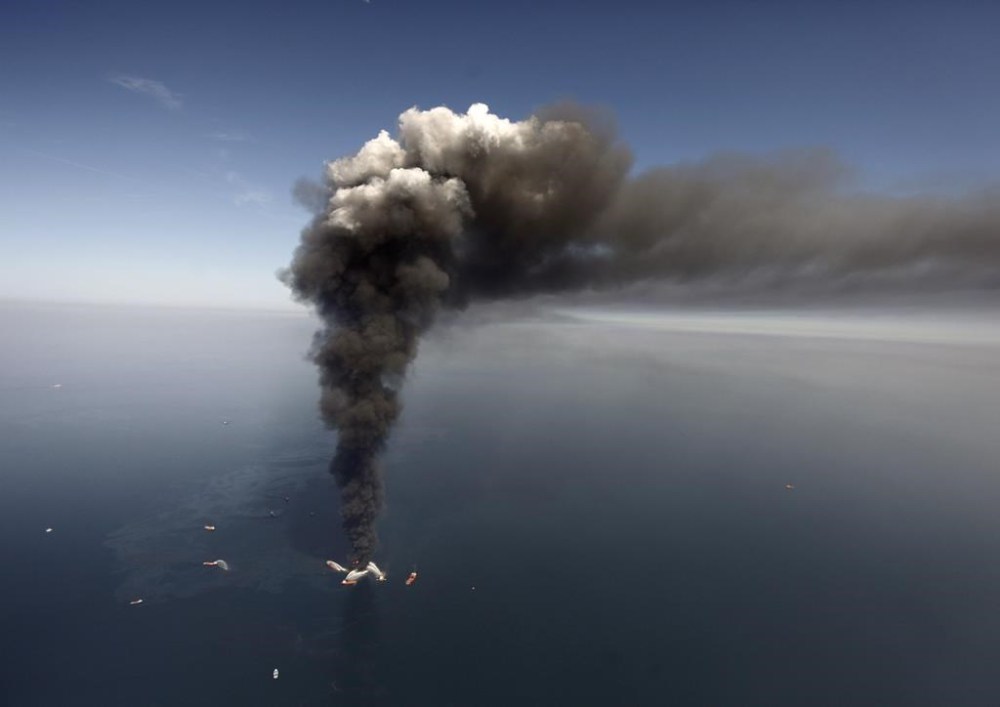
FILE - A large plume of smoke rises from fires on BP's Deepwater Horizon offshore oil rig in the Gulf of Mexico, more than 50 miles southeast of Venice on Louisiana's tip on April 2010. A new National Academy of Science study says that 13 years after a massive BP oil spill fouled the Gulf of Mexico, regulators and industry have reduced some risks in deep water exploration in the gulf but some troublesome safety issues persist. (AP Photo/Gerald Herbert, File)

“There are a lot of things that are happening that are really good, but the industry is not at a place” where it should be, said panel chairman Richard Sears. He was a longtime Shell executive who was the chief technical adviser to the federal panel that initially investigated the 2010 explosion on the BP rig that killed 11 people and caused America’s biggest oil spill — more than 130 million gallons.

A culture that gave lip service to safety but didn’t really integrate it into the way it does business was part of the problem with the accident, Sears and others said. Some companies are treating safety the proper way — including giving flash bonuses to workers who stopped drilling because of potential dangers — but others “that don’t seem to get it,” he said.

“They have not figured out how to naturally embrace safety in particular… in who they are and what they do” but instead treat it like a box to check off, Sears said.

That’s far different from the more uniform industrywide safety culture seen in commercial airlines and nuclear power plants, he said.

There’s a “long list” of specifics on safety culture process that “other high-risk industries” like aviation, have done but the drillers have not, said Steve Murawski, a University of South Florida marine ecologist who was a top NOAA scientist during the spill.

Federal safety inspectors lost a court case giving them power to directly regulate contractors so when they find a problem on an offshore rig they can ding the operator but not the contractor who is actually creating the problem, Sears said. It’s then up to the operator to crack down on the contractor, and it becomes complicated and not as effective, he said.

The report said that was one of the problems on the Deepwater Horizons rig.

Murawski, who wasn’t part of the study team, said the report highlights many of the recommendations that still haven’t been put into effect 13 years after that disaster, especially changes to a key oil spill law. He also said the report shows the need for greater transparency into industry actions.
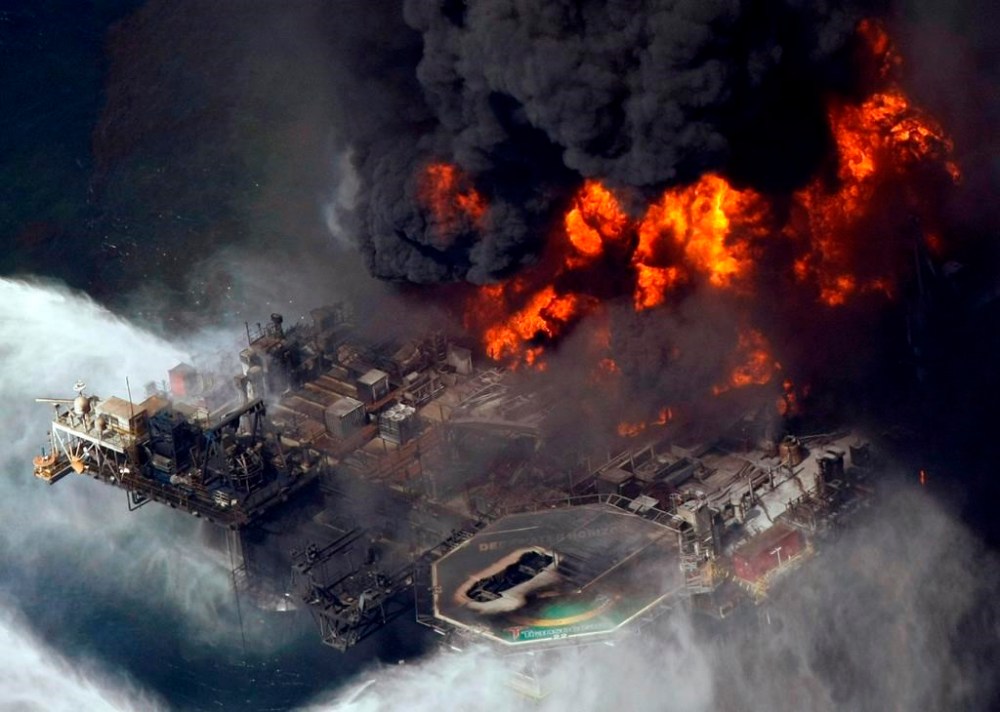
FILE - A plume of smoke rises from fires on BP's Deepwater Horizon offshore oil rig in the Gulf of Mexico on April 21, 2010. A new National Academy of Science study says that 13 years after a massive BP oil spill fouled the Gulf of Mexico, regulators and industry have reduced some risks in deep water exploration in the gulf but some troublesome safety issues persist. (AP Photo/Gerald Herbert, File)

Another outside scientist involved in the spill, Christopher Reddy of the Woods Hole Oceanographic Institution, said he was impressed by “the amount of positive change since 2010” but then that was offset by the safety culture issue.

“The oil and natural gas industry and the federal government have together taken great strides to enhance the safety of offshore drilling operations,” American Petroleum Institute Vice President Holly Hopkins said.

National Academy President Marcia McNutt, who was a top Obama administration official dealing with the spill in 2010, said her concern is that officials are preparing for the last disaster, not the next one.

Still, McNutt said, the public should find the report “at least partially reassuring that this isn’t high school or elementary school shootings in terms of sticking your head in the sand and ignoring the problem.”

___ Follow AP’s climate and environment coverage at https://apnews.com/hub/climate-and-environment ___ Follow Seth Borenstein on Twitter at @borenbears ___ Associated Press climate and environmental coverage receives support from several private foundations. See more about AP’s climate initiative here. The AP is solely responsible for all content.


Report Error Submit a Tip

More Stories

Katie Zacharia and the telling of lies

Pam Frampton 5 minute read Preview

Katie Zacharia and the telling of lies

Pam Frampton 5 minute read Yesterday at 2:00 AM CDT

U.S. President Donald Trump’s new press secretary made her debut last week and was almost universally panned and parodied, lasting just five days before being fired.

Read
Yesterday at 2:00 AM CDT

Today’s horoscope

Georgia Nicols 4 minute read Preview

Today’s horoscope

Georgia Nicols 4 minute read 2:00 AM CDT

MOON ALERT: Avoid shopping (except food and gas) and important decisions after 10 p.m. today. The moon is in Pisces.

ARIES (March 21-April 19)

This is a great day to make art, which is good news for your sign as so many of you are artisans. (You can do anything with your hands, even without training.) Enjoy time alone and give yourself the luxury of doing what you want to do.

TAURUS (April 20-May 20)

Read
2:00 AM CDT

Can’t have our cake and eat it, too

Mel Marginet 6 minute read Preview

Can’t have our cake and eat it, too

Mel Marginet 6 minute read 2:00 AM CDT

Last month, the City of Winnipeg said it would soon begin to study ways to improve pedestrian and cyclist safety along Osborne Street, which runs between two of the city’s densest neighbourhoods, where residents walk and bike for many of their daily activities. As someone who lives in South Osborne and who has frequented the shops and restaurants of the Village since my university days over 20 years ago, these changes can’t come soon enough.

Imagine my frustration when I read that this study of the street between Broadway and the St. Vital Bridge will take place “over the next year” to find “quick” solutions. We’ve all been through the COVID-19 pandemic, during which cities around the world found rapid solutions to improve safety and encourage more walking, biking and transit. Entire manuals have been published on easy things our city could try, literally this weekend, to improve the safety of Osborne Street.

Perhaps the reason this project is going to take a year can be found in this quote from David Patman, the city’s manager of transportation: “Osborne Street is currently serving multiple, competing functions … It exists in a dense, pedestrian-oriented development area that is close to rapid transit, which is at odds with the high flow of motor vehicles that travel daily along the corridor.”

Mr. Patman has correctly identified Osborne Street as a “stroad”. A stroad is a dangerous, inefficient combination of a street and a road. Stroads try to be the best of both worlds, and they fail at both. Charles Marohn, author of Strong Towns, offers the best analogy — a stroad is like a futon, which is both a terrible couch and an uncomfortable bed. You try to save money on two functions, but neither is right.

Read
2:00 AM CDT

Outbreak should never have happened

Editorial 4 minute read Preview

Outbreak should never have happened

Editorial 4 minute read 2:00 AM CDT

The headline offered a vague sense that something had been accomplished, but it most certainly did not describe anything worth celebrating:

“Manitoba declares measles outbreak over.”

The news item in the Oct. 17 Free Press noted provincial public health officials had confirmed Manitoba’s last laboratory-confirmed case of measles was identified in August, and that the absence of any new cases since had allowed for the aforementioned declaration.

The end of the outbreak — which began in February 2025 and included a significant stretch this year during which Manitoba experienced more measles cases than any other province — is certainly worth noting. But it bears reminding that the real story here is that this province, and others across Canada, experienced a resurgence of this highly communicable but successfully eradicated disease in the first place.

Read
2:00 AM CDT

A vote for public education

Shannon D. M. Moore and Melanie Janzen 4 minute read 2:00 AM CDT

On Wednesday, Oct. 28, Manitobans will head to the polls for municipal elections. Alongside their choices for mayors, reeves and councillors, voters will also have an opportunity to elect their school trustees.

Winnipeg business closure scare leads Hydro to reschedule planned outage

Free Press staff 2 minute read Preview

Winnipeg business closure scare leads Hydro to reschedule planned outage

Free Press staff 2 minute read Updated: Yesterday at 8:19 PM CDT

Manitoba Hydro has cancelled a planned River Heights neighbourhood outage after a miscommunication led to area businesses fearing unexpected closure.

Hydro had planned to shut down power along Lanark and Renfrew streets between Corydon Avenue and John Brebeuf Place on Friday.

Overhead electrical maintenance work can only be done with the power off, during the day, for safety reasons, Hydro spokesman Peter Chura said. It chose Friday from 9 a.m. to 3 p.m. because St. John Brebeuf School had an in-service day.

However, the affected area houses a strip of businesses including a Royal Bank of Canada, eateries, shops, services such as physiotherapy and a medical centre.

Read
Updated: Yesterday at 8:19 PM CDT