Budget watchdog troubled by spin around latest report on carbon pricing
Advertisement
Read this article for free:
or
Already have an account? Log in here »
To continue reading, please subscribe:

Digital Subscription
One year of digital access for only $205*
- Enjoy unlimited reading on winnipegfreepress.com
- Read the E-Edition, our digital replica newspaper
- Access News Break, our award-winning app
- Play interactive puzzles
*First annual payment billed as $205.00 + GST for one year. This annual subscription will automatically renew at $233.00 + GST every 52 weeks (10% off the regular annual price of $259.35). Offer available to new and qualified returning subscribers only. Cancel any time.
To continue reading, please subscribe:
Add Free Press access to your Brandon Sun subscription for only an additional
$1 for the first 4 weeks*
- Enjoy unlimited reading on winnipegfreepress.com
- Read the E-Edition, our digital replica newspaper
- Access News Break, our award-winning app
- Play interactive puzzles
*Your next Brandon Sun subscription payment will increase by $1.00 and you will be charged $17.95 plus GST for four weeks. After four weeks, your payment will increase to $24.95 plus GST every four weeks.
Read unlimited articles for free today:
or
Already have an account? Log in here »
Hey there, time traveller!
This article was published 08/04/2023 (1271 days ago), so information in it may no longer be current.
OTTAWA – Canada’s Parliamentary budget officer said he is troubled by what he describes as the selective use of facts from his new financial analysis of carbon pricing.
Yves Giroux said the report has to be put into context alongside the costs of all other climate policies, including doing nothing.
“There will be costs no matter what we do,” Giroux said in an interview with The Canadian Press.
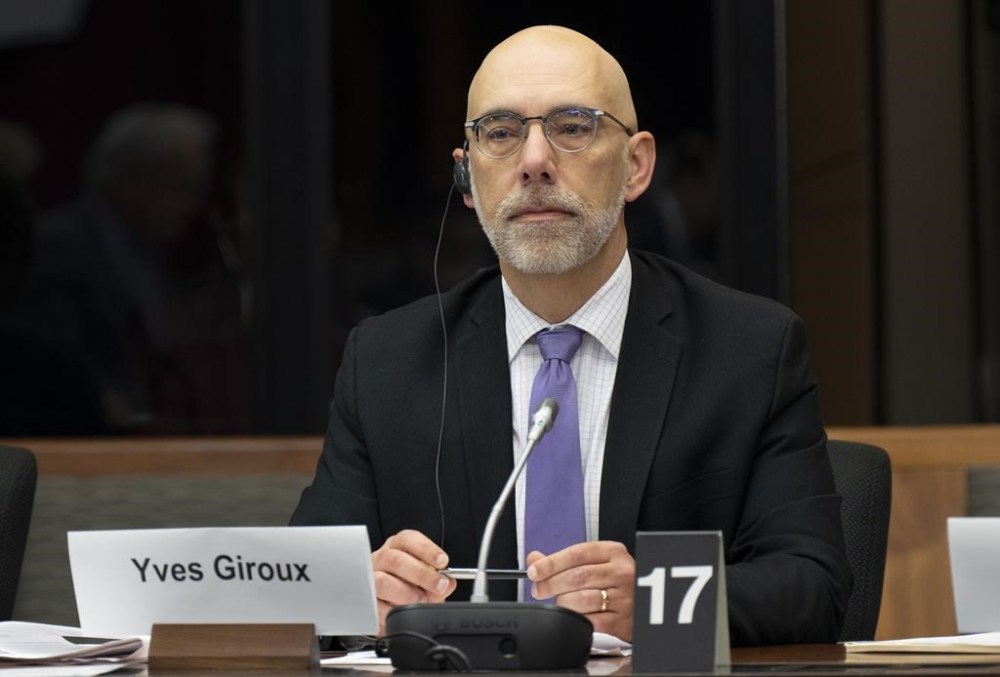
Giroux opened a political firestorm last week with a new report which concluded carbon price rebates are worth more than the direct cost of the carbon price for 80 per cent of families. But he said when the carbon price’s economic impact on job growth and incomes is factored in, 80 per cent of families in most provinces might end up with less money.
The Liberals, who campaigned successfully on carbon pricing in both 2019 and 2021, jumped on the first point to insist the strategy makes life more affordable.
The Conservatives, who have campaigned heavily on scrapping carbon pricing, latched onto the second part to insist the Liberals lied about the “sneaky carbon tax” when they said the rebates would be worth more than the cost.
Giroux said you can’t pick and choose which part to discuss.
“I am concerned at times about looking at just one aspect of the report,” he said.
“Looking at the big picture, the overall picture, is highly preferable. Anything we do with respect to addressing or trying to curb climate change will have costs. It’s either a cost to the carbon tax or regulations to reduce the use of fossil fuel. Regulations also have a cost. Doing nothing would also have costs.”
Carbon pricing is based on the idea that higher fuel costs will lead to lower usage and an overall decrease in emissions. The rebates are meant to mitigate the impact of those higher costs.
The premise may be simple, but the reality is complex and the political spin and misinformation about the policy is rampant.
Christopher Ragan, founding director at McGill University’s Max Bell School of Public Policy, said the Conservatives talk about carbon pricing without offering any glimpse of what they’ll do instead. Any alternative, including doing nothing, isn’t free, he said.
But the government, he adds, isn’t making it easy to understand what carbon pricing really does.
“I think they’ve been quite bad at explaining it and communicating it,” he said.
The government focuses almost exclusively on the money people could save through the rebates or switching to electric cars. They’re less clear that carbon pricing does have a cost to it, because that’s the whole point — to make fuel cost more.
“It’s almost as if they just choose not to engage in those discussions, or they just aren’t good enough to do that, and I’m not sure which it is,” Ragan said.
Carbon pricing also doesn’t provide instant gratification when it comes to lowering emissions.
A separate report Giroux released last year concluded that raising the carbon price to $170 per tonne by 2030, as the government intends, will eliminate 96 million tonnes of emissions more than if the price remained at the current rate of $50 a tonne.
That’s about what 21 million passenger cars emit over a year, and more than 40 per cent of the emissions Canada is seeking to eliminate by 2030 to hit its reduction targets.
But the government can’t yet show people that the price they’re paying is having an impact.
Environment Minister Steven Guilbeault said that analysis is underway, but isn’t ready yet. He was also honest in his assessment that the government’s messaging about climate change and carbon pricing policies isn’t always as sharp as it should be.
“I think we need to do a better job at communicating on climate change,” Guilbeault said in an interview.
His department has hired some outside environment communications experts to help craft a better message with a view to launching what he described as “the largest climate change awareness campaign,” likely by late spring or early summer.
That campaign will try and paint a better picture of what climate change has already cost us, what it could keep costing us and what we can do to limit those costs.
“We want to help people understand,” Guilbeault said.
But the Liberals are frustrated with Giroux’s report because it doesn’t include the context he insists is required.
The most recent report explicitly states it “does not attempt to account for the economic and environmental costs of climate change.”
Ontario Liberal MP Lloyd Longfield, who sits on the House of Commons environment committee, wrote to Giroux Wednesday to ask him to take another crack at the analysis to include those factors.
He also wants Giroux to contextualize the carbon price alongside the costs of other policies to regulate lower emissions, as well as the economic benefits of investing in low-carbon industries.
“To ignore these things does a disservice to the discussion,” Longfield said in an interview.
He said critics argue the carbon price raises the cost of food, but contended climate change does too. He said the swath of droughts, wildfires and floods in California, from where Canadians get a lot of fresh produce, has raised the price of crops such as lettuce, strawberries and broccoli.
Giroux said it’s up to those reading or discussing the report to put it into context.
“Our caveats are clearly included in the report and the limitations are also to the best of our capacity included, as clear as possible,” he said. “So if some individuals or groups use the report and spin it a certain way, I think it’s up to them to explain why.”
The PBO did complete an analysis last year looking at what climate change itself is costing. It said in 2021, the GDP was 0.8 per cent lower than it would have been without climate change. In dollar figures, that amounted to between $20 billion and $25 billion less. It said the GDP will be 0.08 percentage points lower every year as a result of climate change going forward, even if the government implements every policy promised to slow it down.
Doing nothing would increase that cost.
Giroux said he didn’t expand that analysis to show the cost to a family’s budget because a social or cost-benefit analysis like that is tricky.
“Sometimes it can be straightforward, but sometimes it can be difficult and it’s typically not something that we are equipped to do or for which we have an explicit mandate,” he said.
He also said the economic benefits of investing in low-carbon industries will not be realized heavily by 2030, which is as far as this report looks ahead.
Last month, Clean Energy Canada said Canada could add 700,000 new energy jobs from investing in clean technology and renewable energy, but the analysis suggests that gain wouldn’t be realized until 2050.
University of Calgary economist Trevor Tombe said while regulations would dictate what one must do to cut back on fossil fuel use, carbon prices leave it to a consumer or a business to decide what works best for them. That makes it the most efficient way, and usually the cheaper way, to address carbon emissions, he said.
The cost of regulation is also much less transparent than the cost of the carbon price.
This report by The Canadian Press was first published April 8, 2023.