New pipeline agency rule aimed at cutting methane leaks

Advertisement

Advertise with us

WASHINGTON (AP) — The federal agency that regulates pipelines announced new rules Friday aimed at reducing leaks of methane, a potent greenhouse gas, from a network of nearly 3 million miles of natural gas pipelines that crisscross the country.

Read this article for free:


or

Already have an account? Log in here »

To continue reading, please subscribe:

Subscribe and receive a limited-edition Free Press branded hat or tote.

Digital Subscription

One year of digital access for only $205*

  • Enjoy unlimited reading on winnipegfreepress.com
  • Read the E-Edition, our digital replica newspaper
  • Access News Break, our award-winning app
  • Play interactive puzzles

*First annual payment billed as $205.00 + GST for one year. This annual subscription will automatically renew at $233.00 + GST every 52 weeks (10% off the regular annual price of $259.35). Offer available to new and qualified returning subscribers only. Cancel any time.

To continue reading, please subscribe:

Add Free Press access to your Brandon Sun subscription for only an additional

$1 for the first 4 weeks*

  • Enjoy unlimited reading on winnipegfreepress.com
  • Read the E-Edition, our digital replica newspaper
  • Access News Break, our award-winning app
  • Play interactive puzzles
Start now

*Your next Brandon Sun subscription payment will increase by $1.00 and you will be charged $17.95 plus GST for four weeks. After four weeks, your payment will increase to $24.95 plus GST every four weeks.

Hey there, time traveller!
This article was published 05/05/2023 (1242 days ago), so information in it may no longer be current.

WASHINGTON (AP) — The federal agency that regulates pipelines announced new rules Friday aimed at reducing leaks of methane, a potent greenhouse gas, from a network of nearly 3 million miles of natural gas pipelines that crisscross the country.

The proposal by the Transportation Department’s Pipeline and Hazardous Materials Safety Administration would significantly improve the detection and repair of leaks from gas pipelines, keep more product in the pipes and prevent dangerous accidents, officials said.

If finalized, the rules would eliminate up to 1 million metric tons of methane emissions by 2030, equivalent to emissions from 5.6 million gasoline-powered cars, the agency said. Overall, the rule would reduce emissions from covered pipelines by up to 55%.
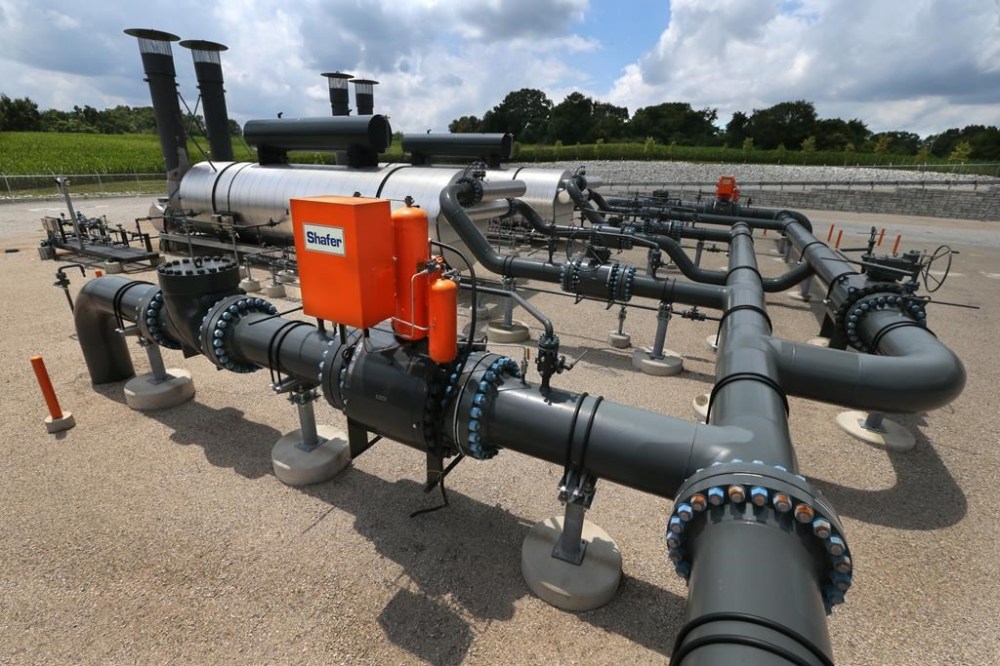
FILE - Natural gas arrives from the north along an underground 24-inch pipeline to Spire's Laclede/Lange Delivery Station in north St. Louis County on July 8, 2021. The federal agency that regulates pipelines on Friday, May 5, 2023, announced new rules aimed at reducing leaks of methane, a potent greenhouse gas, from a network of nearly 3 million miles of natural gas pipelines that crisscross the country. (Robert Cohen/St. Louis Post-Dispatch via AP, File)

“Quick detection of methane leaks is an important way to keep communities safe and help curb climate change,” said Transportation Secretary Pete Buttigieg. “We are proposing a long-overdue modernization of the way we identify and fix methane leaks, thereby reducing emissions and strengthening protections for the American people.”

The proposal is aimed at cutting methane emissions from more than 2.7 million miles of gas transmission, distribution and gathering pipelines nationwide; 400 underground natural gas storage facilities; and 165 liquefied natural gas facilities, the agency said.

The rule would update decades-old federal leak detection and repair standards that rely solely on human senses in favor of new requirements that use commercially available, advanced technologies to find and fix methane leaks and other flammable, toxic and corrosive gases, officials said.

The rules will improve health and safety in poor and minority communities where gas pipelines and related infrastructure are disproportionately located, the agency said.

The proposal is part of a broader effort by the Biden administration to restrict methane emissions and follows proposed rules by the Environmental Protection Agency and Interior Department to strengthen methane leak detection and limit emissions from oil and gas production.

“Natural gas pipelines are ubiquitous in our neighborhoods, cities, parks and rural communities, and pipeline leaks are both safety risks and a source of methane pollution that accelerates climate change,” said Erin Murphy, a senior attorney for the Environmental Defense Fund, which has pushed for stricter methane standards.

PHMSA’s proposal is “a welcome step” that will help “unlock” use of advanced technologies to find and fix more pipeline leaks, Murphy said.

“Strong federal standards to reduce pipeline leaks are critical for delivering on the Biden administration’s commitment to curb climate-warming methane pollution while increasing public health and safety,” she said.

Methane, the primary component of natural gas, is a potent greenhouse gas that is far more powerful than carbon dioxide in the near-term. Leakage from natural gas pipelines is a major source of methane emissions that contribute to global warming.

The Associated Press reported last year that researchers identified more than 500 methane “super emitters,” including pipelines, wells, tanks and compressor stations, during a 2021 aerial survey of the oil-rich Permian Basin in New Mexico and Texas. The sites leak massive amounts of methane into the atmosphere, according to Carbon Mapper, a partnership of university researchers and NASA’s Jet Propulsion Laboratory.

The EPA is now conducting helicopter flyovers in the region using special infrared cameras that can detect emissions of hydrocarbon vapors invisible to the naked eye.

The new pipeline rule was developed as a result of the bipartisan PIPES Act of 2020, which created a series of regulatory mandates targeting pipeline safety, including methane leaks. Transmission, storage and distribution of oil and gas accounts for about one-third of oil-and-gas emissions, according to EPA data.
Report Error Submit a Tip

More Stories

Four Jets clear waivers to join Moose

Ken Wiebe 3 minute read Preview

Four Jets clear waivers to join Moose

Ken Wiebe 3 minute read Yesterday at 2:28 PM CDT

The Winnipeg Jets organizational depth has yet to take a hit on the waiver wire.

On Saturday afternoon, all four players exposed to waivers — defenceman Isaak Phillips and forwards Nikita Chibrikov, Noah Gregor and Parker Ford — cleared, which means they can be assigned to the Manitoba Moose of the American Hockey League.

Owing to injuries to captain Adam Lowry and winger Cole Perfetti, both Chibrikov and Ford started last season on the NHL roster but spent the bulk of last season with the Moose.

Chibrikov, chosen in the second round of the 2021 NHL Draft, has dealt with multiple lower-body injuries during the prior two seasons and is still working his way back to peak form.

Read
Yesterday at 2:28 PM CDT

The wheels on the bus burned down, down, down…

Russell Wangersky 7 minute read Preview

The wheels on the bus burned down, down, down…

Russell Wangersky 7 minute read Yesterday at 2:00 AM CDT

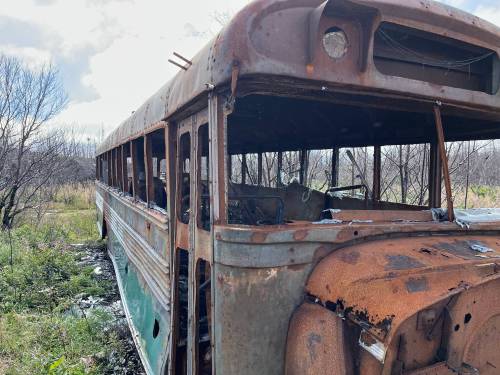
Up on the high ground, a year after the big forest fire in Newfoundland’s Conception Bay North, and the bare rock is startling.

It’s ghostly. The little birds flit and chirp from the naked silver bare-wood branches, and a solitary northern flicker makes its call from — somewhere. But mostly, it’s still, and silent. With the underbrush gone, you can see how little animal life is here right now.

But the most astounding thing is underfoot. On the high rock behind Adam’s Cove and away from the sea, not only are the trees and low brush gone, but much of the soil has burned away as well.

It burned very, very hot.

Read
Yesterday at 2:00 AM CDT

Positive anticipation is growing about major housing developments underway in Winnipeg’s downtown

Gabrielle Piché 10 minute read Preview

Positive anticipation is growing about major housing developments underway in Winnipeg’s downtown

Gabrielle Piché 10 minute read Friday, Sep. 25, 2026

If traffic is light and the wind is down, Somia Sadiq is able to hear the roar of Winnipeg Jets fans twice: first through her window, then on TV.

From her apartment view high above downtown, she can look out at Graham Avenue’s painted pedestrian landscape, see construction cranes and hear the heavy equipment at work as massive housing projects take shape at The Forks, at what used to be Portage Place shopping centre and at the former Hudson’s Bay building.

Sadiq has lived at 300 Main for 2 1/2 years, a few steps from the city’s famous, windy and reopened-to-pedestrians Portage Avenue intersection. At 42 storeys, it’s the tallest building in Winnipeg.

She is among 18,000 downtown residents who will soon be joined by thousands of others attracted to the city’s core by the new wave of major construction projects.

Read
Friday, Sep. 25, 2026

Blue Bombers whiff on their opportunities to put game away

Taylor Allen 6 minute read Preview

Blue Bombers whiff on their opportunities to put game away

Taylor Allen 6 minute read Friday, Sep. 25, 2026

In theory, Bryce Perkins has a simple job.

When it’s third and short, the Winnipeg Blue Bombers trot out the short-yardage quarterback, and all he has to do is plunge forward for a yard or two to make everyone on his sideline happy.

But on Friday night against the visiting Toronto Argonauts, he went above and beyond his job description.

The Bombers, down 24-21 with six minutes left, faced a third-and-one from their own end when Perkins found a hole and burst through it for a 76-yard touchdown to put the home team in front 28-24 late.

Read
Friday, Sep. 25, 2026

Special teams woes hurt Bombers in loss to Argos

Ken Wiebe 7 minute read Preview

Special teams woes hurt Bombers in loss to Argos

Ken Wiebe 7 minute read Yesterday at 8:06 PM CDT

THEY’VE been the most consistent of the three phases in the Winnipeg Blue Bombers arsenal this season.

A port in the proverbial storm, throughout this topsy-turvy campaign of ups-and-downs, the special-teams units have been supplying strength to a group that is still searching for consistency with only four games left in the regular season.

That’s what made this momentary lapse so costly in a 30-28 loss to the Toronto Argonauts on Friday at Princess Auto Stadium.

“We didn’t keep up our end of the bargain. And that hurts our football team, hurts our chances of winning games,” said Blue Bombers special teams ace Tanner Cadwallader. “And if we want to win close games. we’ve got to be a whole lot better than that. And we will. We’re going to come in (on Saturday for the film session) and go through it with a fine-tooth comb and just work a little bit harder.”

Read
Yesterday at 8:06 PM CDT

WSO season kicks off with two fateful fifths

Holly Harris 4 minute read Preview

WSO season kicks off with two fateful fifths

Holly Harris 4 minute read 3:57 PM CDT

Saturday night’s Masterworks program, titled Beethoven 5 and Tchaikovsky 5 and led by Daniel Raiskin, also officially introduced the WSO’s new composer-in-residence, Kelly-Marie Murphy, to the weekend crowd of 1,720. She was met with enthusiastic applause and cheers upon taking the stage.

Read
3:57 PM CDT