Canada’s electronic waste more than tripled in 20 years, study indicates

Advertisement

Advertise with us

Canada's electronic waste more than tripled in the last two decades and is expected to keep increasing, a new study indicates, with researchers urging better e-waste management to reduce environmental harm and bring economic rewards.

Read this article for free:


or

Already have an account? Log in here »

To continue reading, please subscribe:

Subscribe and receive a limited-edition Free Press branded hat or tote.

Digital Subscription

One year of digital access for only $205*

  • Enjoy unlimited reading on winnipegfreepress.com
  • Read the E-Edition, our digital replica newspaper
  • Access News Break, our award-winning app
  • Play interactive puzzles

*First annual payment billed as $205.00 + GST for one year. This annual subscription will automatically renew at $233.00 + GST every 52 weeks (10% off the regular annual price of $259.35). Offer available to new and qualified returning subscribers only. Cancel any time.

To continue reading, please subscribe:

Add Free Press access to your Brandon Sun subscription for only an additional

$1 for the first 4 weeks*

  • Enjoy unlimited reading on winnipegfreepress.com
  • Read the E-Edition, our digital replica newspaper
  • Access News Break, our award-winning app
  • Play interactive puzzles
Start now

*Your next Brandon Sun subscription payment will increase by $1.00 and you will be charged $17.95 plus GST for four weeks. After four weeks, your payment will increase to $24.95 plus GST every four weeks.

Hey there, time traveller!
This article was published 08/05/2023 (1202 days ago), so information in it may no longer be current.

Canada’s electronic waste more than tripled in the last two decades and is expected to keep increasing, a new study indicates, with researchers urging better e-waste management to reduce environmental harm and bring economic rewards.

Researchers from the University of Waterloo conducted what they called a comprehensive estimate of e-waste in Canada to better understand the lifecycle of electronic items from point of sale to disposal.

The study, published in the Journal of Hazardous Materials, looked at e-waste data going as far back as 1971.
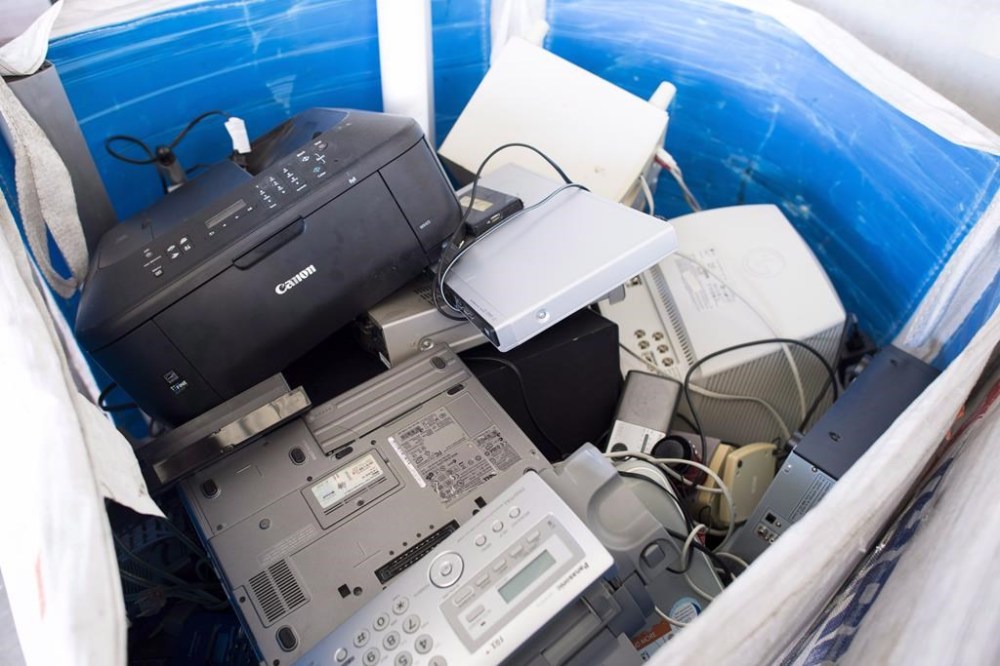
Canada's electronic waste has more than tripled in the last two decades and is expected to continue rising, researchers have found, prompting calls for better e-waste management to reap its economic benefits and reduce environmental harm. Wires and electronic e-waste is pictured at the North Vancouver, recycle depot, Thursday, Oct. 4, 2018. THE CANADIAN PRESS Jonathan Hayward

E-waste consists of discarded electronic products including computers, televisions, cell phones, consumer goods like electronic toys and household lighting, and large household appliances such as refrigerators or washing machines.

The research indicates e-waste generation per personincreased from 8.3 kilograms in 2000 to 25.3 kilograms in 2020.

Canadians produced nearly one million tonnes of e-waste in 2020, and that’s expected to reach 1.2 million tonnes annually by 2030, the study suggests.

Lead researcher Komal Habib, a professor at the University of Waterloo’s School of Environment, Enterprise and Development, said the rising rate of electronic consumption can be attributed to the increased pace of technological developments since the turn of the millennium, shorter device lifespan and consumer habits.

“From a consumer perspective, we tend to upgrade our technological setup to the latest available technology,” said Habib in an interview.

“The phone I’m holding right now … is five years old, but not many Canadians are like me, right? They tend to upgrade their device every year.”

The study also found the estimated growth of e-waste reflects Canada’s growing population.

Within all of that electric junk is “an urban mine of precious minerals and many other types of resources,” which, according to Habib, could help create a secondary supply chain of critical minerals and reduce potential supply disruptions if managed properly.

Meanwhile, inefficient handling of e-waste can lead to toxic materials being released into the environment, causing environmental and human health problems, the study said.

Canada’s e-waste recycling infrastructure has not developed at a pace in line with electronics development, said Habib.

Governments can address rising e-waste by providing more incentives for recyclers to keep up with the waste, Habib said. Product designers should also give more consideration to how metals and minerals can be more easily recovered from devices in a financially viable way, she said.

“That is something which is lacking: a bridge between these two sectors at both ends of a product, at the designer and manufacturer level, as well as the end-of-life level,” she said.

But managing e-waste is a shared responsibility, she said, and consumers play a role as well.

“It’s our responsibility to be mindful of our consumption patterns,” said Habib. “We really don’t need to upgrade our product every year or every two years if it’s fully functional and providing the service we bought it for.”

Her research calls for more attention to be given to improving repair, refurbishment and product life extension opportunities rather than focusing solely on recycling and material recovery.

“Repair is something which we have forgotten in high-income societies,” she said. “But we should really focus and promote where it is possible to repair a product before discarding it.”

This report by The Canadian Press was first published May 8, 2023.

Report Error Submit a Tip

More Stories

ER wait times have hit all-time highs in Winnipeg and are impacting nearly all aspects of hospital operations

Tom Brodbeck 17 minute read Preview

ER wait times have hit all-time highs in Winnipeg and are impacting nearly all aspects of hospital operations

Tom Brodbeck 17 minute read 6:00 AM CDT

On most days at Health Sciences Centre’s adult emergency department, all 58 treatment beds are filled with sick patients. Another dozen or so brought in by ambulance line the hallways on stretchers, with only one nurse to look after them.

Out in the waiting room, about 30 or 40 people — sometimes more — are slouched in chairs in pain or discomfort, waiting hours to see a doctor. Most have been assessed by a triage nurse, but many will have to wait 10 to 20 hours to be examined by a physician because there’s no room for them in the treatment area.

Some patients leave because they can no longer tolerate the excruciating wait, only to return days later, sicker than they were before.

Welcome to the emergency department at Manitoba’s largest hospital, where some of the highest-acuity patients seek medical care but now face delays that were unimaginable a few years ago.

Read
6:00 AM CDT

Sisters among 137 to begin doctor journey at U of M

Nicole Buffie 4 minute read Preview

Sisters among 137 to begin doctor journey at U of M

Nicole Buffie 4 minute read Wednesday, Aug. 19, 2026

Not everyone enters medical school with a built-in study buddy.

Sisters Maya and Dana Jalal joined 135 of their classmates to don white coats and mark the beginning of their journey through the University of Manitoba’s Max Rady College of Medicine Wednesday morning.

Maya, 22, and Dana, 21, were accepted into medical school at the same time.

“Thankfully, we both got accepted in the same area, same time. So we decided we’d rather go together than apart,” Maya said. “It’ll be nice seeing different perspectives during our studies. We are siblings, but we each have our own perspectives, our own lived experiences.”

Read
Wednesday, Aug. 19, 2026

Provincial teacher watchdog releases names, details in three disciplinary matters

Maggie Macintosh 6 minute read Preview

Provincial teacher watchdog releases names, details in three disciplinary matters

Maggie Macintosh 6 minute read Updated: 11:19 AM CDT

An Interlake teacher with a history of “intimidating” outbursts has been ordered to participate in counselling and study anger-management strategies after he made a child cry.

Read
Updated: 11:19 AM CDT

Summer flooding sinks some fall harvest hopes

Tiago Resko 4 minute read Preview

Summer flooding sinks some fall harvest hopes

Tiago Resko 4 minute read 7:08 PM CDT

A number of Manitoba farmers say they are expecting this year’s harvest to be one of the worst they’ve seen after major flooding decimated fields at the start of summer.

Bob Elliot, who has been farming east of Stonewall for 43 years, said he’s expecting the operation’s 5,500 acres to produce roughly half their normal yield.

Stonewall has logged the most precipitation this summer, with 523 millimetres of rainfall between May 1 and Aug. 16, according to Manitoba’s weather conditions report.

Elliot said the amount of rain has created a “unique” situation for farmers. “This is something that I don’t think anyone around here has ever seen.”

Read
7:08 PM CDT

Costco breaks ground on new West St. Paul store

Gabrielle Piché 4 minute read Preview

Costco breaks ground on new West St. Paul store

Gabrielle Piché 4 minute read Tuesday, Aug. 18, 2026

Construction has begun on the American retailer's newest Manitoba location which developers expect will open in August 2027.

Read
Tuesday, Aug. 18, 2026

Low-income residents of 114-year-old downtown block staggered by proposed rent hikes

Malak Abas 9 minute read Preview

Low-income residents of 114-year-old downtown block staggered by proposed rent hikes

Malak Abas 9 minute read Updated: Yesterday at 11:27 AM CDT

Marcel Blanchette’s life has not travelled down a smooth road.

In 2014, he was violently assaulted in his home, an unprovoked attack that left him with severe injuries, including permanent brain damage. He underwent months of hospitalization and rehabilitation. During that time, he learned his possessions had been sold off when the Office of The Public Guardian and Trustee took over his affairs.

Twelve years later, he finds himself in another fight. This time, it comes in the form of a proposal from the new owners of the Conway Court apartment block that would nearly double his monthly rent. While he’s been able to live in the Kennedy Street unit with the support of disability income assistance for nearly five years, the sudden spike, he said, could leave him homeless.

“To go through that, and now I’m going through this, it’s another obstacle,” Blanchette told the Free Press. “I fought the Public Guardian and Trustee, and I’ll fight this too, with whatever I have.”

Read
Updated: Yesterday at 11:27 AM CDT