Plan to discharge water into Hudson River from closed nuclear plant sparks uproar

Advertisement

Advertise with us

Sitting along the Hudson River near New York City, the Indian Point nuclear plant repeatedly attracted controversy during the decades it generated electricity.

Read this article for free:


or

Already have an account? Log in here »

To continue reading, please subscribe:

Subscribe and receive a limited-edition Free Press branded hat or tote.

Digital Subscription

One year of digital access for only $205*

  • Enjoy unlimited reading on winnipegfreepress.com
  • Read the E-Edition, our digital replica newspaper
  • Access News Break, our award-winning app
  • Play interactive puzzles

*First annual payment billed as $205.00 + GST for one year. This annual subscription will automatically renew at $233.00 + GST every 52 weeks (10% off the regular annual price of $259.35). Offer available to new and qualified returning subscribers only. Cancel any time.

To continue reading, please subscribe:

Add Free Press access to your Brandon Sun subscription for only an additional

$1 for the first 4 weeks*

  • Enjoy unlimited reading on winnipegfreepress.com
  • Read the E-Edition, our digital replica newspaper
  • Access News Break, our award-winning app
  • Play interactive puzzles
Start now

*Your next Brandon Sun subscription payment will increase by $1.00 and you will be charged $17.95 plus GST for four weeks. After four weeks, your payment will increase to $24.95 plus GST every four weeks.

Hey there, time traveller!
This article was published 20/06/2023 (1201 days ago), so information in it may no longer be current.

Sitting along the Hudson River near New York City, the Indian Point nuclear plant repeatedly attracted controversy during the decades it generated electricity.

Two years after its shutdown, it still is.

The latest flashpoint revolves around plans to release 1.3 million gallons of water with traces of radioactive tritium into the river as part of the plant’s decommissioning.
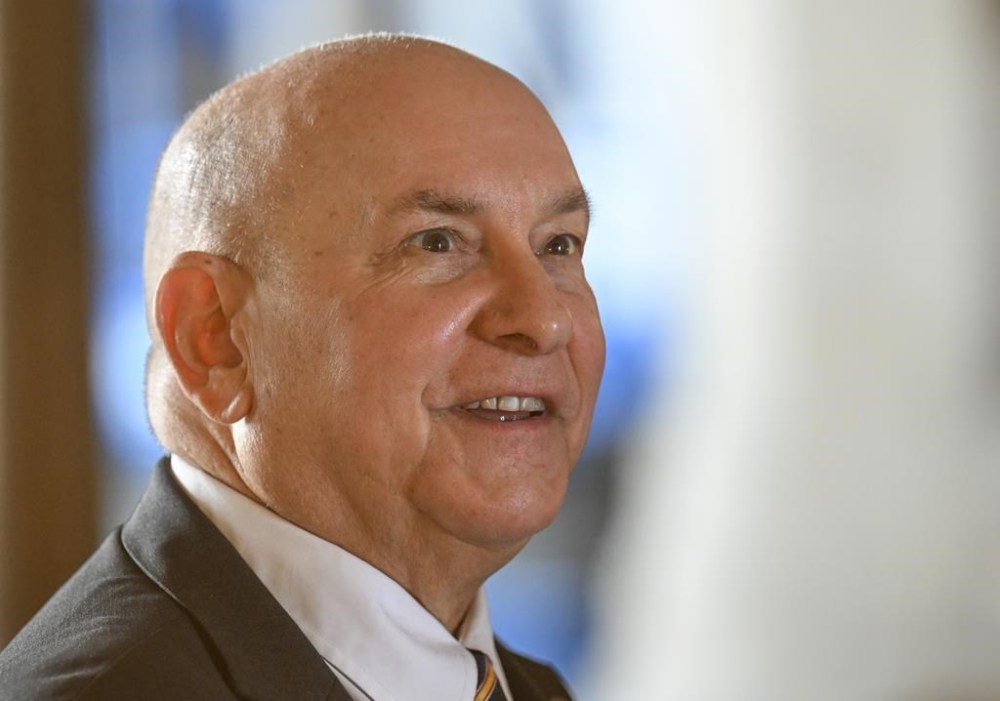
Assemblyman Chris Burdick, D-Mount Kisco, stands with advocates during a rally at the state Capitol in Albany, N.Y., Tuesday, June 20, 2023, urging lawmakers and New York Gov. Kathy Hochul to pass the legislative bill
Assemblyman Chris Burdick, D-Mount Kisco, stands with advocates during a rally at the state Capitol in Albany, N.Y., Tuesday, June 20, 2023, urging lawmakers and New York Gov. Kathy Hochul to pass the legislative bill "Save the Hudson", banning the dumping of toxic radioactive waste water from nuclear power plants into the Hudson River. (AP Photo/Hans Pennink)

Supporters of the planned releases say they are just like those made when Indian Point was producing power and that the concentration of tritium has been far below federal standards.

But opponents along the river question the health and safety claims. They say the releases of radioactive water could be a step back for a once notoriously polluted river that is now a popular summer attraction for sailors, kayakers and swimmers.

Communities along the river have already passed resolutions opposing the discharges, and an online petition has gathered more than 440,000 signatures. On Tuesday, a bill sponsored by two Hudson Valley Democrats that would ban radiological discharges into the river was approved by state Assembly.

“It leaves a bad taste in your mouth … the idea that we would be polluting our beautiful Hudson River with waste when we’ve spent so many years trying to clean it up. This shouldn’t be a dumping ground,” Assembly member Dana Levenberg said at a state Capitol rally for her bill before the debate.

The bill, approved by the state Senate earlier this month, is opposed by some labor officials, who say it could interrupt the decommissioning and cause layoffs.

The bill will be sent to Gov. Kathy Hochul, who has not said whether she supports the measure.

Indian Point Energy Center generated about a quarter of the electricity used in New York City and suburban Westchester County until its two reactors were shut down in 2020 and 2021.

Critics had called for its closure for years, claiming a major nuclear accident or a terror strike on the plant — just 25 miles (40 kilometers) from the city — could be devastating. Those critics also said the plant had a spotty environmental and safety record.

Indian Point was fully shut down in 2021 and was transferred to Holtec International for decommissioning, which is projected to take 12 years and cost $2.3 billion.

Holtec is allowed to discharge water from spent fuel pools and other parts of the plant into the river as part of the decommissioning. Some water contains tritium, which occurs naturally in the environment and is a common byproduct of nuclear plant operations.

Holtec currently plans to begin a release into the river as early as September.

Similar releases are made by other nuclear plants, as well as hospitals and wastewater treatment facilities, Holtec spokesman Patrick O’Brien said. The Hudson releases have been safe and have had “very, very low” levels of tritium, he said.

“Any headline that’s going to say ‘radioactive’ is going to scare people. And I understand that. It takes a lot of education,” O’Brien said.

But critics say the release of any radioactive material into the Hudson should be avoided if there are viable alternatives. Tracy Brown, president of the environmental group Riverkeeper, said storing the water on-site for 12 years or so would give Holtec time to explore long-term options to separate the tritium.
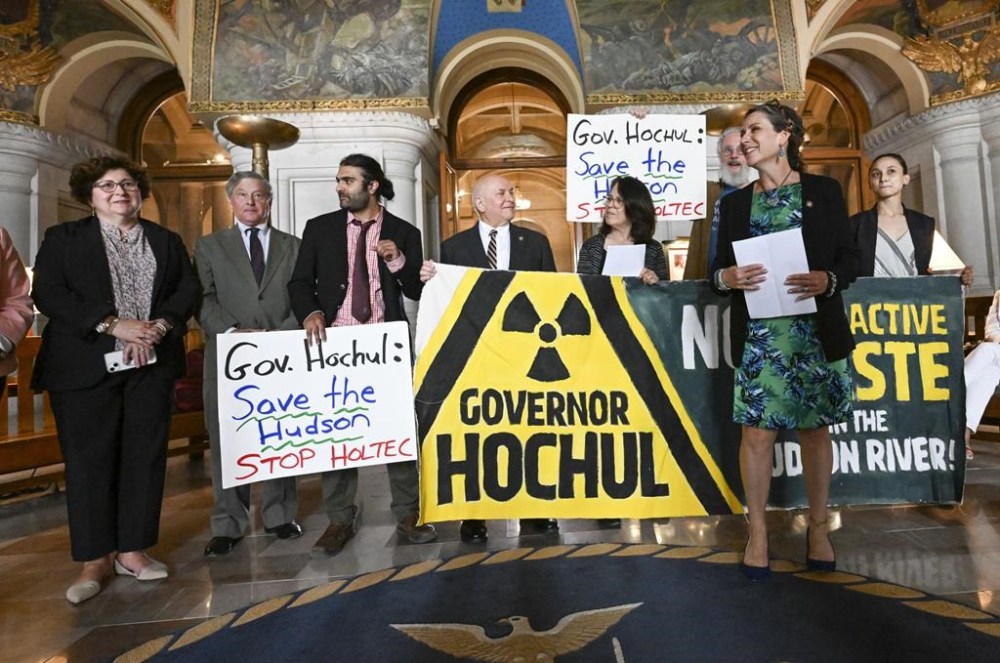
New York Assemblywoman Dana Levenberg, D-Ossining, right, stands with advocates during a rally at the state Capitol in Albany, N.Y., Tuesday, June 20, 2023, urging lawmakers and New York Gov. Kathy Hochul to pass the legislative bill
New York Assemblywoman Dana Levenberg, D-Ossining, right, stands with advocates during a rally at the state Capitol in Albany, N.Y., Tuesday, June 20, 2023, urging lawmakers and New York Gov. Kathy Hochul to pass the legislative bill "Save the Hudson", banning the dumping of toxic radioactive waste water from nuclear power plants into the Hudson River. (AP Photo/Hans Pennink)

“We’re pretty confident that something better is going to come along,” she said.

O’Brien said river discharges remain the “preferred option” for Holtec.

The bill approved by the Legislature would force another solution by making it unlawful to discharge any radiological substance into the Hudson River in connection to nuclear plant decommissioning. Sponsors say the discharge of nuclear waste into the river poses a substantial risk to local real estate values and economic development.

“Even though this bill doesn’t discuss environmental or health impacts, the public perception is tied to what they believe … could actually happen to them if they were to swim, boat, paddle or live on and dip their toes into the Hudson River,” Levenberg said during the debate.

Republican Assembly member Andy Goodell noted the long history of releases from the plant.

“It didn’t create a problem then,” he said. “It’s not going to create a problem now.”

O’Brien said a ban on river discharges could lead to layoffs among the hundreds of decommissioning workers because it would require work to be re-sequenced. The argument has been amplified by some labor groups, with the North Atlantic States Regional Council of Carpenters calling the bill “job-killing legislation.”

Proponents of the bill say the layoff threats are a scare tactic.

__

Maysoon Khan contributed. Khan is a corps member for the Associated Press/Report for America Statehouse News Initiative. Report for America is a nonprofit national service program that places journalists in local newsrooms to report on undercovered issues.

Report Error Submit a Tip

More Stories

A spiritual vision will help anchor a health civic outlook

John Longhurst 5 minute read 2:01 AM CDT

We have an election coming up. With that in mind, the Free Press asked some of their columnists to write about the challenges ahead and how the city can become better.

For Tom Brodbeck, the main challenge is finances — and how candidates will pay for their many promises for fixing roads, improving public safety and making transit better.

Rebecca Chambers said that the concerns of inner-city residents need to be taken seriously by those who aspire to work at city hall.

Niigaan Sinclair said the most pressing issue in Winnipeg isn’t construction projects, light-rail transit, public safety, taxes or social services. For him, it’s the city’s relationship with Indigenous people.

Retired guidance counsellor defends explicit 2025 sex-ed presentation to high school football team in disciplinary hearing

Maggie Macintosh 7 minute read Preview

Retired guidance counsellor defends explicit 2025 sex-ed presentation to high school football team in disciplinary hearing

Maggie Macintosh 7 minute read Updated: Yesterday at 12:26 PM CDT

Gus Watanabe, a former employee of Oak Park High School in Winnipeg, was the subject of a public disciplinary hearing on Thursday.

Read
Updated: Yesterday at 12:26 PM CDT

Health minister warns $1.2 billion in annual federal funding set to expire in March

Scott Billeck 4 minute read Preview

Health minister warns $1.2 billion in annual federal funding set to expire in March

Scott Billeck 4 minute read Thursday, Oct. 1, 2026

Manitoba’s health minister is warning of possible cuts to health care with $1.2 billion in annual funding from Ottawa set to expire next year.

“We’re very concerned that what would be the largest cut to health care in a generation is right in front of us,” Health Minister Uzoma Asagwara said Thursday at the Manitoba legislature. “It means that services that Manitobans depend on will be in jeopardy and be at risk.

“Any reductions, any cuts from Canada, will have direct impacts on the health outcomes of Manitobans.”

Asagwara, who serves as the provincial and territorial health minister lead, chaired a virtual meeting Tuesday with provincial and territorial health ministers to discuss federal funding for health care, mental health care and substance use services, which is scheduled to expire March 31, 2027.

Read
Thursday, Oct. 1, 2026

Six high school hockey programs ceased operations following new Hockey Manitoba policy

Joshua Frey-Sam 7 minute read Preview

Six high school hockey programs ceased operations following new Hockey Manitoba policy

Joshua Frey-Sam 7 minute read Updated: Yesterday at 8:19 PM CDT

She lived the best of both worlds.

For the last three years, the 17-year-old wore a sweater for two different hockey programs — her high school team and AAA club in the Manitoba Female Hockey League — and was preparing to flourish in both colours again this winter.

Recently, however, the blue-liner was disappointed to learn she is no longer eligible to play her Grade 12 season with her school owing to a new policy imposed by Hockey Manitoba that bans players from participating in the Manitoba Women’s High School Hockey League if they are rostered on a U18 AAA team.

The rule applies to all athletes who play for both Winnipeg-based and rural AAA teams.

Read
Updated: Yesterday at 8:19 PM CDT

Khan should’ve taken high road: Goertzen

Carol Sanders 5 minute read Preview

Khan should’ve taken high road: Goertzen

Carol Sanders 5 minute read Yesterday at 6:39 PM CDT

The veteran Progressive Conservative who championed Obby Khan’s leadership bid says the former Blue Bomber dropped the ball by dissing his Tory teammates before he stepped down.

“I wouldn’t recommend it, and I didn’t recommend it,” Kelvin Goertzen (Steinbach) said in an interview Friday.

Khan resigned as PC leader and quit the caucus Monday saying some members were secretly plotting his ouster, even after he won a confidence vote on Sept. 25.

On Tuesday, Khan lashed out in a CJOB interview, naming the alleged plotters, saying constituents deserved to know which of their elected representatives “lacked moral integrity.” Khan told the Free Press he was “deeply emotionally hurt,” and felt stabbed in the back.

Read
Yesterday at 6:39 PM CDT

Plan to discharge water into Hudson River from closed nuclear plant sparks uproar

Michael Hill, The Associated Press 5 minute read Preview

Plan to discharge water into Hudson River from closed nuclear plant sparks uproar

Michael Hill, The Associated Press 5 minute read Tuesday, Jun. 20, 2023

Sitting along the Hudson River near New York City, the Indian Point nuclear plant repeatedly attracted controversy during the decades it generated electricity.

Two years after its shutdown, it still is.

The latest flashpoint revolves around plans to release 1.3 million gallons of water with traces of radioactive tritium into the river as part of the plant's decommissioning.

Supporters of the planned releases say they are just like those made when Indian Point was producing power and that the concentration of tritium has been far below federal standards.

Read
Tuesday, Jun. 20, 2023