“A preoccupation with failure.” Why the Titan submersible was doomed from the start
Advertisement
Read this article for free:
or
Already have an account? Log in here »
To continue reading, please subscribe:

Digital Subscription
One year of digital access for only $205*
- Enjoy unlimited reading on winnipegfreepress.com
- Read the E-Edition, our digital replica newspaper
- Access News Break, our award-winning app
- Play interactive puzzles
*First annual payment billed as $205.00 + GST for one year. This annual subscription will automatically renew at $233.00 + GST every 52 weeks (10% off the regular annual price of $259.35). Offer available to new and qualified returning subscribers only. Cancel any time.
To continue reading, please subscribe:
Add Free Press access to your Brandon Sun subscription for only an additional
$1 for the first 4 weeks*
- Enjoy unlimited reading on winnipegfreepress.com
- Read the E-Edition, our digital replica newspaper
- Access News Break, our award-winning app
- Play interactive puzzles
*Your next Brandon Sun subscription payment will increase by $1.00 and you will be charged $17.95 plus GST for four weeks. After four weeks, your payment will increase to $24.95 plus GST every four weeks.
Read unlimited articles for free today:
or
Already have an account? Log in here »
Hey there, time traveller!
This article was published 03/07/2023 (1181 days ago), so information in it may no longer be current.
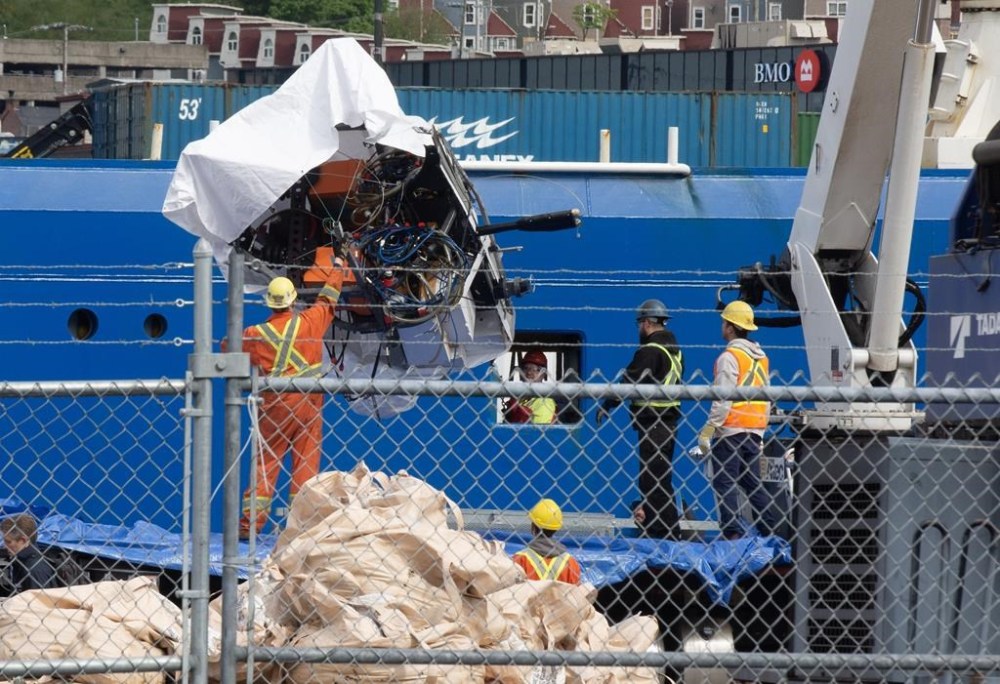
HALIFAX – The company behind the submersible that imploded during a recent dive to the Titanic ignored key principles that guide organizations working in high-risk environments, experts in emergency management say.
Jack Rozdilsky, a professor at York University in Toronto, says OceanGate’s business — ferrying paying passengers to the floor of the North Atlantic — could be compared to the immensely risky work of companies that launch space flights, drill for offshore oil, fight wildfires or operate nuclear power plants.
“These are high-reliability organizations (HROs) that operate in complex, high-hazard domains for extended periods of time without serious accidents or catastrophic failures,” Rozdilsky, a professor of disaster and emergency management, said in a recent interview. “OceanGate does not appear to have functioned as a high-reliability organization.”
The professor cited three key attributes shared by HROs:
— They are reluctant to simplify. They accept that tasks they are involved in are complex and have the potential to fail in unexpected ways.
— They are preoccupied with failure. They do not view near-misses as proof of success.
— They practise resilience. They provide backups for backups, or as Rozdilsky put it: “Suspenders for the suspenders.”
There is evidence to suggest OceanGate CEO Stockton Rush — one of five people killed June 18 when the submersible Titan ruptured near the ocean floor — emphasized simplicity over complexity when it came to Titan’s engineering. During an interview last year with CBS News, Rush showed off Titan’s basic interior, which included one power button, two video screens and a gaming controller for steering the 6.7-metre vessel.
“This is to other submersibles what the iPhone was to the Blackberry,” Rush said at the time, suggesting the simplicity of the vessel was a strength. “There’s a lot of rules out there that didn’t make engineering sense.”
Rozdilsky questioned Rush’s decision to simplify an otherwise complex deep-sea craft.
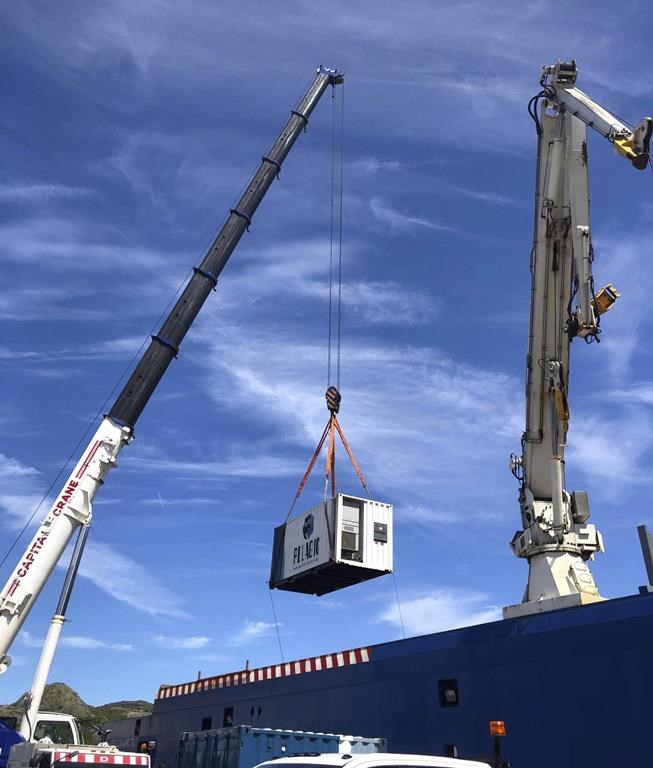
“It’s not something we can make like an elevator,” he said. “A high-reliability organization refuses to simplify to that extent. They welcome the complexity and realize that by attempting to interact with that complexity, it gives them routes to safety.”
On another front, Rozdilsky said lessons learned from the space shuttle Challenger disaster in 1986 — a mid-air explosion that killed all seven astronauts aboard — remind us that organizations operating in high-risk environments can fall prey to risk-management errors and erosion of safety protocols.
In the case of Challenger, a presidential commission determined that NASA officials had responded to early warnings about design flaws by increasing levels of acceptable damage during flights. The commission concluded NASA justified the changes by saying, “We got away with it the last time.”
Similarly, there have been multiple reports of problems and near-misses with Titan.
“One way to view those mishaps is proof of success,” Rozdilsky said. “But successful, high-risk organizations look at that from a different perspective: they … see these near misses as opportunities to improve …. There’s a preoccupation with failure, not a preoccupation with success.”
As for OceanGate, it has become clear in recent weeks that Titan experienced many problems before and during its 3,800-metre dives to the Titanic wreck site over the past three years.
Last month, German adventurer Arthur Loibl told The Canadian Press that his 2021 voyage to the doomed ocean liner was beset by snafus. The 60-year-old retired businessman said the submersible had problems with its battery and balancing weights, which led to a 90-minute repair job. But the trip went ahead anyway.
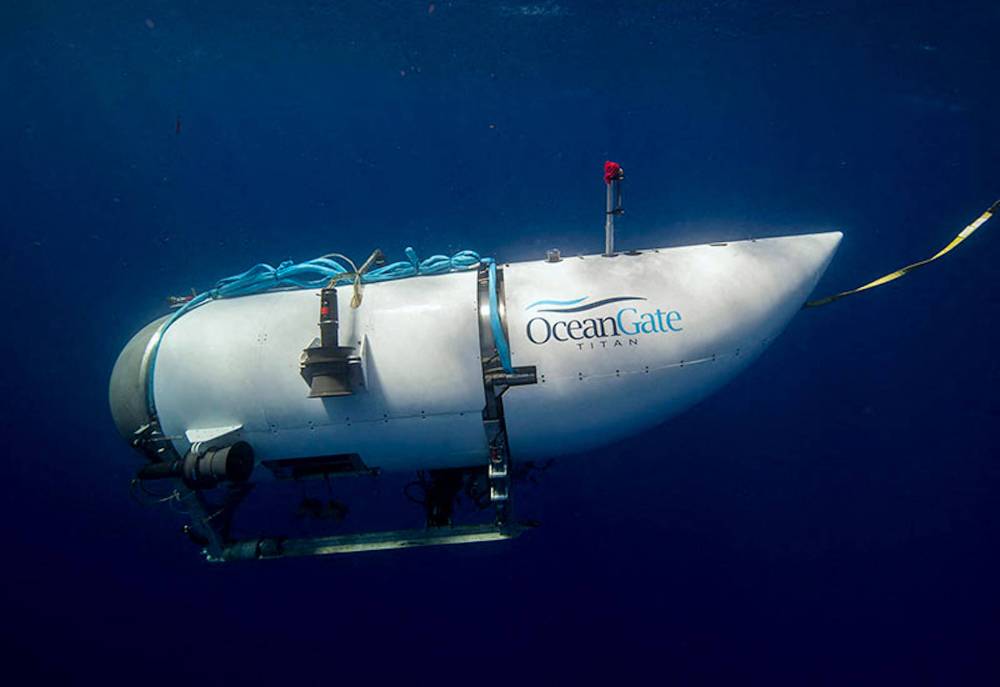
Titan, the submersible that vanished on expedition to the Titanic wreckage. (OceanGate/Zuma Press Wire/TNS)
YouTube celebrity Jake Koehler also released a video describing how his trip aboard Titan was scrubbed earlier this year because of persistent computer problems. In the video released last month, Rush can be heard saying the computer’s role was “up there with life support,” but it was “not consistently communicating.”
“Long story short: every day they did have some problems,” Koehler added.
Even as Titan was being built in Everett, Wash., red flags were being raised. In January 2018, then-director of marine operations David Lochridge filed a report identifying serious safety concerns including improper testing of its carbon-fibre hull, according to court documents filed in Washington state.
Lochridge told Rush the vessel should be certified by a classification agency, such as the American Bureau of Shipping, but that never happened, the documents say. Instead, Lochridge was fired.
Meanwhile, a search and rescue expert says it appears Rush’s company was not prepared to deal with emergencies.
Merv Wiseman, a retired search-and-rescue co-ordinator, said it remains unclear whether OceanGate filed a preparedness plan with the Marine Rescue Sub-Centre in St. John’s, which is where Wiseman worked for 35 years.
“This is the highest of the high-risk areas we can think of,” he said in an interview, adding that offshore operations like drilling platforms are required to submit detailed preparedness manuals to the Canadian Coast Guard. “If something were to happen at the Hibernia (offshore oil platform), I would go to their manual. They have a volume with alerting matrixes and all the technical items.”

Wiseman said Transport Canada should have had jurisdiction over the OceanGate operation. “I think this may have slipped through the cracks,” he said.
In response to a question about its lack of action against the uncertified submersible operating from a base in Canada, Transport Canada suggested in an emailed statement that it had no say over the Titan’s operations outside Canadian waters.
“In general, the safety of marine activity operating in the high seas is governed by the International Convention for Safety of Life at Sea (SOLAS),” the statement said. “Submersibles are currently not covered by the SOLAS provisions.”
Meanwhile, deep-diving experts have been issuing warnings about Titan’s shoddy construction an lack of certification for years. And in 2018, a group of engineers wrote a letter warning that the company’s “experimental” approach could have catastrophic consequences.
There were also warnings about Titan’s lack of backup systems — another worrisome trait that stands in sharp contrast to the practices of high-reliability organizations.

“If you put one vehicle (into the deep ocean), you have a backup vehicle down there to help rescue the first vehicle in case it fails,” Rozdilsky said.
That’s what happened in 1991 when two Russian submersibles, known as Mir I and Mir II, were used to bring a camera crew to film Titanic. At one point, one of the vessels was snared on wires on Titanic’s deck. But the pilot managed to free the craft once he received guidance from the pilot on the other submersible.
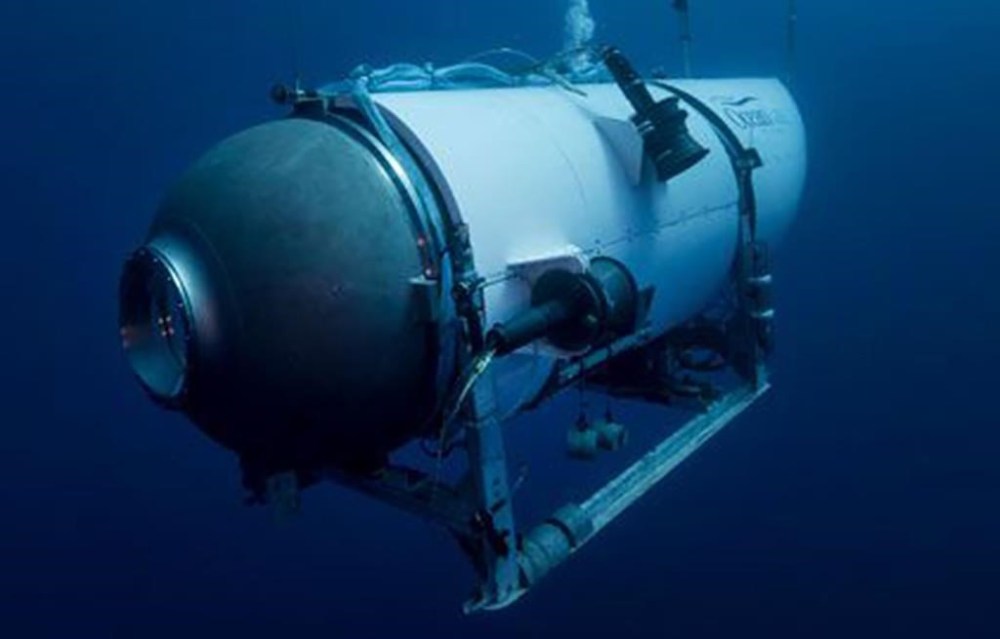
Wiseman said Titan should not have dived on its own.
“It is reasonable to expect that if this kind of voyage is going to be undertaken, with people’s lives at stake, that there be a duplicate (submersible) available,” Wiseman said.
This report by The Canadian Press was first published July 3, 2023.
Related Articles
A new Titanic expedition is planned. The US is fighting it, says wreck is a grave site
Advertisement Advertise With Us
Advertisement Advertise With Us