Germany alleges Poland hasn’t stopped pollution that led to fish die-off in Oder River
Advertisement
Read this article for free:
or
Already have an account? Log in here »
To continue reading, please subscribe:

Digital Subscription
One year of digital access for only $205*
- Enjoy unlimited reading on winnipegfreepress.com
- Read the E-Edition, our digital replica newspaper
- Access News Break, our award-winning app
- Play interactive puzzles
*First annual payment billed as $205.00 + GST for one year. This annual subscription will automatically renew at $233.00 + GST every 52 weeks (10% off the regular annual price of $259.35). Offer available to new and qualified returning subscribers only. Cancel any time.
To continue reading, please subscribe:
Add Free Press access to your Brandon Sun subscription for only an additional
$1 for the first 4 weeks*
- Enjoy unlimited reading on winnipegfreepress.com
- Read the E-Edition, our digital replica newspaper
- Access News Break, our award-winning app
- Play interactive puzzles
*Your next Brandon Sun subscription payment will increase by $1.00 and you will be charged $17.95 plus GST for four weeks. After four weeks, your payment will increase to $24.95 plus GST every four weeks.
Read unlimited articles for free today:
or
Already have an account? Log in here »
Hey there, time traveller!
This article was published 03/07/2023 (1168 days ago), so information in it may no longer be current.
BERLIN (AP) — Germany’s government accused Poland on Monday of failing to stop the dumping of pollutants that contributed to the deaths of hundreds of tons of fish in the Oder River, which runs along the border between the two countries.
The mass fish die-off last summer caused friction between Warsaw and Berlin, which both blamed chemical discharges on the Polish stretch of the river for promoting the growth of deadly golden algae. The environmental group Greenpeace said wastewater from Poland’s coal mines was most likely responsible.
“We see increasing signs that salts continue to be discharged (into the Oder),” German Environment Ministry spokesperson Christopher Stolzenberg said. “There has been no reaction by the Polish side to limit the salt discharge.”
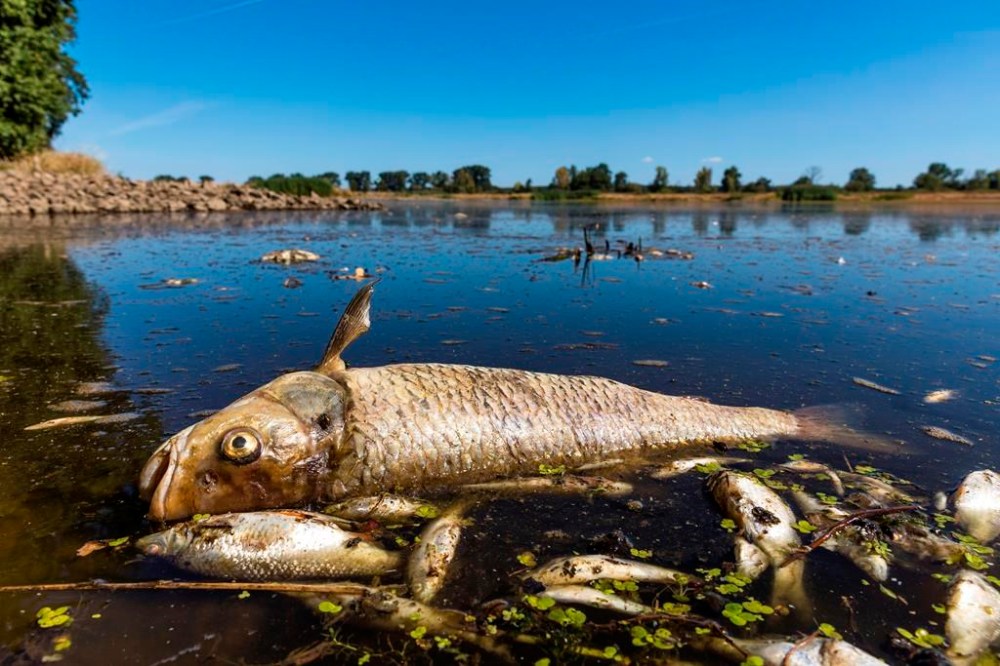
He said a similar die-off could happen again this summer but noted that water levels and high temperatures were factors in producing golden algae.
“We need to see what’s going to happen in the next weeks and months,” Stolzenberg told reporters in Berlin.
German officials have reached out to their Polish counterparts “at all levels” to raise awareness about the risk of another environmental catastrophe, he said.
“It can’t be in anybody’s interest to have a second such disaster,” Stolzenberg said. “At the moment, the signs aren’t good, and in the end it’s a question of time and also circumstances … whether it could happen again.”
Aleksander Brzozka, a spokesperson for Poland’s Climate and Environment Ministry, said in text message that the Polish government was in “constant touch with the German side and they exchange information on a current basis.”