Wildfire-prone California to consider new rules for property insurance pricing
Advertisement
Read this article for free:
or
Already have an account? Log in here »
To continue reading, please subscribe:

Digital Subscription
One year of digital access for only $205*
- Enjoy unlimited reading on winnipegfreepress.com
- Read the E-Edition, our digital replica newspaper
- Access News Break, our award-winning app
- Play interactive puzzles
*First annual payment billed as $205.00 + GST for one year. This annual subscription will automatically renew at $233.00 + GST every 52 weeks (10% off the regular annual price of $259.35). Offer available to new and qualified returning subscribers only. Cancel any time.
To continue reading, please subscribe:
Add Free Press access to your Brandon Sun subscription for only an additional
$1 for the first 4 weeks*
- Enjoy unlimited reading on winnipegfreepress.com
- Read the E-Edition, our digital replica newspaper
- Access News Break, our award-winning app
- Play interactive puzzles
*Your next Brandon Sun subscription payment will increase by $1.00 and you will be charged $17.95 plus GST for four weeks. After four weeks, your payment will increase to $24.95 plus GST every four weeks.
Read unlimited articles for free today:
or
Already have an account? Log in here »
Hey there, time traveller!
This article was published 21/09/2023 (1105 days ago), so information in it may no longer be current.
SACRAMENTO, Calif. (AP) — California will let insurance companies consider climate change when setting their prices, the state’s chief regulator announced Thursday, a move aimed at preventing insurers from fleeing the state over fears of massive losses from wildfires and other natural disasters.
Unlike other states, California does not let insurance companies consider current or future risks when deciding how much to charge for an insurance policy. Instead, they can only consider what’s happened on a property in the past to set the price.
At a time when climate change is making wildfires, floods and windstorms more common, insurers say that restriction makes it difficult to truly price the risk on properties. It’s one reason why, in the past year, seven of the top 12 insurance companies doing business in California have either paused or restricted new business in the state.
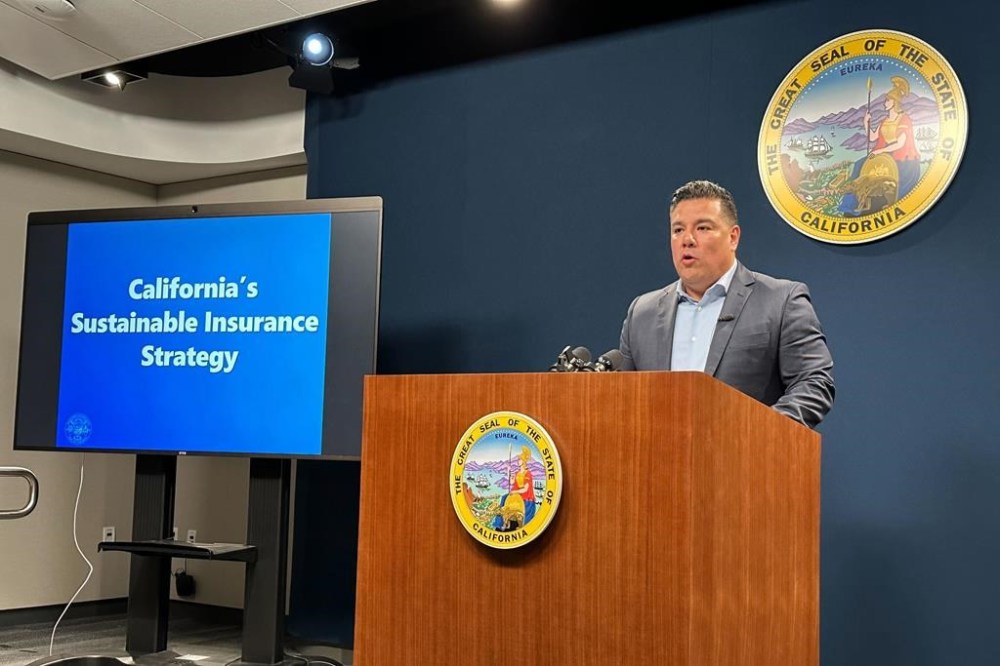
On Thursday, California Insurance Commissioner Ricardo Lara said the state will write new rules to let insurers look to the future when setting their rates. But companies will only get to do this if they agree to write more policies for homeowners who live in areas with the most risk — including communities threatened by wildfires.
“Modernizing our insurance market is not going to be easy or happen overnight. We are in really unchartered territory and we must make difficult choices when the world is changing rapidly,” Lara said at a news conference.
The rule change could mean higher rates for homeowners who are already seeing dramatic increases. Eight insurance companies doing business in California have requested rate increases of at least 20% or higher this year, according to the California Department of Insurance.
Harvey Rosenfield, founder of the advocacy group Consumer Watchdog and author of a 1988 ballot proposition that regulates insurance rates, said Lara’s announcement “will dramatically increase homeowner and renter insurance bills by hundreds or even thousands of dollars.”
But Lara said looking to the future to set rates doesn’t have to always be pessimistic. Insurers can also consider the billions of dollars the state has spent to better manage forests and the improvements homeowners have made to their homes to make them resistant to wildfires — all things insurers aren’t allowed to consider when setting rates under the current rules.
“Insurers have advanced a very powerful argument that the past is not as good a predictor of the future as it used to be,” said Amy Bach, executive director of United Policyholders, a national insurance consumer organization. “I think the (Insurance) department did what it needed to do to try to restore a viable market. We don’t have a viable market right now in this state in a lot of areas.”
California isn’t the only state that’s struggled to keep home insurance companies amid natural disasters. Officials in Florida and Louisiana, which deal with hurricanes and flooding, have fought to keep companies writing policies. A recent report from First Street Foundation said about one-quarter of all homes in the nation are underpriced for climate risk in insurance. Florida allows insurers to consider climate risk with restrictions. States with less regulated insurance markets have insurers who build current and future events into their models.
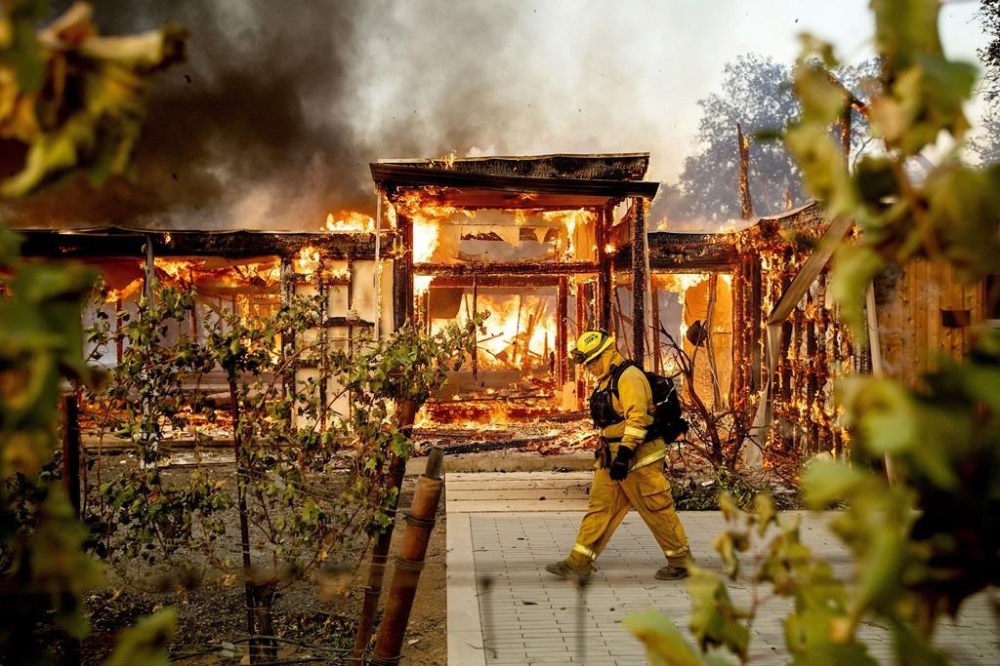
Wildfires have always been part of life in California, where it only rains for a few months out of the year. But as the climate has gotten hotter and dryer, it has made those fires much larger and more intense. Of the top 20 most destructive wildfires in state history, 14 have occurred since 2015, according to the California Department of Forestry and Fire Protection.
Insurance companies have responded by not renewing coverage for many homeowners who live in areas threatened by wildfires. When that happens, homeowners who need insurance must purchase it from the California Fair Access to Insurance Requirements (FAIR) Plan. The plan is primarily funded by policies sold to customers. Insurers only pay into the fund if it is insolvent or to keep it from going insolvent.
People with mortgages often have to buy home insurance because their lender requires it. The number of people on California’s FAIR plan nearly doubled in the five years leading up to 2021, and that number has almost certainly increased even more in the past two years.
Lara said his plan is to require insurance companies to write policies for no less than 85% of their statewide market share in areas at risk for wildfires. That means if a company writes policies for 20 homes, it must write 17 new policies for homeowners in wildfire-distressed areas — moving those people off of the FAIR Plan.
“This is a historic agreement between the department and insurance companies,” Lara said.
The American Property Casualty Insurance Association, which represents insurers, called Lara’s actions “the first steps of many needed to address the deterioration” of the market.
“California’s 35-year-old regulatory system is outdated, cumbersome and fails to reflect the increasing catastrophic losses consumers and businesses are facing from inflation, climate change, extreme weather and more residents living in wildfire prone areas,” Denni Ritter, vice president for state government relations, said in a statement.
Jeremy Porter, a co-author of the First Street Foundation report on climate risk, said allowing insurers to consider climate change in their pricing might lead to more competition in the state’s insurance market.
“If this is implemented correctly, this would definitely allow insurers to come back into the market in California,” he said.
Some consumer groups, including Consumer Watchdog, say they are not opposed to insurance companies using a model to look to the future to set their rates. But they want to see what is in that model. It’s not clear if California’s new rules will allow that. State regulators will spend much of the next year deciding what the rule will be.
Lara said he’s committed to making those models public.
“The department will be able to verify these models to make sure they’re accurate,” he said.
___

This story has been corrected to say that a fund to provide coverage for people who can’t get coverage through no fault of their own is primarily funded by policies sold to customers. Insurers only pay into the fund if it is insolvent or to keep it from going insolvent.
___
This story has been corrected to fix the second reference to the foundation to say First Street, not Front Street.
___
Associated Press writer Ken Sweet contributed from New York.