Brazil’s Amazon rainforest faces a severe drought that may affect around 500,000 people
Advertisement
Read this article for free:
or
Already have an account? Log in here »
To continue reading, please subscribe:

Digital Subscription
One year of digital access for only $205*
- Enjoy unlimited reading on winnipegfreepress.com
- Read the E-Edition, our digital replica newspaper
- Access News Break, our award-winning app
- Play interactive puzzles
*First annual payment billed as $205.00 + GST for one year. This annual subscription will automatically renew at $233.00 + GST every 52 weeks (10% off the regular annual price of $259.35). Offer available to new and qualified returning subscribers only. Cancel any time.
To continue reading, please subscribe:
Add Free Press access to your Brandon Sun subscription for only an additional
$1 for the first 4 weeks*
- Enjoy unlimited reading on winnipegfreepress.com
- Read the E-Edition, our digital replica newspaper
- Access News Break, our award-winning app
- Play interactive puzzles
*Your next Brandon Sun subscription payment will increase by $1.00 and you will be charged $17.95 plus GST for four weeks. After four weeks, your payment will increase to $24.95 plus GST every four weeks.
Read unlimited articles for free today:
or
Already have an account? Log in here »
Hey there, time traveller!
This article was published 26/09/2023 (1111 days ago), so information in it may no longer be current.
RIO DE JANEIRO (AP) — The Amazon rainforest in Brazil is facing a severe drought that may affect around 500,000 people by the end of the year, authorities said Tuesday.
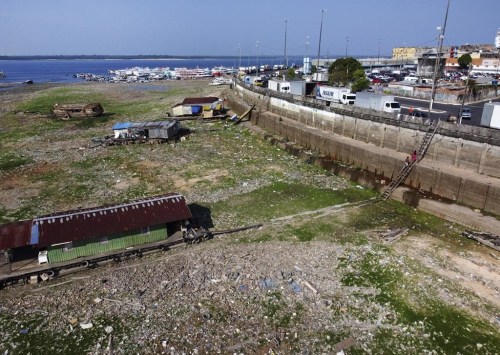
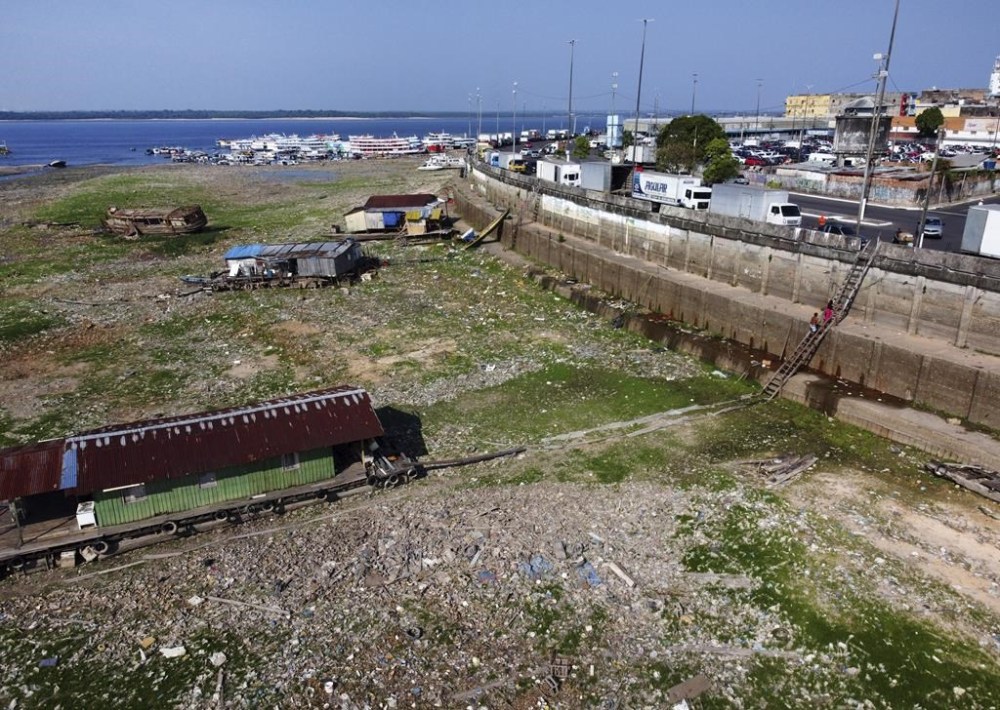
Many are already struggling to access essential supplies such as food and water, because the principal means of transportation in the region is waterways, and river levels are historically low. Droughts also impact fishing, a means of subsistence for many riverside communities.
Amazonas state declared an environmental emergency two weeks ago in response to the prolonged drought and launched a response plan valued at $20 million. Authorities will also distribute food and water supplies as well as personal hygiene kits, the state’s civil defense agency said in a statement.
Gov. Wilson Lima was in Brazil’s capital, Brasilia, on Tuesday to meet with representatives of the federal government. Lima spoke with President Luiz Inácio Lula da Silva to discuss the drought.
The different levels of government will “coordinate measures in support of the people living in the affected municipalities,” Lima said on X, the platform formerly known as Twitter, on Sunday.
Fifteen municipalities were in a state of emergency on Tuesday, while 40 others were on a state of alert, the civil defense authority said.
According to the port of Manaus, which monitors water levels, the river stood at 16.7 meters (55 feet) on Tuesday, around six meters (20 feet) below the same day last year. The lowest level of water was recorded on Oct. 24, 2010, when the river dropped to 13.6 meters (about 45 feet).
The drought is forecast to last longer and be more intense because of El Niño climate phenomenon, which inhibits the formation of rain clouds, the civil defense authority said.
Climate change exacerbates droughts by making them more frequent, longer and more severe. Warmer temperatures enhance evaporation, which reduces surface water and dries out soils and vegetation.