Who’s being listened to on the global stage? Increasingly not who you might think
Advertisement
Read this article for free:
or
Already have an account? Log in here »
To continue reading, please subscribe:
Digital Subscription
One year of digital access for only $1.44 a week*
- Enjoy unlimited reading on winnipegfreepress.com
- Read the E-Edition, our digital replica newspaper
- Access News Break, our award-winning app
- Play interactive puzzles
*Billed as $5.77 plus GST every four weeks. After 52 weeks, price increases to the regular rate of $19.95 plus GST every four weeks. Offer available to new and qualified returning subscribers only. Cancel any time.
To continue reading, please subscribe:
Add Free Press access to your Brandon Sun subscription for only an additional
$1 for the first 4 weeks*
- Enjoy unlimited reading on winnipegfreepress.com
- Read the E-Edition, our digital replica newspaper
- Access News Break, our award-winning app
- Play interactive puzzles
*Your next Brandon Sun subscription payment will increase by $1.00 and you will be charged $17.95 plus GST for four weeks. After four weeks, your payment will increase to $24.95 plus GST every four weeks.
Read unlimited articles for free today:
or
Already have an account? Log in here »
Hey there, time traveller!
This article was published 26/09/2023 (1123 days ago), so information in it may no longer be current.
UNITED NATIONS (AP) — Togo’s foreign minister wasn’t having any of it. He talked of an accelerating “African awakening,” of a resolve to “fight our own battles,” of a refusal to be banished to the children’s table while the musclebound great powers of the 20th century moved chess pieces around the board.
“Nobody is at the center of the world,” Robert Dussey said in French, his voice emphatic. “We don’t want to be relegated to the background as the world develops.”
Africa was Dussey’s subject. But he might have been one of any number of leaders speaking at the United Nations this past week — the voices of smaller nations that typically command less attention. They come, they air grievances and concerns, and then the oxygen is gobbled up by others — often the five permanent members of the U.N. Security Council.
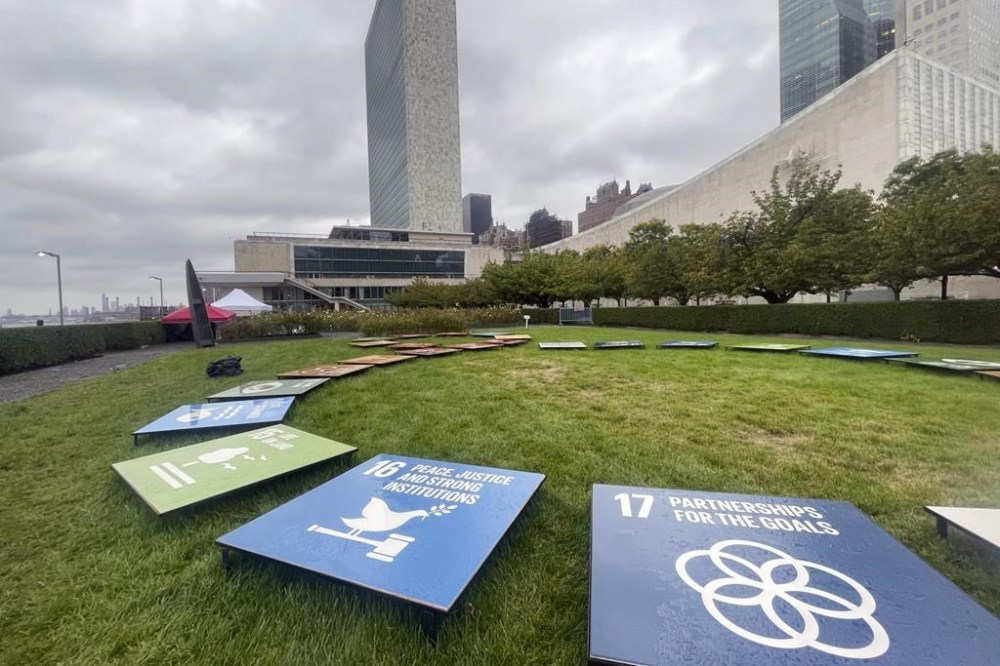
This year, though, Volodymyr Zelenskyy’s high-profile presence notwithstanding, things felt different. Top leaders of four of the five permanent member nations didn’t attend. Climate change helped amplify the concerns of smaller nations — not coincidentally, those most affected by it. And speech by speech, speaker by speaker, it became clear: On the international stage, other voices are beginning to rise — and to be heard.
“The voice of the Global South is growing louder,” said Terrance Michael Drew, prime minister of the Caribbean island nation of Saint Kitts and Nevis. “The voices and experiences of the Pacific matter,” said Australian Foreign Minister Penny Wong. “Our appetite for transformative change has never been higher,” said Xavier Espot, prime minister of the small European country of Andorra.
“The General Assembly is always the biggest platform for countries that don’t get a spotlight,” says Anjali Dayal, an associate professor of international politics at Fordham University and an expert on the United Nations and other international organizations.
“But I think this year, we saw that more leaders were paying attention to the biggest constituency of U.N. countries — countries that are not big powers but that suffer the biggest consequences and very seldom get to cast the decisive vote,” she said.
Where is the momentum coming from? As with so many matters of import these days, there’s no single answer.
This year, one development helped clear space for some of the voices: the shallow attendance of major nations’ leaders. Of the U.N. Security Council’s five permanent members, only the United States, in the personage of President Joe Biden, spoke. The others — Russia, China, France and Britain — chose to send underlings, as did India and Canada.
U.N. Deputy Secretary-General Amina Mohammed called that “disappointing.” But it did mean that smaller nations and coalitions had more oxygen. They used some of it to advocate for a broader-based permanent membership of Security Council, the only U.N. body with the power to take military action and impose sanctions. Only its permanent members can veto resolutions, and frustration about that runs long and deep.
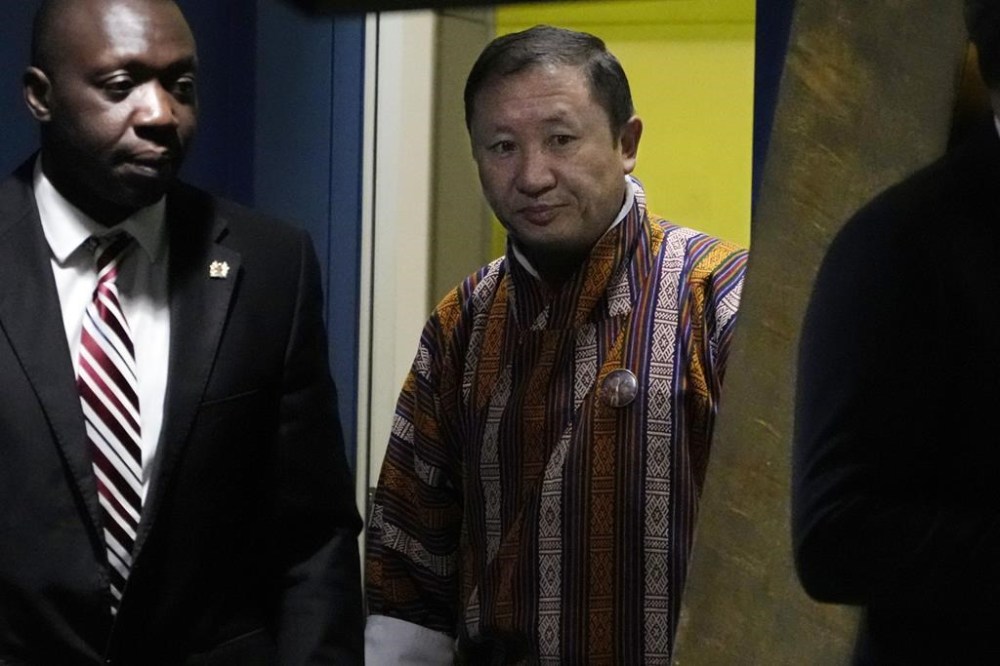
“The global governance architecture has not delivered the equity and inclusion that is required,” said Tandi Dorji, foreign minister of the Asian nation of Bhutan. He insisted representation on the council — which lacks a permanent member from Africa or Latin America — be broadened. “The increasing fragmentation, polarization, and growing inequity we witness in the world today only serve as an urgent cry for strengthening multilateralism.”
The structure of the United Nations, most countries agree, doesn’t fit the current global configuration. An organization built in the postwar mid-20th century to, in essence, prevent the nations who could destroy the world from doing so is not equipped to tackle the fragmentation afoot as the mid-21st century steams toward us with a rapidly evolving global power structure, speaker after speaker said.
Other factors, too, are helping softer voices grow louder. Exhibit A: climate change, which has hit the world’s poorest countries hardest — in particular, island nations whose very existence is threatened by rising waters. When the president of the island nation of Kirabati, Taneti Maamau, says his country is “experiencing intensifying severe drought and coastal inundation,” it’s not a secondhand account — and people are starting to listen.
“They’re banding together and saying, ‘We are the front line of world’s biggest problems, and the only way we get attention is if we band together.’ That has been remarkably effective in terms of voice,” Dayal said. “They’re saying, ‘Today it’s us. Tomorrow it’s going to be you.’”
The pandemic and the gradual recognition — finally — of Secretary-General Antonio Guterres’ yearslong insistence that a multilateral planet is the only way forward also are helping matters.
Much like climate change, the vaccine inequity that the pandemic produced is a pressing topic; smaller nations, as the most affected constituencies, have natural roles driving that as well. “As we rebuild from the pandemic, we must do so with an unwavering commitment to inclusivity,” said Seychelles President Wavel Ramkalawan.
And coalitions are strengthening beyond usual suspects like the G20 and the European Union. There is the Global South in general, with its malleable membership but its commitment to developing countries with unique common needs. There is SIDS, or small island developing states, which tell firsthand stories about climate change. And Africa’s voice is stronger than ever as it pushes for equity, buoyed by a new permanent G20 seat for the African Union.
Then there’s sheer population. Africa’s alone is expected to double from its current 1.3 billion by 2050 and make up a quarter of the planet’s people. This year, India surpassed China to become the world’s most populous nation; its leader, Narendra Modi, may have skipped the U.N. meeting, but he hosted the G20 two weeks ago and used it as a forum to trumpet India’s suitability as a leader of the Global South.
China, too, used the General Assembly last week to cast itself as a member of the Global South and the community of developing nations. While that’s a matter of some debate — China also wants to be perceived as a key global power — its oomph carries along other less-heard nations’ priorities in its wake, while bigger nations are distracted with other things.
“It seems that the Global North, under the U.S leadership, is busy resisting China’s growing power and weakening Putin’s Russia,” Zhiqun Zhu, a professor of political science and international relations at Bucknell University, said in an email. “No wonder China is seeking support in the developing world.”
Even Biden focused his U.N. speech not on the big powers whose leaders didn’t show, but on leaders in the room. “The United States is working across the board to make global institutions more effective and more inclusive,” he said, adding that in the 21st century, “21st-century results are badly needed.”

That, like so many other remarks that followed in coming days, was an acknowledgment of something crucial: Both the community of nations and the U.N. itself need to address a world that might not have been recognizable to the architects of the post-World War II order and the global organization that rose from its ashes.
Which brings us back to Togo. Dussey surely voiced the concerns of myriad smaller nations when he said, flatly, that it is time to be heard and listened to — individually or as a group, but in a way that befits a 21st-century civilization where some of the most difficult circumstances are visited upon those with the least resources to cope.
“We are wearied by paternalism,” Dussey said. “We are weary at your condescension. We are weary of your arrogance. We are weary. We are weary. We are weary.”
___
Ted Anthony, the director of new storytelling and newsroom innovation at The Associated Press, has been writing about international affairs since 1995 and covering the U.N. General Assembly’s leaders meetings since 2018. Find him at http://twitter.com/anthonyted