In the Amazon, communities next to the world’s most voluminous river are queuing for water
Advertisement
Read this article for free:
or
Already have an account? Log in here »
To continue reading, please subscribe:

Digital Subscription
One year of digital access for only $205*
- Enjoy unlimited reading on winnipegfreepress.com
- Read the E-Edition, our digital replica newspaper
- Access News Break, our award-winning app
- Play interactive puzzles
*First annual payment billed as $205.00 + GST for one year. This annual subscription will automatically renew at $233.00 + GST every 52 weeks (10% off the regular annual price of $259.35). Offer available to new and qualified returning subscribers only. Cancel any time.
To continue reading, please subscribe:
Add Free Press access to your Brandon Sun subscription for only an additional
$1 for the first 4 weeks*
- Enjoy unlimited reading on winnipegfreepress.com
- Read the E-Edition, our digital replica newspaper
- Access News Break, our award-winning app
- Play interactive puzzles
*Your next Brandon Sun subscription payment will increase by $1.00 and you will be charged $17.95 plus GST for four weeks. After four weeks, your payment will increase to $24.95 plus GST every four weeks.
Read unlimited articles for free today:
or
Already have an account? Log in here »
Hey there, time traveller!
This article was published 25/10/2023 (1075 days ago), so information in it may no longer be current.
CAREIRO DA VARZEA, Brazil (AP) — As the Amazon drought rages on, public authorities in Brazil are scrambling to deliver food and water to thousands of isolated communities throughout a vast and roadless territory, where boats are the only means of transportation.
Across Amazonas state, which has a territory the size of three Californias, 59 out of its 62 municipalities are under state of emergency, impacting 633,000 people. In the capital Manaus, Negro River — a major tributary of the Amazon — has reached its lowest level since official measurements began 121 years ago.
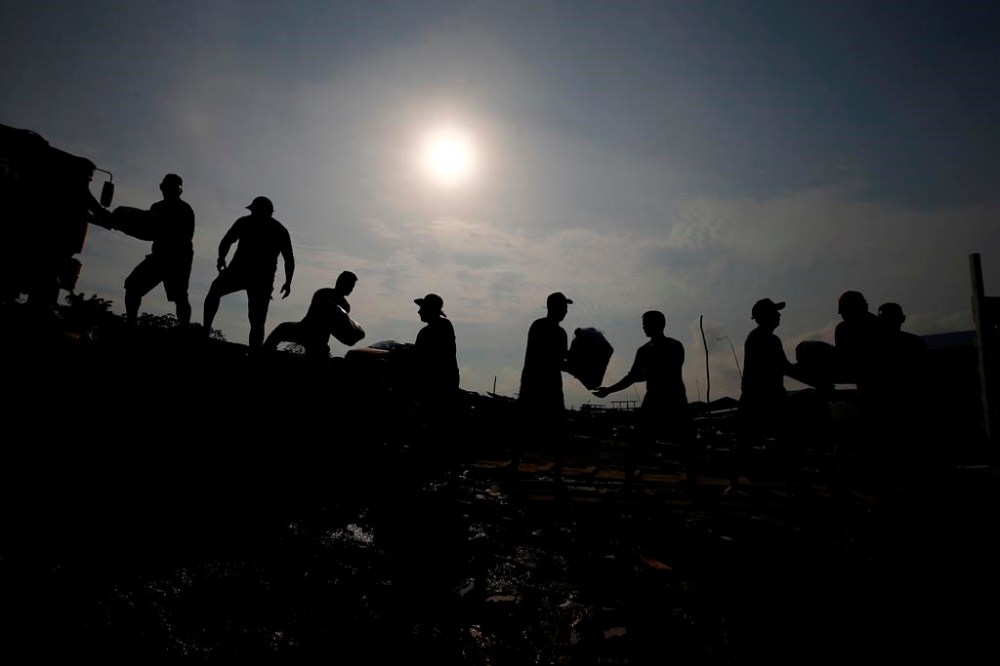
One of the most impacted cities is Careiro da Varzea, near Manaus by the Amazon River. On Tuesday, the municipality distributed emergency kits using an improvised barge originally designed to transport cattle.
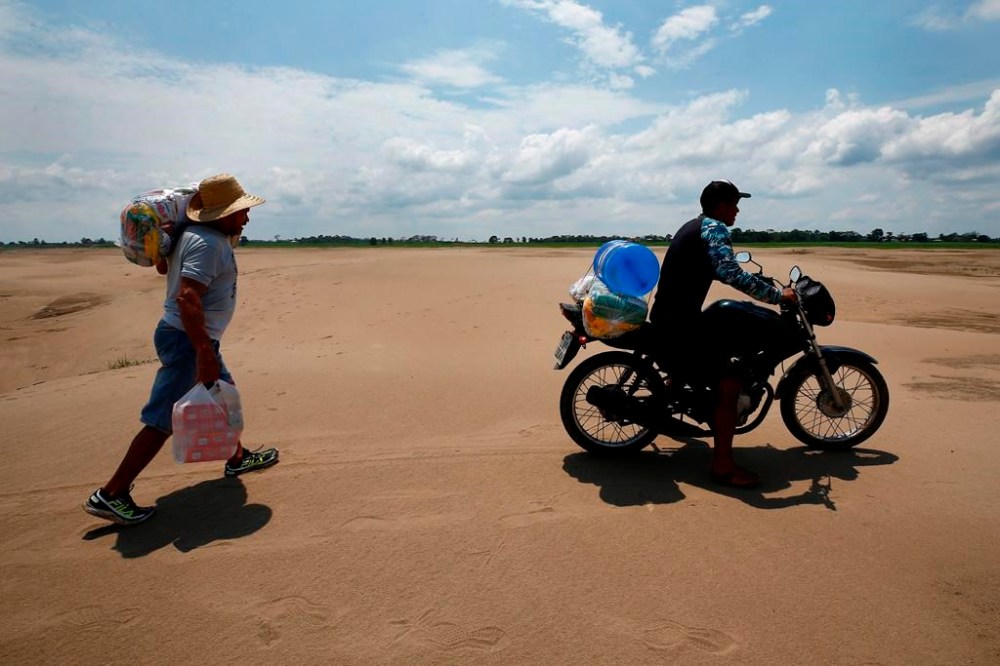
The Associated Press accompanied the delivery to two communities. It docked miles away from them, requiring residents, most of them small farmers and fishermen, to walk long distances through former riverbeds turned into endless sand banks and mud.
Each family received a basic food package and 20 liters (5.3 gallons) of water, enough for just a few days but a heavy burden to carry under the scorching heat.
“I will have to carry the food package on my back for half an hour,” Moisés Batista de Souza, a small farmer from Sao Lazaro community, told the AP. He said the biggest problem is getting drinkable water. To reach the closest source demands a long walk from his house.
“Everybody in Careiro da Varzea has been affected by the drought,” said Jean Costa de Souza, chief of Civil Defense of Careiro da Varzea, a municipality of 19,600 people, most living in rural areas. “Unfortunately, people don’t have water. Some lost their crops, while others couldn’t transport their output.”
Costa de Souza said the municipality will finish next week the first round of deliveries to all rural communities. Other two rounds are under planning, pending on receiving aid from state and federal governments.

Dry spells are part of the Amazon’s cyclical weather pattern, with lighter rainfall from May to October for most of the rainforest. The season is being further stretched this year by two climate phenomena: the warming of northern tropical Atlantic Ocean waters and El Niño — the warming of surface waters in the Equatorial Pacific region — which will peak between December and January.
___
AP reporter Fabiano Maisonnave contributed from Brasilia.
___
Associated Press climate and environmental coverage receives support from several private foundations. See more about AP’s climate initiative here. The AP is solely responsible for all content.