Climate change battering municipal finances across Canada
Advertisement
Read this article for free:
or
Already have an account? Log in here »
To continue reading, please subscribe:

Digital Subscription
One year of digital access for only $205*
- Enjoy unlimited reading on winnipegfreepress.com
- Read the E-Edition, our digital replica newspaper
- Access News Break, our award-winning app
- Play interactive puzzles
*First annual payment billed as $205.00 + GST for one year. This annual subscription will automatically renew at $233.00 + GST every 52 weeks (10% off the regular annual price of $259.35). Offer available to new and qualified returning subscribers only. Cancel any time.
To continue reading, please subscribe:
Add Free Press access to your Brandon Sun subscription for only an additional
$1 for the first 4 weeks*
- Enjoy unlimited reading on winnipegfreepress.com
- Read the E-Edition, our digital replica newspaper
- Access News Break, our award-winning app
- Play interactive puzzles
*Your next Brandon Sun subscription payment will increase by $1.00 and you will be charged $17.95 plus GST for four weeks. After four weeks, your payment will increase to $24.95 plus GST every four weeks.
Read unlimited articles for free today:
or
Already have an account? Log in here »
Hey there, time traveller!
This article was published 11/12/2023 (1011 days ago), so information in it may no longer be current.
MONTREAL – The hamlet of Gore, Que., had the foresight to start preparing for more intense annual flooding due to climate change a decade ago.
That’s when the rural township 60 kilometres northwest of Montreal began quadrupling the size of its culverts to accommodate greater water flow under its roads.
But that still wasn’t enough to withstand the 2023 flood season.
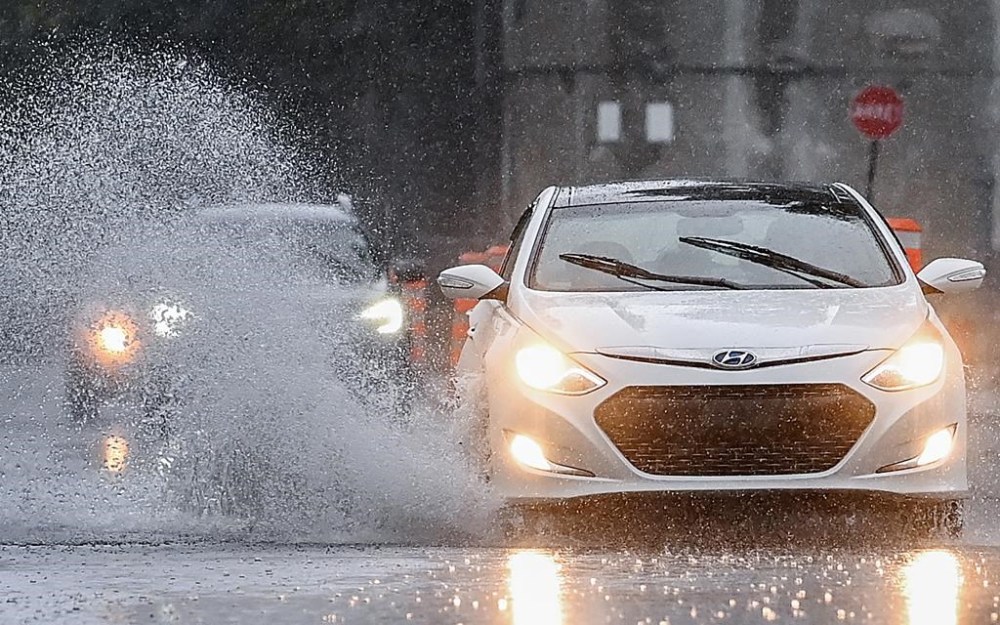
“We ended up losing three roads at a cost of close to $1 million,” Gore Mayor Scott Pearce said in a recent interview. The town’s annual budget is around $6 million.
Gore is one of scores of Canadian municipalities whose budgets are being squeezed by climate change. As high inflation eats away government revenues, cities and towns are increasingly being battered by historic fires, flooding, heat and ice storms, and having to dispense additional sums to guard against severe weather and clean up in its aftermath. Municipal officials are warning that they’ll be unable to absorb growing weather-related costs without more money from the federal and provincial governments.
“Municipalities of all sizes across the country, we’re seeing the amount of damage — it’s unbelievable,” said Pearce, who is also president of the Federation of Canadian Municipalities. Provincial and federal governments must invest more, he said. “We’re seeing more and more damage year by year.”
Montreal, Ottawa and Regina are among the cities where severe weather has threatened balanced budgets in the last year.
In Regina, unexpectedly significant snowfall events and resulting road maintenance costs at the end of 2022 produced an operating deficit “for the first time in corporate memory,” the city’s financial strategy director, Barry Lacey, told its executive committee in May. Chris Warren, the city’s roadways and transportation director, directly linked the growing operational costs in his department with climate change.
Officials in Ottawa warned in September that the city was on track to finish 2023 with a deficit after blowing through its public works budget to dig itself out from snowfall and freezing rain spells at the beginning of the year that were “substantially higher” than five-year averages.
And in Montreal, expenses tied to extreme temperatures and torrential rainfall were among the factors that led the city scrambling to limit costs at the end of 2023.
Quebec’s island metropolis has been increasingly inundated with water-related challenges — some of the most visible and costly local consequences of climate change, says Maja Vodanovic, Montreal executive committee member responsible for waterworks.
In addition to flooding shores, underpasses and basements, more intense precipitation is flushing higher amounts of detritus into the St. Lawrence River, where it’s drawn into the city’s water filtration system, which in turn requires more purifying chemicals, Vodanovic said.
In the winter, volatile freeze-thaw cycles have forced the city to lower the snowfall threshold that triggers snow removal operations to prevent dangerous ice formation.
On top of these extra operational costs, Montreal has earmarked hundreds of millions of dollars for rainfall mitigation measures, such as water-absorbent parks.
Vodanovic says it will be difficult for the city to keep up with climate change-related costs without more money from the provincial government and new revenue sources beyond its traditional property tax base. Montreal is increasing residential taxes by 4.9 per cent in 2024.
“It doesn’t allow us to do a lot more,” Vodanovic said in a recent interview. “Everything that we have to do more we’re squeezing in other departments.”
Further east, the Quebec town of Sutton is dealing with another water problem: too little of it. Drought and a population increase have in recent years diminished the ponds that supply drinking water to what’s known as the town’s mountain sector, a popular ski destination.
Last year, officials ordered a freeze on all construction projects in the area in an attempt to conserve water, halting plans for hundreds of new residences, Sutton Mayor Robert Benoît explained in an interview.
The town has had to spend tens of thousands of dollars on studies to evaluate the problem, he said. The latest study, published this month, concluded that underground water sources in lower-lying sectors could sustainably supplement the mountain supply. However, pending further engineering studies, the town estimates the construction of new water conduits will cost up to $20 million.
Benoît anticipates that with grant funding and additional levies on developers Sutton will likely be responsible for only a fraction of that sum. But with flooding, wildfires, wind and ice storms, climate change-related costs are piling up for the municipality, the mayor said.
“What we have to do is tax the citizens. And taxing the citizens, every time we do it, well, it’s not a big party,” he said.
Sutton and Montreal are among the Quebec municipalities requesting $2 billion more per year from the provincial government to pay for climate change adaptation measures. Premier François Legault has committed far less: roughly $1.8 billion over five years.
Investments could help save municipalities from exploding costs as weather worsens, Pearce said. “We’re better to invest now to protect against this because otherwise we’re just throwing money away,” he said. “It’s a lot cheaper to buy Flintstone chewable vitamins than pay for your penicillin after you’re sick.”
This report by The Canadian Press was first published Dec. 11, 2023.