Hallucinations, thirst and desperation: How migrants endured 36 days at sea
Advertisement
Read this article for free:
or
Already have an account? Log in here »
To continue reading, please subscribe:

Digital Subscription
One year of digital access for only $205*
- Enjoy unlimited reading on winnipegfreepress.com
- Read the E-Edition, our digital replica newspaper
- Access News Break, our award-winning app
- Play interactive puzzles
*First annual payment billed as $205.00 + GST for one year. This annual subscription will automatically renew at $233.00 + GST every 52 weeks (10% off the regular annual price of $259.35). Offer available to new and qualified returning subscribers only. Cancel any time.
To continue reading, please subscribe:
Add Free Press access to your Brandon Sun subscription for only an additional
$1 for the first 4 weeks*
- Enjoy unlimited reading on winnipegfreepress.com
- Read the E-Edition, our digital replica newspaper
- Access News Break, our award-winning app
- Play interactive puzzles
*Your next Brandon Sun subscription payment will increase by $1.00 and you will be charged $17.95 plus GST for four weeks. After four weeks, your payment will increase to $24.95 plus GST every four weeks.
Read unlimited articles for free today:
or
Already have an account? Log in here »
Hey there, time traveller!
This article was published 18/12/2023 (1017 days ago), so information in it may no longer be current.
FASS BOYE, Senegal (AP) — The voyage from the struggling Senegalese fishing town of Fass Boye to Spain’s Canary Islands, a gateway to the European Union where they hoped to find work, was supposed to take a week.
But the wooden boat carrying 101 men and boys was getting blown further and further away from its destination.
No land was in sight. Yet four men believed — or hallucinated — they could swim to shore. They picked up empty water containers and wooden planks — anything to help them float. And one by one, they leapt.
Dozens more would do the same before disappearing into the ocean. The migrants still in the boat watched as their brothers faded. Those who died onboard were tossed into the ocean until the survivors had no energy left and bodies began accumulating.
On day 36, a Spanish fishing vessel spotted them. It was Aug. 14 and they were 290 kilometers (180 miles) northeast of Cape Verde, the last cluster of islands in the eastern central Atlantic Ocean before the vast nothingness that separates West Africa from the Caribbean.
For 38 men and boys, it was salvation. For the other 63, it was too late.
Too often, migrants disappear without a trace, without witnesses, without memory.
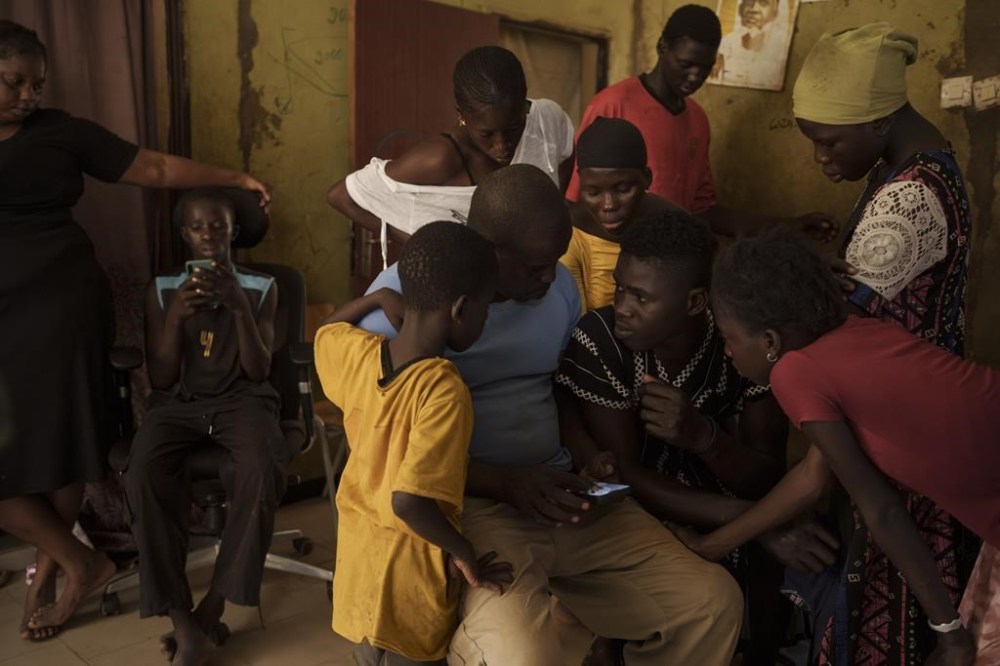
As the number of people leaving Senegal for Spain this year surged to record levels, The Associated Press spoke to dozens of survivors, rescuers, aid workers and officials to understand what the men endured at sea, and why many are willing to risk their lives again. Theirs is a rare chronicle of the treacherous migration route from West Africa to Europe.
Senegalese fisherman Papa Dieye was struggling to survive on earnings of 20,000 CFA francs ($33) a month. “There are no fish left in the ocean,” he laments.
Years of overfishing by industrial vessels from Europe, China and Russia had wiped out Senegalese fishermen’s livelihoods — pushing them to desperate measures.
“We want to work to build houses for our mothers, little brothers and sisters,” he explains.
For the first few days, the voyage proceeded slowly but smoothly. On day five, the winds rebelled.
Tensions on board rose, explains Ngouda Boye, 30, another fisherman from Fass Boye. “When we could almost see Spain, the fuel ran out,” Dieye says. It was day 10.
Back in Fass Boye, relatives were beginning to grow anxious. The 1,500-kilometer voyage from Senegal to the Canaries normally takes a week. Ten days later, they had no news.
Migrant arrivals to the Canaries hit a record 35,000 people this year, more than double the previous year. For others, the migration journey has ended in tragedy. Entire boats have gone missing in the Atlantic, becoming what are known as “invisible shipwrecks.”
Spanish authorities routinely fly over a massive area of the Atlantic around the Canary Islands looking for lost migrants. But the vast distances, volatile weather conditions and relatively small boats mean they are easily missed.
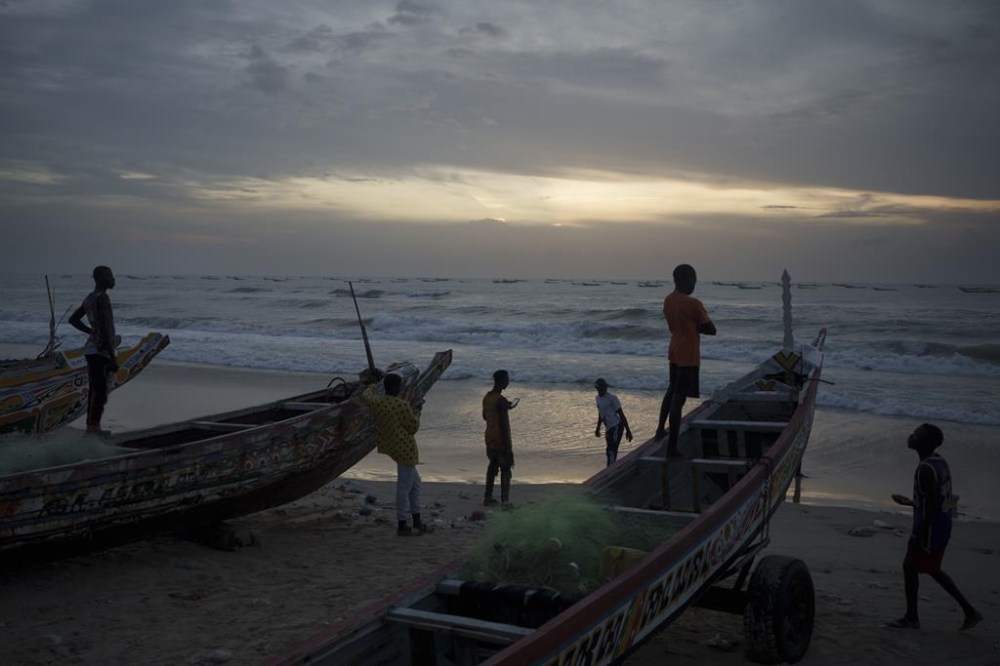
Massive cargo ships passed the would-be migrants by almost every day, destabilizing their shaky wooden canoe-like boat, known as a pirogue. No one came to their rescue. Under international law, captains are required “to render assistance to any person found at sea in danger of being lost.” But the law is hard to enforce.
It didn’t take long for passengers to start pointing fingers at the captain, who was not a native of Fass Boye. “He did things like a sorcerer. He spoke gibberish,” Dieye recounts. Belief in witchcraft and the power of curses is strong across West Africa.
“They tied him up,” Dieye says. “He was the first to die.”
Into their third week, they ran out of water. There was nothing left but the ocean. Those who tried to quench their thirst with saltwater died. Those who took only tiny sips survived. The hunger tortured them as much as the thirst.
“Sometimes I sat at the ledge of the pirogue,” Bathie Gaye, a 31-year-old survivor from Diogo Sur Mer, Senegal, recalls, “so if I died, I wouldn’t have to tire the others — they could just push me over.”
Fernando Ncula, a 22-year-old from Guinea-Bissau, was one of only two foreigners on board. His friend succumbed to thirst and hunger around day 25, Ncula recalls.
When he opened his eyes the next morning, his friend’s body was gone. Others had thrown it in the ocean. He was the only outsider left, and became terrified he would be thrown overboard, too.
“Why are you not tired like the rest of us?” Ncula remembers being interrogated. They tied him up.
Unable to move, and without food or water, he fell in and out of consciousness for two days. Finally, an older man took pity on him and cut him loose. His savior later died, too.
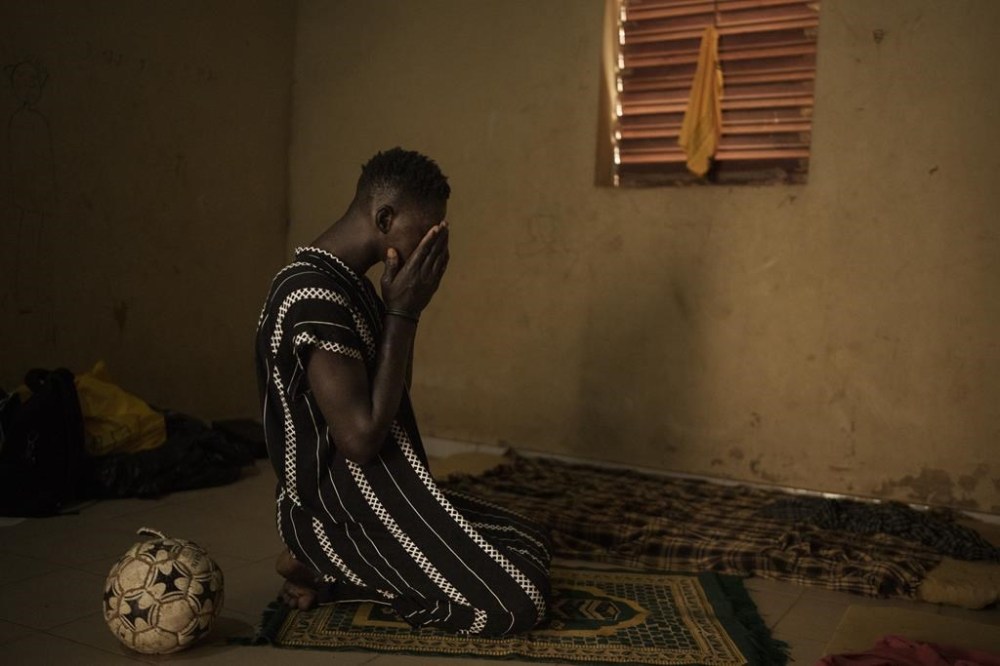
Death seemed inevitable; waiting for it was unbearable. As they reached the one-month mark, people started to jump in a desperate attempt to swim to safety, or perhaps to put themselves out of misery. Thirty men and boys died that way, survivors say.
Two nights after the last men jumped, lights appeared in the sky. It was the Zillarri, a Belize-flagged, Spanish-owned tuna fishing support vessel.
“They were so skinny. I saw their eyes and teeth and only bones,” Abdou Aziz Niang, a Senegalese mechanic working on the ship, remembers. “How long have you been here?” he asked them.
It had been 36 days. Now these men — who were fleeing for Europe because industrial overfishing had made their livelihoods untenable — were being rescued by a European fishing vessel.
Finally, the ship received instructions: Take the rescued people to the closest port, Palmeira, on the island of Sal in Cape Verde, 290 kilometers (180 miles) away.
They were alive, yes. But at what cost? Relatives had invested in their journey to Europe, selling possessions to pay for their trip, hoping the young men would get jobs and send money back home. Instead, they would return with empty hands and terrible news.
Without jobs, the survivors are back where they started. They are still looking for ways out — even if that means gambling their lives again.
Among them is Boye. Boarding another boat could leave his wife a widow and his two children fatherless. But “when you have no work,” he says, “it’s better to leave and try your luck.”
___
Associated Press journalists Ndeye Sene Mbengue and Zane Irwin contributed to this report.
___
Follow AP’s coverage of migration issues at https://apnews.com/hub/migration